
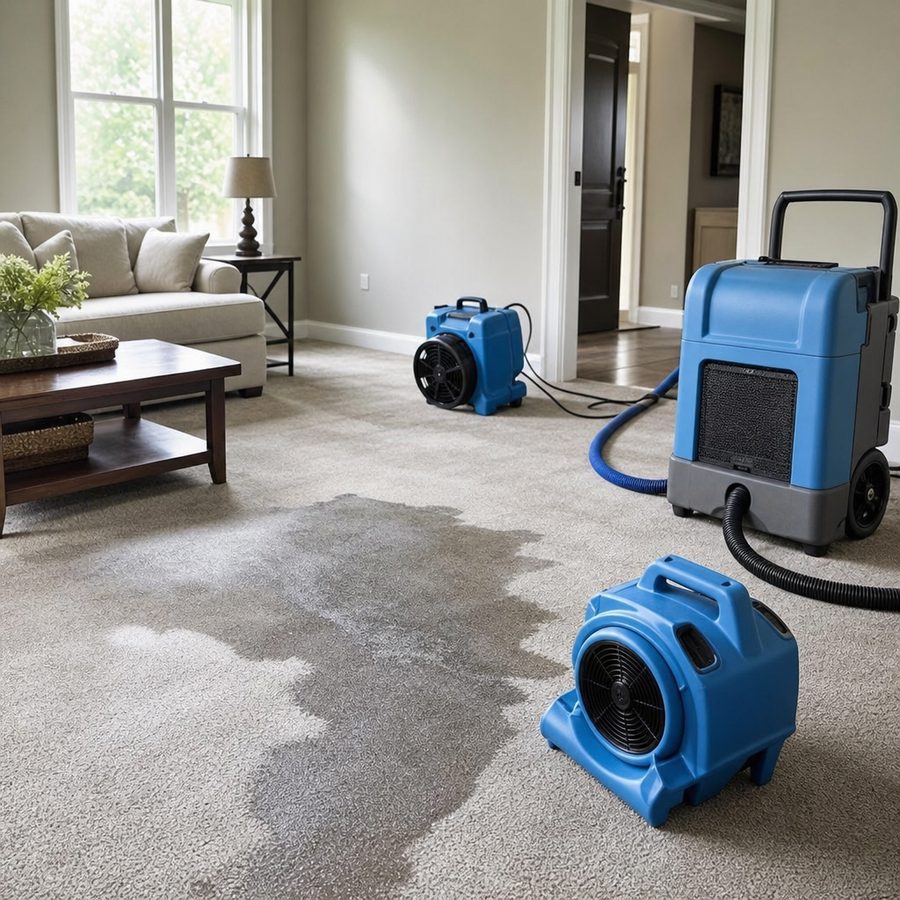
When water soaks into your carpet, the clock starts immediately. Within 24 to 48 hours, wet carpet padding becomes a breeding ground for mold, subfloor materials begin to swell, and what started as a manageable emergency turns into a far more expensive problem. We have worked with homeowners across the Omaha metro for years, and we know how fast conditions here can overwhelm a home. Whether a pipe burst during a January cold snap, Papillion Creek backed your basement up during a summer storm, or your sump pump gave out while spring snowmelt saturated your yard, our crews are equipped to respond fast and dry your home the right way.
Why Omaha Homes Are Especially Vulnerable to Wet Carpet Emergencies
Omaha is not a generic American city when it comes to water damage risk. Several local conditions make wet carpet events more common and more severe here than in many other metros.
- Sub-zero cold snaps: Every January, temperatures in Omaha regularly drop below zero. Supply lines in exterior walls, crawlspaces, and unheated garages freeze and burst. By the time the pipe thaws, hundreds of gallons have already moved through your flooring. What to do when a pipe bursts in Omaha's deep freeze is not an abstract question. It happens on your street, or your neighbor's, every single winter.
- Papillion Creek watershed flooding: Homes in Papillion, La Vista, and parts of Bellevue sit within or near the Papillion Creek watershed. During heavy summer rain events, this creek rises fast. Basements flood, sump pumps lose the battle, and finished lower levels end up under several inches of water.
- Spring snowmelt and sump pump overload: When a big snow melts quickly on already-saturated ground, sump pumps in La Vista, Elkhorn, and Millard run almost continuously. Pump failures during this window are extremely common. Clay-heavy soils in Elkhorn hold water against foundations longer than sandy soils would, which adds extra hydrostatic pressure pushing moisture inward.
- Aging infrastructure in older neighborhoods: In Ralston, Benson, and Dundee, homes were built decades before modern sewer separation standards. Combined sewer lines in these neighborhoods can back up raw sewage into basements during heavy rain events. That is a category 3 contamination situation that requires a different response than clean water intrusion.
- Derecho and storm-driven water intrusion: Omaha sits squarely in a corridor that sees violent summer storms with straight-line winds. When wind-driven rain gets under siding, through compromised window seals, or into a garage, carpet and flooring get wet in a hurry.
What Happens If Wet Carpet Is Not Dried Quickly
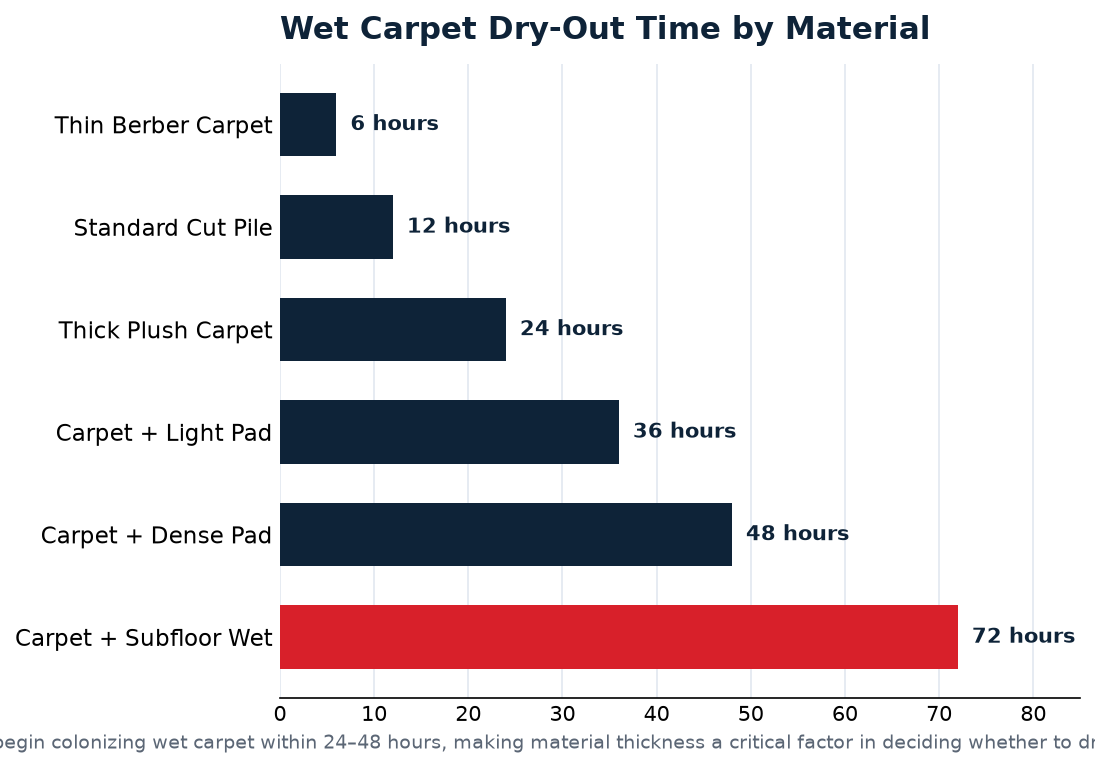
This is the part homeowners sometimes underestimate. Water does not stay in your carpet. Within hours it moves into the carpet pad, then into the subfloor, then into wall cavities if it traveled along a wall. By 48 hours, conditions for mold growth are established. By 72 hours, you may have active mold colonization under the carpet where you cannot see it.
This is why mold inspection and testing becomes relevant so quickly after a water event. If your carpet was wet for more than 48 hours before drying began, or if you are not sure when the water intrusion started, a post-drying mold inspection and testing protocol is worth taking seriously. We can walk you through what that looks like and whether your situation warrants it.
Can Water-Damaged Hardwood Floors Be Saved?
If your home has hardwood in addition to carpet, this is a question you are probably already asking. The honest answer is: sometimes yes, but timing is everything. Hardwood that is dried quickly with proper air movement and dehumidification, usually within the first 24 to 48 hours, can often be saved. Hardwood that stays wet for several days will almost certainly cup, buckle, or delaminate. We assess hardwood floors during every extraction job and give homeowners a straight answer about what is salvageable and what is not.
Our Wet Carpet Drying Process, Step by Step
We do not just pull up wet carpet and point fans at it. Effective wet carpet drying is a documented, measured process.
- Initial assessment and moisture mapping: We use thermal imaging and moisture meters to find all affected areas, including areas under furniture, behind baseboards, and inside wall cavities that look dry from the surface.
- Standing water extraction: Industrial truck-mounted or portable extraction units remove standing water from carpet and hard surfaces before drying begins. This step cannot be skipped.
- Carpet and pad evaluation: We determine whether the carpet pad can be dried in place or needs to be removed. Pad almost always needs to come out because it retains water and blocks airflow to the subfloor.
- Structural drying with air movers and dehumidifiers: We place calibrated equipment strategically to create the airflow patterns that dry materials from the bottom up. This is not guesswork. We follow IICRC S500 drying standards.
- Daily moisture readings: We return each day to document drying progress with moisture meters. Drying is not complete when the carpet feels dry to the touch. It is complete when moisture readings in the subfloor and wall base materials return to acceptable levels.
- Final documentation: We provide a drying log that you can submit to your insurance company.
What To Do Right Now, Before We Arrive
If you are dealing with wet carpet in your home right now, here is what you can do immediately.
- Stop the water source if you can. Shut off the main water supply if a pipe has burst.
- Do not use a household vacuum to remove water. It will not work and may create an electrical hazard.
- Move furniture off wet carpet if it is safe to do so. Furniture dyes and wood finishes can stain carpet permanently.
- Open windows if outdoor humidity is low (below about 50 percent). If it is humid outside, keep them closed and let us bring dehumidification equipment.
- Do not run the HVAC fan to try to dry things out. In some situations this circulates contaminated air through your duct system.
- Document everything with photos before cleanup begins. Your insurance adjuster will want this.
Insurance, Costs, and What to Expect
Most homeowner policies cover sudden and accidental water damage, including burst pipes. Gradual leaks and flooding from outside sources are typically handled differently and may require separate coverage. We work directly with insurance adjusters and can provide the documentation your claim requires. We also provide upfront written estimates so you know what you are looking at before work begins.
Frequently Asked Questions
How long does wet carpet drying actually take? In most residential situations, structural drying takes three to five days when drying begins quickly. Larger events, or situations where water sat for an extended period, can take longer.
Do I have to replace my carpet? Not always. Carpet soaked with clean water (category 1) and dried within 24 to 48 hours can often be saved. Carpet contaminated by sewage or floodwater, or carpet that has been wet for several days, usually needs to be replaced.
Should I be worried about mold even after the carpet is dry? If drying happened quickly and moisture readings confirmed the subfloor and walls returned to normal levels, the mold risk is low. If there was any delay in drying or you are seeing musty odors after the fact, mold inspection and testing is a reasonable next step.
My home is in Ralston and the backup smells like sewage. Is that different? Yes. Sewage backups are a category 3 contamination event. Affected materials require antimicrobial treatment, and some porous materials including carpet pad and drywall below the water line typically must be removed rather than dried in place.
What if the water came up through the slab during flooding near Papillion Creek? Groundwater and surface flooding that enters from below or outside is typically considered category 3 contamination regardless of how it looks. We assess these situations on arrival and explain exactly what the appropriate response is for your specific conditions.