
When temperatures in Omaha plunge to -10°F or -20°F in January, the question is rarely if a pipe will freeze somewhere in the metro, but whose pipe will freeze tonight. If you are reading this while water is still running somewhere it should not be, call us first and read the rest while we are on our way.
We have responded to frozen pipe water damage calls across Douglas and Sarpy Counties for years, and we know exactly what Omaha winters do to homes that were not built with this kind of cold in mind. This page walks you through what to do right now, what our restoration process looks like from first call to final walkthrough, and what you should realistically expect from your insurance claim.
Why Omaha Homes Are Especially Vulnerable to Frozen Pipes
Omaha's winters create a specific and punishing combination of conditions.
- Extreme cold snaps move in fast. A January polar vortex can drop the air temperature 30 degrees in a single afternoon. Pipes in exterior walls, unconditioned crawl spaces, and attached garages are the first to go.
- Older housing stock has thin insulation. In neighborhoods like Dundee and Benson, we work in homes built in the 1910s through 1940s. Those walls were framed before modern vapor barriers existed, and the plumbing runs in places no one would put it today.
- Finished basements concentrate the damage. Millard is one of the largest residential areas in southwest Omaha, and nearly every home there has a finished basement. A half-inch copper line feeding a basement bathroom can release hundreds of gallons before the homeowner notices the ceiling bubbling above the home theater.
- Supply lines to exterior hose bibs are a common culprit. Even in newer Elkhorn subdivisions built on west Omaha's clay soils, we regularly find that the shutoff valve behind the exterior spigot was never closed before the first hard freeze.
What To Do When a Pipe Bursts in Omaha's Deep Freeze
Acting in the right order matters. Here is exactly what to do from the moment you discover the break.
- Shut off the main water supply. Know where your shutoff is before winter arrives. It is typically near the water meter in your basement or utility room.
- Do not touch standing water near electrical panels, outlets, or appliances. Turn off power to affected circuits at the breaker if you can do so safely and without stepping through the water.
- Open cabinet doors under sinks on exterior walls. This will not help the pipe that already burst, but it may prevent a second failure while you wait for help.
- Document everything with photos and video before cleanup begins. Your insurance adjuster will need this, and so will we.
- Call a licensed restoration company, not just a plumber. A plumber can fix the pipe. We extract the water, dry the structure, and prevent mold from taking hold in your walls and subfloor. Both calls need to happen.
- Do not run a space heater in a wet room and walk away. Drying must be controlled and monitored with moisture meters, not guessed at.
Our Frozen Pipe Water Damage Restoration Process
We follow IICRC S500 standards on every job. Here is what happens after you call us.
Step 1: Emergency extraction and assessment. We arrive with truck-mounted extractors and remove standing water immediately. We also conduct a thermal imaging scan of walls and ceilings to find moisture that is not yet visible.
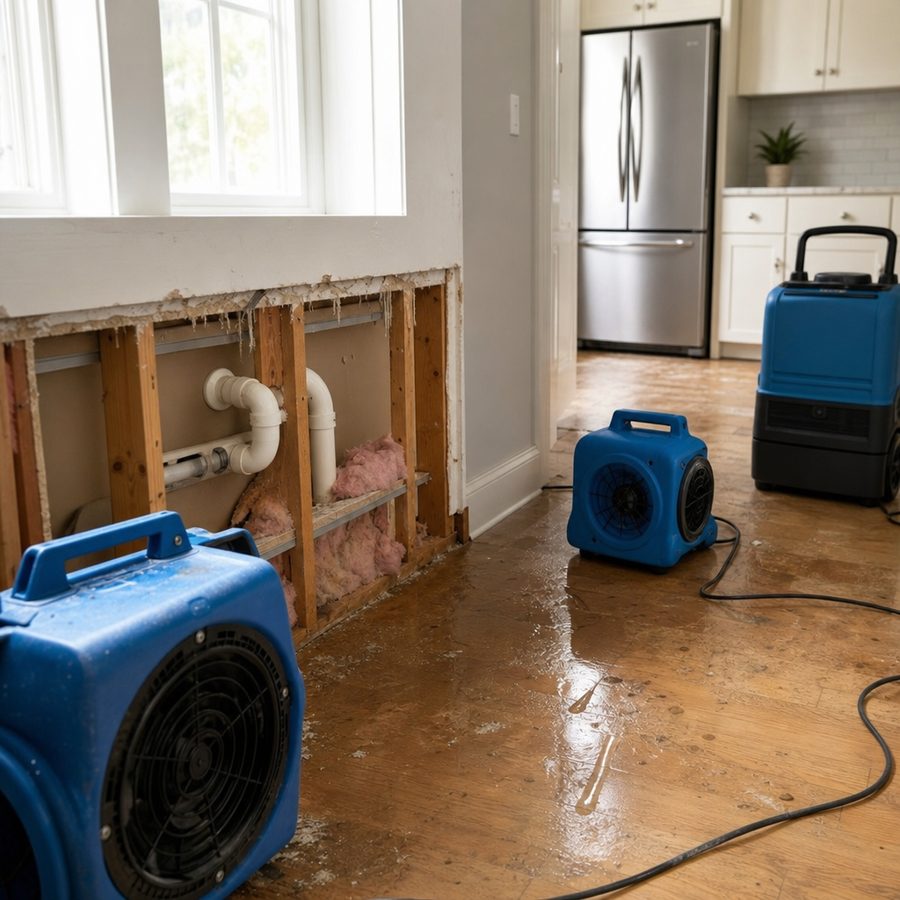
Step 2: Structural drying. We place industrial air movers and dehumidifiers in a calculated configuration based on the square footage and materials involved. We monitor and document moisture readings daily.
Step 3: Mold inspection and testing. Any time drywall or wood framing has been wet for more than 24 to 48 hours, we assess for microbial growth. If we find anything suspicious, we can arrange for independent mold inspection and testing before and after remediation. We do not skip this step on finished basements, because mold behind a newly rebuilt wall is worse than the original water damage.
Step 4: Demo and rebuild. Wet drywall comes out. Wet insulation comes out. We do not dry insulation in place, because it holds moisture against the framing for weeks. Once everything tests dry, our rebuild crews restore your space to pre-loss condition.
Can Water-Damaged Hardwood Floors Be Saved?
This is one of the most common questions we get on burst-pipe jobs. The honest answer is: sometimes, and it depends on how fast we get there.
Solid hardwood floors that have been wet for fewer than 24 hours can often be dried in place using specialized floor mat systems and targeted dehumidification. We have saved beautiful original oak floors in Dundee homes this way.
Engineered hardwood and laminate are less forgiving. Once the core swells or delaminates, replacement is almost always more cost-effective than attempting a dry-out.
The variables that matter most are the wood species, the subfloor material underneath, how long the water sat, and whether the finish had any cracks that allowed moisture to penetrate the grain. We will give you an honest assessment on-site, not a guess over the phone.
Insurance and Costs: What to Expect
Most standard homeowners insurance policies cover sudden and accidental water damage from a burst pipe. What they typically do not cover is damage from a pipe that froze gradually due to a maintenance issue, like a homeowner who turned the heat off entirely during a vacation.
- Document before you demo. Take photos of the pipe, the damage pattern, and the point of origin.
- Get a written scope from your restoration company. We work directly with all major carriers and can provide line-item estimates that match the format adjusters use.
- Ask about your ALE (Additional Living Expense) coverage. If your home is uninhabitable during restoration, many policies will cover temporary housing.
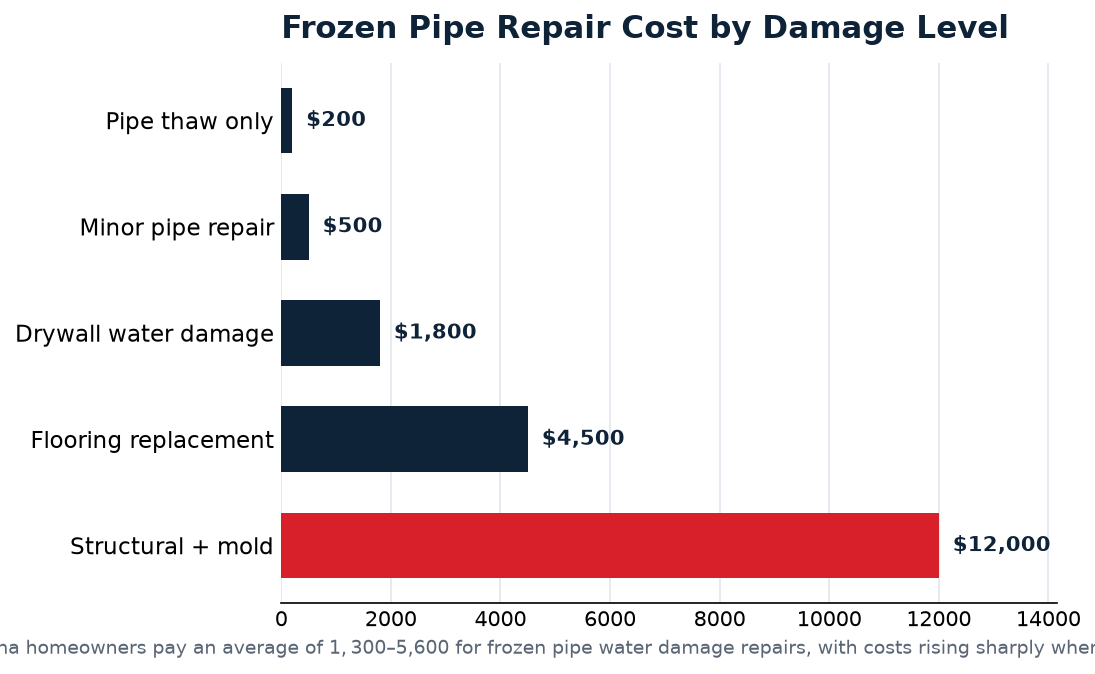
- Deductibles typically run $1,000 to $2,500. The total cost of a burst pipe restoration in Omaha ranges widely, from under $5,000 for a contained bathroom event to well over $30,000 for a finished basement that sat wet over a holiday weekend.
Frequently Asked Questions
How long does it take to dry out a burst-pipe water loss? A standard residential drying job takes three to five days when we can begin within the first few hours. If the water sat longer, or if the affected area includes multiple rooms or a finished basement, allow five to seven days for structural drying before any rebuilding begins.
Will my insurance rates go up if I file a claim? Filing a single water damage claim does not automatically raise your rates, but every carrier is different. We recommend calling your agent before filing to understand the implications for your specific policy.
My pipe burst in an exterior wall. Do you have to tear out all the drywall? Not always. We use moisture meters and thermal cameras to determine how far the water wicked. If we can confirm the framing behind the drywall is dry without opening the wall, we will. If there is any doubt, we open it. Hidden moisture leads to mold, and mold leads to a much more expensive problem.
I am in Millard and my finished basement flooded. How fast can you get there? We serve the entire Omaha metro including Millard, Bellevue, Papillion, Elkhorn, La Vista, Ralston, Dundee, Benson, Gretna, and Council Bluffs across the river. For water emergencies, we aim to be on site within 60 to 90 minutes of your call.
Is it too late to call if the water has been sitting for two days? No. Call us immediately. Two days increases the likelihood that mold has begun to establish in porous materials, which means remediation is a bigger part of the scope, but the restoration process is the same. The sooner we begin, the more we can save.