
Raw sewage in your basement is one of the most urgent emergencies a homeowner can face. It is not just an awful smell or a ruined floor. It is a genuine health hazard, a structural threat, and a situation that gets measurably worse with every hour you wait. Our crews respond to sewage backup calls across the Omaha metro every week, and we want to give you an honest picture of what is happening in your home, what we do about it, and what you can do right now.
Why Sewage Backups Happen in Omaha Homes
Omaha's geography, soil composition, and aging infrastructure create a specific set of conditions that make sewage backups more common here than in many other cities.
Aging sewer laterals. The lateral is the private pipe that runs from your home to the city main. In older neighborhoods like Ralston and Dundee, these laterals are often clay tile or cast iron installed 60 to 100 years ago. They crack, shift, and collapse. Tree roots find every gap. When a lateral fails or blocks, sewage has nowhere to go except back into your basement floor drain.
Clay soils and poor drainage. Elkhorn and other west Omaha communities sit on heavy clay soils that absorb water slowly and hold it for days. After a significant rain event, saturated soil puts hydrostatic pressure on sewer lines and foundation walls, forcing water and sewage back through any weak point.
Papillion Creek watershed flooding. Homes near Papillion Creek in communities like Papillion and La Vista face real flash-flood risk during heavy summer storms. When the municipal sewer system gets overwhelmed, the path of least resistance is often your basement.
Sump pump failure. Thousands of La Vista homes were built in the last 20 years and were designed to rely on sump pumps to manage groundwater. A pump that fails during a storm, loses power, or has a float stuck in the off position can allow sewage and groundwater to enter the finished basement within hours.
Sarpy County has issued backwater valve recommendations for sewage-backup-prone homes precisely because of these combined pressures. If you are in Papillion, La Vista, or Bellevue and you have not had a licensed plumber inspect your backwater valve, that is worth doing before the next storm season.
The Health Risk You Cannot Ignore
Sewage contains Category 3 water (black water) in the IICRC classification system. That means it carries bacteria, viruses, and parasites. Exposure can cause serious illness. Porous materials like drywall, carpet, insulation, and wood framing absorb contaminated water and cannot be reliably sanitized. They have to come out.
Beyond the immediate contamination, wet organic material in a warm basement becomes a mold colony in 24 to 72 hours. Douglas County requires a licensed mold assessment for larger remediation jobs, and Nebraska relies on IICRC certification as the primary quality signal since there is no statewide mold licensing. Our team holds current IICRC credentials and coordinates mold inspection and testing as a built-in step of every sewage restoration project, not an afterthought.
What To Do Right Now (Before We Arrive)
- Get everyone out of the affected area. Do not let children or pets into the basement.
- Do not run water in the house. No flushing toilets, no running sinks. You will make the backup worse.
- Turn off electricity to affected areas if you can do so safely and without stepping into standing water.
- Call your insurance company to open a claim. Document everything with your phone camera before touching anything.
- Do not attempt to clean it yourself. Household disinfectants are not rated for Category 3 contamination.
Our Sewage Backup Restoration Process
We follow a structured, documented process on every job. Here is what that looks like from the moment we arrive.
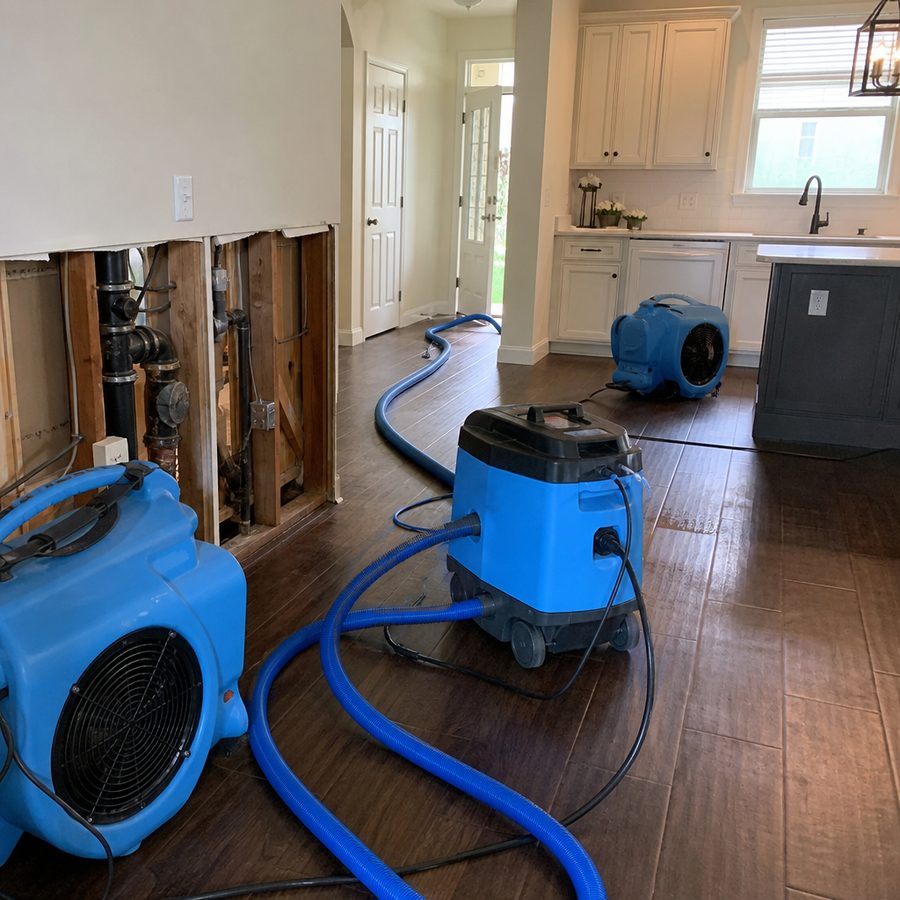
1. Emergency Response and Assessment We arrive with personal protective equipment, containment materials, and extraction equipment. We assess the source of the backup, the extent of contamination, and any structural concerns. We document everything for your insurance claim.
2. Extraction We remove standing sewage and contaminated water using truck-mounted and portable extraction units. This is not a shop-vac job. Volume, speed, and equipment grade matter.
3. Controlled Demo of Contaminated Materials Drywall, carpet, pad, insulation, and in some cases subflooring that have been contacted by Category 3 water are removed and bagged per EPA guidelines. We follow City of Omaha permit requirements for structural drying and reconstruction work when applicable.
4. Antimicrobial Treatment and Deodorization We apply EPA-registered antimicrobial agents to all affected surfaces. Odor is not just unpleasant. It signals active contamination. We address both.
5. Structural Drying Commercial air movers and dehumidifiers run until moisture readings in walls, subfloor, and framing return to normal. This step typically takes two to five days depending on the extent of saturation.
6. Mold Inspection and Testing Because mold can begin growing before extraction is complete, we conduct mold inspection and testing as a standard step. If we find growth, remediation happens before any reconstruction begins.
7. Reconstruction Once the space is clean, dry, and cleared, we rebuild. Drywall, flooring, insulation, trim. We handle the full scope so you are not coordinating multiple contractors during an already stressful situation.
Costs and Insurance
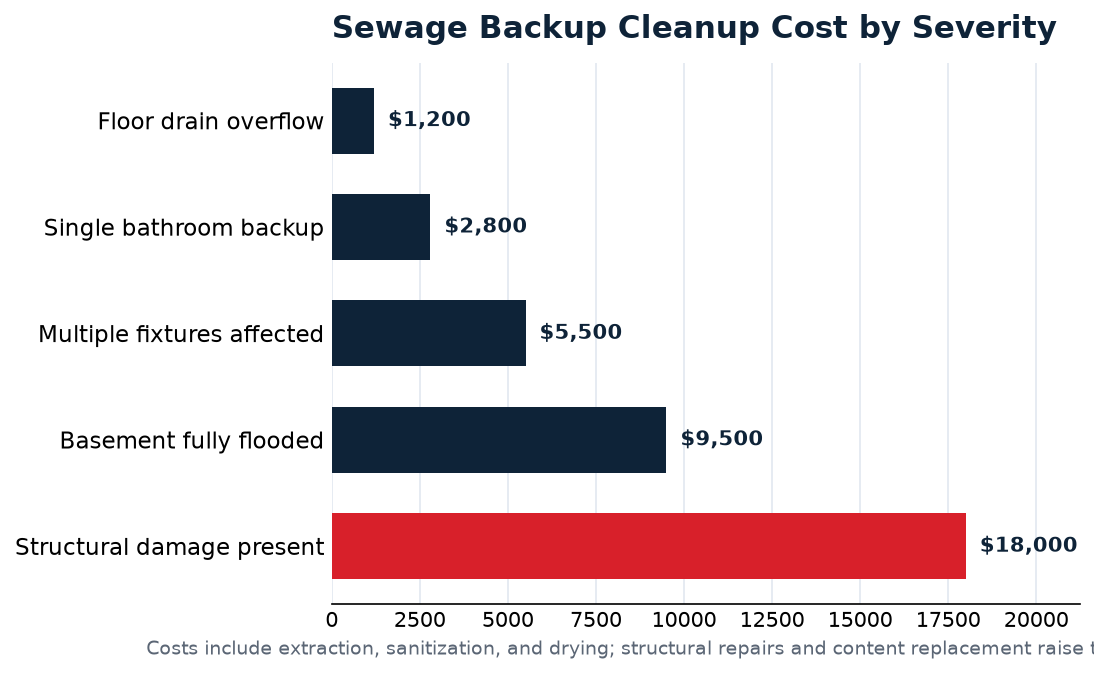
Sewage backup restoration in Omaha typically runs between $3,000 and $15,000 depending on the size of the affected area, the extent of demolition needed, and whether mold remediation is required.
Most standard homeowners insurance policies do NOT cover sewage backups unless you have a sewer backup rider or endorsement. Check your policy now, before an emergency happens. If you are in a flood-prone area like Bellevue near the Missouri River floodplain, you may also have separate NFIP flood coverage that applies.
We work directly with insurance adjusters, provide detailed photo documentation, and can walk you through the claims process. We do not inflate scopes to pad claims, and we do not cut corners to get a job done fast. Our documentation holds up.
Frequently Asked Questions
Can water-damaged hardwood floors be saved after a sewage backup? Rarely, and only if they have had minimal contact time. Hardwood that has absorbed Category 3 water is considered contaminated and almost always requires removal. We assess each situation honestly. If there is a realistic chance of saving the floor, we will tell you. If not, we will tell you that too.
What should I do when a pipe bursts in Omaha's deep freeze? Shut off your main water supply immediately and call a plumber before calling us. Once the water source is controlled, we handle the water extraction and structural drying. Omaha winters are hard on supply lines in exterior walls and unheated crawl spaces. If you have had a burst pipe, do not assume the visible damage is the full extent of the moisture intrusion.
How do I know if I have mold after a sewage backup? You may not be able to tell by looking. Mold grows inside wall cavities, under flooring, and behind insulation. A musty smell is one indicator, but mold inspection and testing with moisture meters and, when appropriate, air sampling is the only reliable method. We include this step in our restoration process.
Does Sarpy County require anything specific for sewage backup repairs? Sarpy County strongly recommends backwater valve installation for homes with a history of backups. Your plumber handles the valve installation. We handle the restoration. On larger jobs, permits may be required and we pull them.
How long does sewage backup restoration take? Extraction and demo typically happen in the first one to two days. Structural drying runs two to five days. Mold clearance testing, if needed, adds one to two days. Reconstruction timeline depends on scope but most finished basements are restored within two to four weeks of the initial event.
If you are dealing with a sewage backup right now, call us. We are locally owned, available around the clock, and we know Omaha's specific conditions, neighborhoods, and codes. We will get there fast and tell you exactly what is going on.