
When a pipe bursts, a basement floods, or a fire leaves soot on everything you own, the damage to your belongings can feel just as devastating as the damage to the structure itself. We work with homeowners across the Omaha metro, from Millard's finished basements to older homes in Dundee and Benson, to recover, clean, and restore the personal property that matters most. This page explains exactly how our content cleaning and restoration process works, what you should do right now, and what local Omaha conditions mean for your belongings.
What Is Content Cleaning and Pack-Out Restoration?
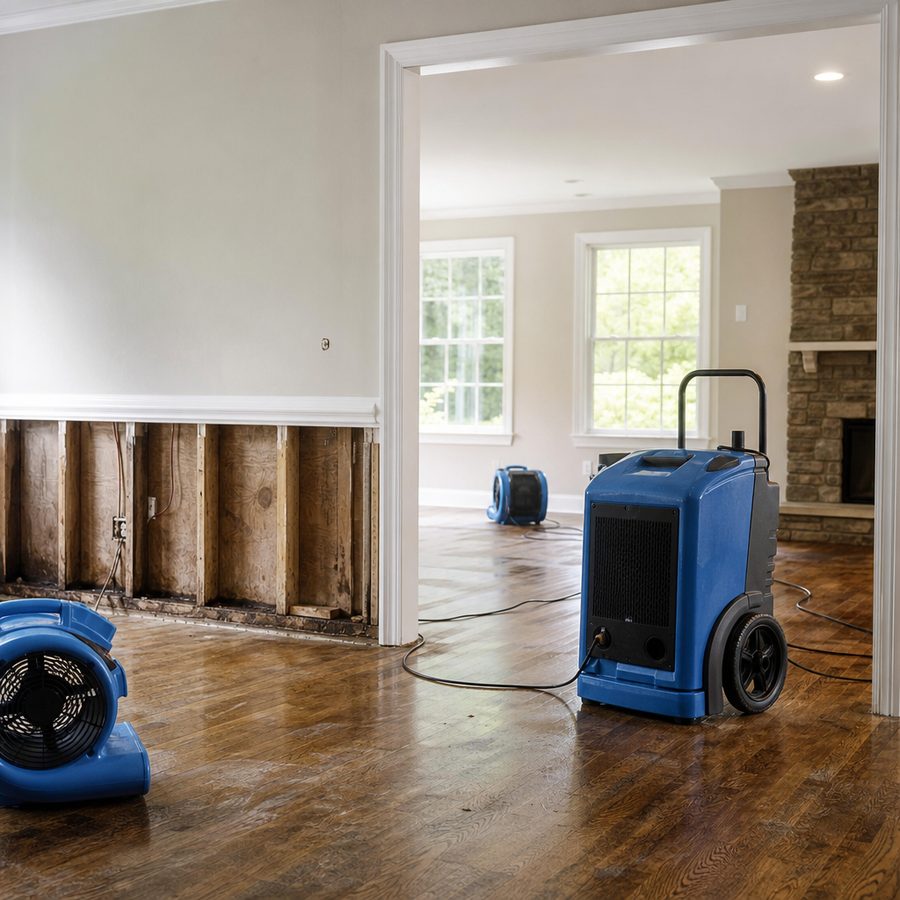
Content cleaning and restoration refers to the professional cleaning, deodorizing, drying, and storage of your personal property after a disaster. This is separate from structural drying or rebuilding. We are talking about your furniture, clothing, documents, electronics, artwork, kitchen goods, and heirlooms.
A pack-out is the process of carefully inventorying, boxing, and transporting your belongings to a secure climate-controlled facility while your home undergoes structural restoration. Once your home is ready, we bring everything back, cleaned and inventoried. This approach protects your belongings from secondary damage like mold growth, cross-contamination from soot, or ongoing humidity exposure while crews work on the structure.
Why Omaha's Climate and Housing Stock Make This Especially Important
Omaha's weather creates real, specific risks for your personal property. Winters routinely push into single digits, and a burst pipe in a Millard home with a finished basement can release hundreds of gallons of water before anyone notices. Summers bring intense thunderstorms that overwhelm sump pumps in La Vista's newer construction and send Papillion Creek surging through homes in the Papillion watershed area.
A few local realities worth knowing:
- Older homes in Dundee and Benson often have aging plumbing, uninsulated crawl spaces, and basement moisture problems that give mold a head start before damage is even discovered.
- Ralston's older sewer laterals make sewage backups a genuine risk, and sewage-contaminated belongings require a different, more aggressive cleaning protocol than clean water damage.
- Bellevue and Council Bluffs homes near the Missouri River floodplain face the possibility of large-volume flooding that can submerge belongings for extended periods, dramatically increasing the complexity of restoration.
- Elkhorn's clay soils hold water against foundations, meaning even a home without a visible flood event can end up with belongings damaged by persistent elevated humidity.
The bottom line: the longer your belongings sit in a damaged environment, mold begins colonizing porous materials within 24 to 48 hours. Getting your contents out and into a controlled environment is not optional if you want to save them.
Our Content Pack-Out and Cleaning Process
We follow a structured process on every job so nothing is overlooked and your insurance claim is supported with thorough documentation.
Step 1: Emergency Response and Assessment We arrive and assess what is salvageable, what requires cleaning, and what is a total loss. We document everything with photos and a written inventory before we touch a single item.
Step 2: Categorization and Inventory Every item is tagged, photographed, and logged into our inventory system. You receive a copy. This protects you during the insurance claims process and ensures nothing is lost during transport.
Step 3: Pack-Out and Transport We carefully pack and transport your belongings to our climate-controlled facility. Fragile items, documents, and electronics receive special handling. We use sealed containers for items with odor or contamination concerns.
Step 4: Cleaning and Restoration Depending on the type of damage, we use ultrasonic cleaning for hard goods, ozone and hydroxyl treatment for odor, document drying and freeze-drying for papers and photos, and specialized soft-content laundering for textiles. Soot, smoke, mold, and water damage each require different chemistry and technique.
Step 5: Mold Inspection and Testing If there is any indication of mold on your belongings or in the affected area, we coordinate mold inspection and testing before returning contents to your home. Douglas County requires licensed mold assessment for larger remediation jobs, and Nebraska's lack of statewide mold licensing means you should look for IICRC-certified professionals (which our team holds) as your quality signal. We do not cut corners here because returning cleaned belongings to a home that still has a mold problem defeats the entire purpose.
Step 6: Storage During Restoration Your belongings stay in our secure, climate-controlled facility for as long as structural work is underway. You have itemized access to the inventory at any time.
Step 7: Pack-Back and Return Once your home passes inspection and is cleared for occupancy, we return your belongings, unpacking and placing items according to a room-by-room plan we coordinate with you.
What To Do Right Now If You Have Water or Fire Damage
If you are reading this in an emergency, here is what matters in the next hour:
- Stop the source if you safely can. Know where your main water shutoff is. If you do not, call your water utility immediately.
- Do not run your HVAC system. In a fire or mold situation, the blower spreads contamination through every room.
- Do not start moving things yourself without documenting first. Take video and photos of every room and every affected item before anything moves. Your adjuster will thank you.
- Get a restoration company on site within hours, not days. Mold growth and secondary damage accelerate fast in Omaha's humid summers. What to do when a pipe bursts in Omaha's deep freeze is different from a summer flood, but one rule applies in both cases: time is the enemy.
- Call your insurance company to open a claim. Most homeowner policies cover sudden and accidental water damage and fire damage, including content restoration. Flood damage from rising water requires separate flood insurance.
- Ask your restoration company about direct billing to your insurer. We work directly with adjusters and can help document your claim accurately.
Costs and Insurance
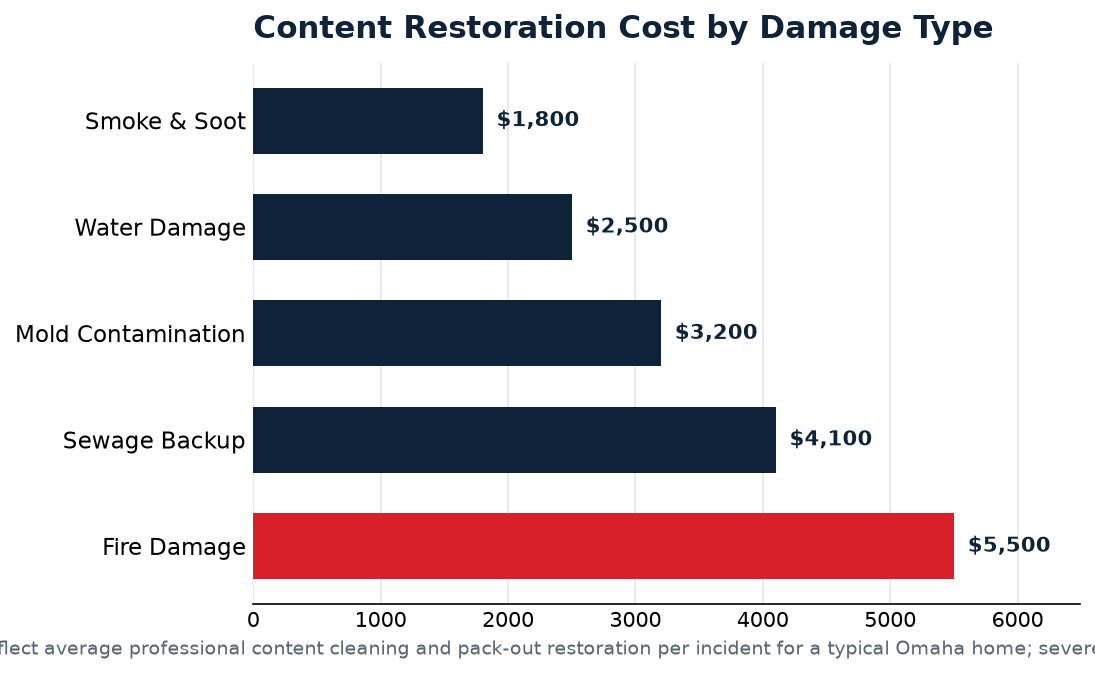
Content cleaning and restoration costs vary depending on volume, type of damage, and how long contents have been exposed. A pack-out and cleaning for a single-room water loss might run a few thousand dollars. A whole-home fire loss with pack-out, storage, and full content restoration can reach significantly higher amounts. The good news is that most standard homeowner policies cover content restoration under personal property coverage, and we work with all major carriers.
If you have a sewage backup in a Ralston home or storm-related flooding in Papillion, ask specifically about your policy's coverage for those loss types. They are sometimes separate endorsements. We can walk through the documentation with you so your claim reflects the actual scope of loss.
Frequently Asked Questions
Can water-damaged hardwood floors be saved, and does that affect my belongings on those floors? Yes, water-damaged hardwood floors can often be saved with rapid drying, but the timeline matters enormously. The same humidity that warps your floors is damaging furniture legs, book bindings, and electronics sitting on them. We remove contents first to give structural drying crews the access they need and to protect your belongings from prolonged exposure.
What happens to items that cannot be restored? We document them in writing with photos and include them in your total loss inventory for your insurance claim. You should never simply throw damaged items away before your adjuster has reviewed the scope.
Do you handle mold-affected clothing and soft goods? Yes. Mold-affected textiles require ozone treatment, HEPA-filtered laundering, and sometimes disposal if contamination is too deep. We assess each item individually and do not batch everything together.
How long does the pack-out and restoration process take? For a single-room loss, pack-out and content cleaning can be completed within a week or two. For larger losses, plan for several weeks of structural work before contents can return. We give you a realistic timeline upfront, not an optimistic guess.
Do I need a mold inspection before you return my belongings? In most cases involving water damage lasting more than 48 hours, yes. We strongly recommend mold inspection and testing before pack-back, particularly in older homes in Benson or Dundee where baseline moisture conditions were already elevated. Returning clean belongings to a moldy home is a mistake we help you avoid.