
When your sump pump quits, water doesn't wait. In neighborhoods like Millard and La Vista, where nearly every finished basement depends on a working pump, a failed float switch or a burned-out motor during a spring storm can mean several inches of standing water in under an hour. We have responded to hundreds of these calls across the metro, and we want to give you honest, detailed information so you know exactly what to expect from the moment you discover the flooding to the day your home is fully dry.
Why Sump Pump Failures Happen More Often in Omaha
Omaha's geography and climate create a near-perfect set of conditions for pump overload and mechanical failure.
Soil and water table pressure. Elkhorn and other west Omaha communities sit on dense clay soils that hold moisture long after a rain event. Instead of draining away, groundwater keeps pressing against your foundation and into the sump pit for days. A pump running almost continuously will wear out far sooner than manufacturers' ratings suggest.
Seasonal surge windows. The March and April snowmelt period is the single busiest stretch we see for sump pump failure cleanup calls. The ground is still partly frozen, meltwater has nowhere to percolate, and every low-lying yard turns into a slow-motion flood. Add a power outage from a spring storm and even a perfectly maintained pump is useless without a battery backup.
Papillion Creek watershed flash flooding. After a heavy summer downpour, Papillion Creek can rise several feet in a matter of hours. Homes in Papillion and La Vista that sit near the drainage corridors can see groundwater infiltration faster than any residential pump is rated to handle.
Aging infrastructure. In Ralston and Benson, older housing stock sometimes means undersized sump pits, corroded discharge lines, or check valves that haven't been replaced in decades. When those components fail, the pump runs continuously without actually moving water.
Winter freeze complications. January lows regularly drop to -10F or colder. Discharge lines that exit through a rim joist on an unheated side of the house can freeze solid, causing water to back up into the pit and overflow into the basement even while the motor is still spinning.
What Sump Pump Failure Water Damage Actually Looks Like
Many homeowners expect a dramatic flood. Often the reality is more insidious. Water seeps under finished drywall, saturates fiberglass insulation, and wicks up into wall cavities long before you see it puddling on the floor. By the time carpet feels wet underfoot, the subfloor and lower wall framing may already have been wet for hours.
Common damage patterns we find on arrival:
- Saturated carpet padding that holds far more water than the carpet itself
- Buckled or cupping hardwood flooring (more on saving those floors below)
- Wet fiberglass batt insulation that has lost its R-value and started harboring mold spores
- Swollen baseboards and drywall that mask hidden moisture behind finished walls
- Water pooling inside electrical outlet boxes at the floor level
Our Sump Pump Failure Cleanup Process
We follow IICRC S500 standards on every job. Here is what the process looks like from our first truck on your driveway.
1. Immediate water extraction. We use truck-mounted extractors to remove standing water as fast as possible. Time is the most important factor in limiting damage. Every hour water sits, absorption into porous materials deepens.
2. Moisture mapping. Before we tear out anything, our crews use thermal imaging cameras and calibrated moisture meters to map exactly how far water has traveled inside walls, under flooring, and into structural members. This prevents guesswork and unnecessary demolition.
3. Controlled demolition if necessary. If moisture readings show water trapped behind drywall or under subfloor, we remove the affected material. Leaving wet material in place is how mold colonies establish within 24 to 72 hours.
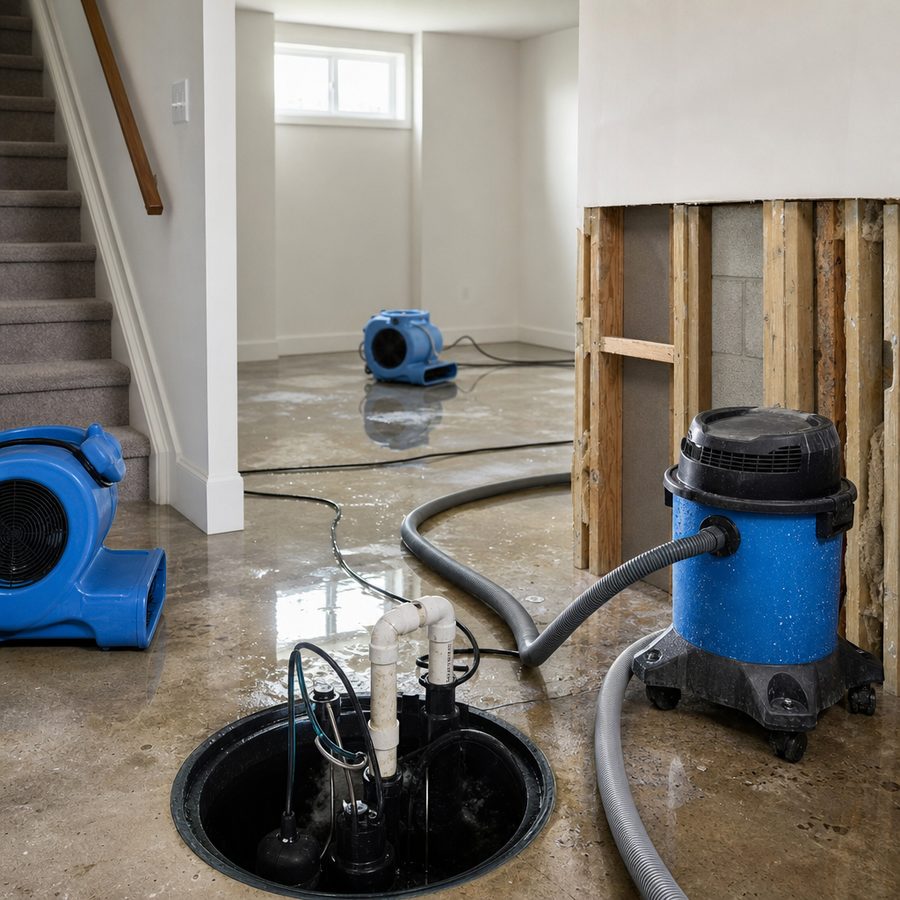
4. Industrial drying. We place high-velocity air movers and refrigerant dehumidifiers throughout the affected area. We monitor and adjust equipment daily until all readings return to dry standard levels, which typically takes 3 to 5 days depending on materials and severity.
5. Mold inspection and testing. Once the structure is dry, we assess whether any mold growth began during the wet period. If we see any indication of growth or if the space was wet for more than 48 hours before we arrived, we recommend formal mold inspection and testing with air samples and surface samples sent to an independent lab. We do not skip this step on older homes in Benson or Dundee, where existing moisture issues and century-old framing can accelerate mold development significantly.
6. Restoration. After clearance, we repair or replace drywall, insulation, flooring, and trim. Our goal is to hand the space back to you in better condition than we found it.
Can Water-Damaged Hardwood Floors Be Saved?
This is one of the most common questions we hear after a sump pump backup. The honest answer is: sometimes yes, sometimes no, and timing is everything.
Solid hardwood that has been wet for fewer than 24 hours and has not yet severely cupped can often be dried in place using floor drying mats and targeted dehumidification. Engineered hardwood is more vulnerable because its plywood core delaminates quickly. Floors that have been wet for multiple days, that show significant buckling, or that sit over a wet subfloor almost always need replacement.
We make this assessment on site with moisture meters rather than guessing. We will always tell you honestly what is and is not salvageable because pulling up a dryable floor costs you money you do not need to spend.
Costs, Insurance, and What to Do Right Now
Call your insurance company today. Most standard homeowners policies cover sudden and accidental water damage from a sump pump failure, but coverage for flooding from outside (ground water entering without a mechanical failure) typically requires a separate flood endorsement. Document everything with photos and video before cleanup begins, and do not throw away damaged materials until your adjuster has seen them.
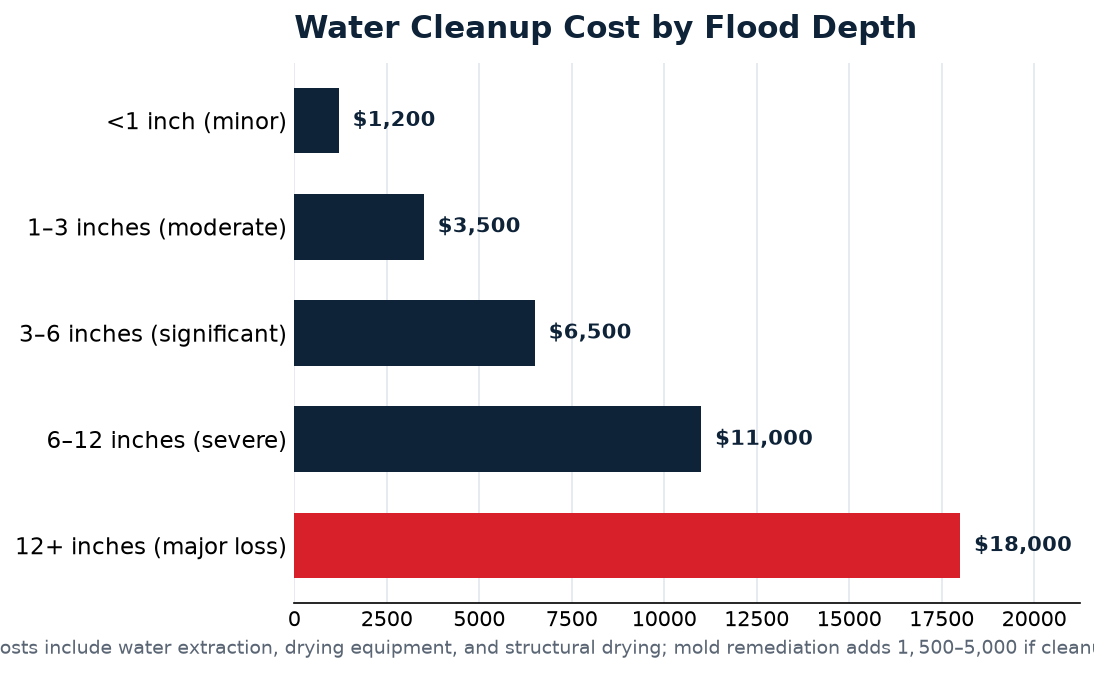
Typical cost range. A straightforward extraction and drying job runs between $1,500 and $4,000 for an average finished basement. If mold remediation, flooring replacement, or drywall repair is required, costs rise accordingly. We provide itemized written estimates.
What to do right now before we arrive:
- Cut power to the basement at the breaker if there is standing water near any outlets or appliances
- Move valuables, documents, and electronics to a dry upper floor
- Do not run a shop vac or personal fans, they are not designed for structural drying and can spread contamination
- Take photos and video of all damage from multiple angles
- Call us immediately, the faster we arrive, the more we can save
Frequently Asked Questions
How quickly does mold start growing after a sump pump failure? Mold can begin colonizing wet porous materials within 24 to 72 hours at typical basement temperatures. In a finished basement with carpeting, insulation, and drywall, that window closes fast. Getting extraction started the same day is the single most effective thing you can do to prevent a mold problem.
My pump failed during a power outage. What should I have done differently? A battery backup sump pump or a water-powered backup pump is the most reliable protection against outage-related failures. We see this situation constantly during spring storm season. A backup unit costs a few hundred dollars installed and can prevent thousands in damage.
Will my insurance cover this if the pump just wore out? Most policies cover the resulting water damage even if the pump failed due to mechanical wear, but not all do. Coverage depends on your specific policy language. We work with all major carriers and can help document the claim, but we recommend calling your agent before we begin work so you understand your coverage.
What is the difference between water damage cleanup and mold remediation? Water damage cleanup focuses on extracting water and drying the structure. Mold remediation is a separate process that involves containing affected areas, removing contaminated materials, applying antimicrobial treatments, and conducting clearance testing through mold inspection and testing procedures. If mold is found during or after drying, remediation is required before reconstruction begins.
We live near Bellevue close to the Missouri River floodplain. Does that affect our coverage options? Yes, significantly. Homes in the Bellevue and Council Bluffs area near the Missouri River floodplain may be in a FEMA-designated Special Flood Hazard Area. Standard homeowners insurance does not cover rising water from outside the home. If you are in or near a flood zone, a separate National Flood Insurance Program policy is worth having before the next event, not after.