
When a toilet overflows, the damage moves faster than most homeowners expect. Within minutes, contaminated water soaks into grout lines, wicks into subfloor material, and begins threatening anything below, including finished basements that are common across Millard and Ralston. We respond to toilet overflow emergencies across the Omaha metro every week, and we want you to understand exactly what you are dealing with, what we do about it, and how to protect your home right now.
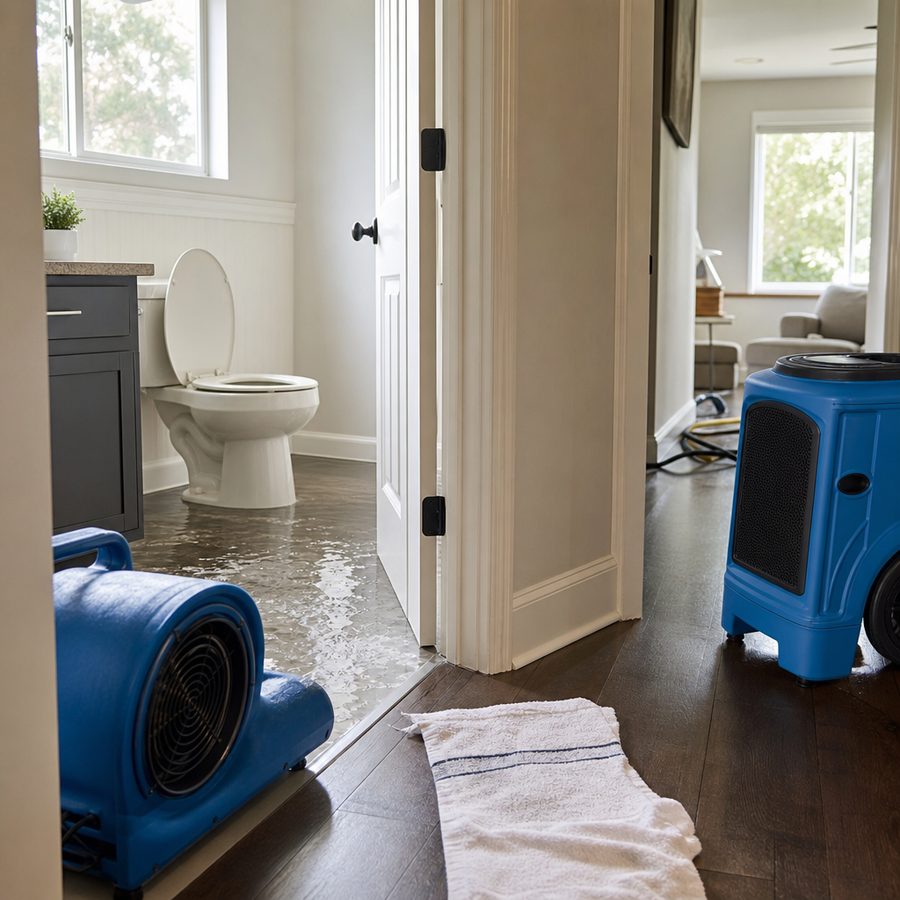
Why Toilet Overflow Is More Serious Than a Simple Mess
A toilet overflow is not just a plumbing inconvenience. The water involved is classified by the restoration industry as Category 2 or Category 3, depending on the source.
- Category 2 (gray water): A toilet tank line or supply valve failure. The water is not sanitary but does not contain solid waste.
- Category 3 (black water): Any overflow that carries sewage, waste, or material from a backed-up drain line. This is the category that demands immediate professional response.
In older Omaha neighborhoods like Dundee and Benson, aging combined sewer lines are a real factor. During heavy rain events, those lines can back up directly into toilets and floor drains, turning what looks like a simple overflow into a full sewage contamination event. We have seen this pattern repeatedly in homes built before 1960, where the lateral connections were never separated from the storm system.
Black water carries bacteria, viruses, and pathogens that survive on porous surfaces for days. Tile grout, drywall, wood subfloor, carpet padding, and insulation all absorb contaminated water and hold it far longer than the surface appears wet.
What Causes Toilet Overflows in Omaha Homes
Understanding the cause matters because it determines how far the water traveled before you noticed it.
Common causes we find on the job:
- Clogged drain or blocked trap causing bowl overflow
- Faulty fill valve that never shuts off, causing tank overflow onto the floor
- Sewage backup traveling up through the toilet drain (especially during Omaha's summer derechos and heavy thunderstorms when the combined sewer system gets overwhelmed)
- Frozen and burst supply lines during Omaha's sub-zero January cold snaps, which can flood a bathroom floor in minutes
- Wax ring failure on older toilets, allowing slow leaks that go unnoticed until the subfloor is already compromised
In La Vista and Elkhorn, many newer homes rely heavily on sump pumps to manage groundwater from clay-heavy soils. When spring snowmelt saturates the ground and overwhelms those pumps, pressure beneath a slab can force water up through any weak point, including toilet connections.
What To Do Right Now Before We Arrive
Time matters. Here is what you should do immediately after a toilet overflow:
- Shut off the water supply. The shutoff valve is located behind or below the toilet. Turn it clockwise until it stops. If the valve is stuck or broken, shut off the main water supply to the house.
- Do not use any electrical switches or outlets in the affected bathroom or any room directly below it. Water and electricity are a life-threatening combination.
- Remove standing water with towels or a wet-dry vacuum only if the source is Category 2 (clean supply line). Do not enter a room with visible sewage contamination without rubber boots and gloves.
- Move rugs, bath mats, and any items on the floor out of the wet area immediately. Do not place them on hardwood floors in adjacent rooms.
- Open windows if weather permits and run the bathroom exhaust fan to begin air circulation.
- Call your plumber to fix the source, and call us to handle the water damage cleanup. These are two separate scopes of work.
One important note on floors: we are frequently asked, "Can water-damaged hardwood floors be saved?" The honest answer is that it depends heavily on how quickly we start drying and how long the water sat. Hardwood in adjacent hallways or bedrooms can often be saved with aggressive drying if we get there within 24 to 48 hours. Subfloor damage and cupping that goes beyond that window usually requires replacement. We assess this on every job and give you a straight answer before work begins.
Our Toilet Overflow Cleanup Process
We follow IICRC S500 standards for water damage restoration. Here is what our process actually looks like, step by step.
Step 1: Assessment and moisture mapping We use thermal imaging cameras and calibrated moisture meters to trace exactly where the water traveled. This is especially important in two-story homes where an upstairs bathroom overflow can saturate ceiling materials directly above finished living space.
Step 2: Contamination containment For Category 3 jobs, we establish containment barriers, put on appropriate PPE, and treat the affected area as a biohazard zone. We do not simply mop and dry. Sanitizing comes before drying.
Step 3: Removal of unsalvageable material Saturated drywall, insulation, and carpet padding that cannot be effectively dried and disinfected are removed. We document everything for your insurance claim.
Step 4: Antimicrobial treatment We apply EPA-registered antimicrobial solutions to all affected surfaces, including subfloor, framing, and any remaining drywall edges.
Step 5: Structural drying We deploy commercial-grade air movers and dehumidifiers. Drying is monitored daily with moisture readings logged until all structural materials reach accepted drying goals.
Step 6: Mold inspection and testing If the water sat for more than 24 to 48 hours before we were called, we recommend mold inspection and testing before closing up walls. Mold can begin colonizing porous materials within 24 to 72 hours in Omaha's humid summer conditions. We partner with independent certified industrial hygienists for testing so results are unbiased, and we can remediate any growth found.
Insurance and Cost Realities
Most homeowner insurance policies in Nebraska cover sudden and accidental water damage, which includes toilet overflows. They typically do not cover damage caused by a slow leak you ignored for months.
What we recommend:
- Call your insurance carrier to open a claim before or immediately after calling us
- We document everything with photos, moisture logs, and written scope so your adjuster has everything needed
- We work directly with most major carriers and can communicate with your adjuster on your behalf
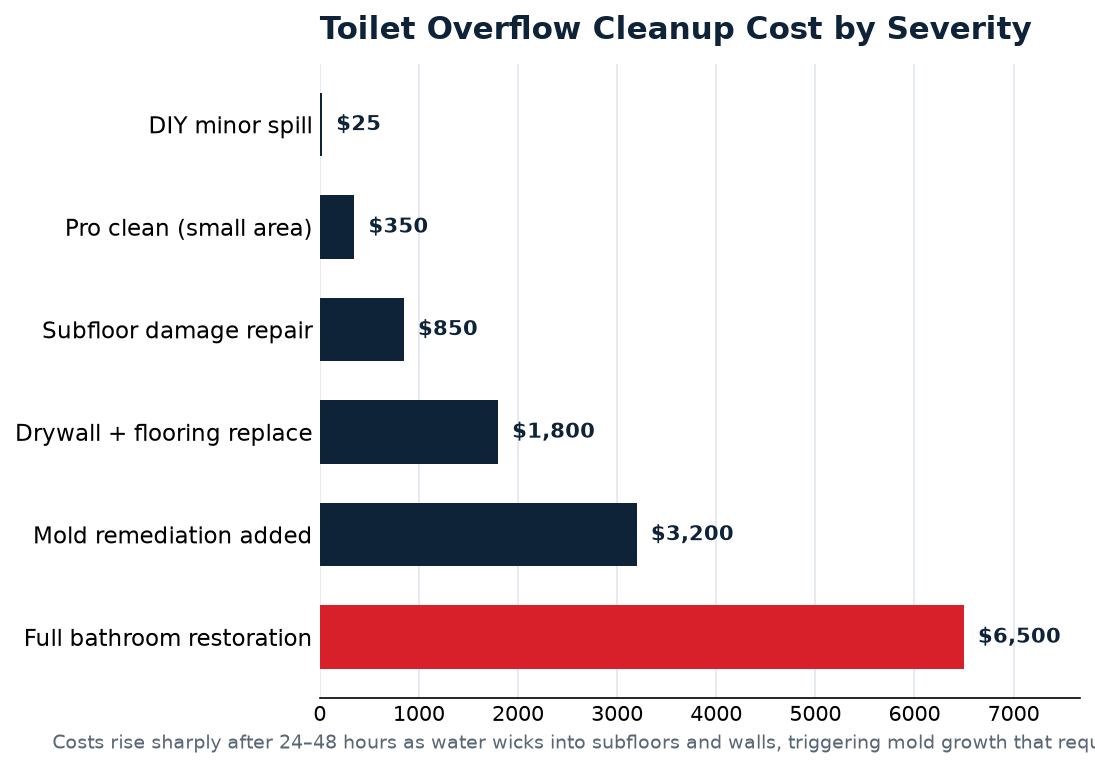
- Out-of-pocket costs without insurance typically range from a few hundred dollars for a minor Category 2 bathroom cleanup to several thousand dollars for a sewage backup affecting a finished basement
Frequently Asked Questions
Q: How long does toilet overflow cleanup take? Structural drying alone typically takes three to five days depending on how much material was affected and the ambient humidity. The full process including assessment, removal, antimicrobial treatment, and drying usually runs five to seven days before reconstruction can begin.
Q: Is the smell after a toilet overflow dangerous? The odor from a sewage-involved overflow indicates active pathogens. You should limit time in affected areas, keep children and pets out, and let us handle ventilation and sanitizing before you treat the space as safe again.
Q: My bathroom is on the second floor. How do I know if the ceiling below is damaged? Water travels to the lowest point available. We always inspect the ceiling and wall cavities of rooms directly below an upstairs overflow. In many Millard homes with finished lower levels, we find damage two floors below the source.
Q: What happens if mold is already growing? If we find active mold growth during our mold inspection and testing phase, we pivot immediately to remediation. We contain the area, remove affected material, treat the surface, and air-test after remediation to confirm clearance before reconstruction.
Q: What should I tell my insurance company when I call? Tell them the date and time it happened, the cause if you know it (overflow, backup, supply line failure), what rooms are affected, and that you have already taken steps to stop the water source. Ask for a claim number and your adjuster's direct contact before you hang up.
We serve Omaha, Bellevue, Papillion, La Vista, Millard, Elkhorn, Ralston, Gretna, Council Bluffs, Dundee, Benson, and surrounding communities. If you are in the middle of an overflow right now, call us. We can have a crew on the way within the hour.