
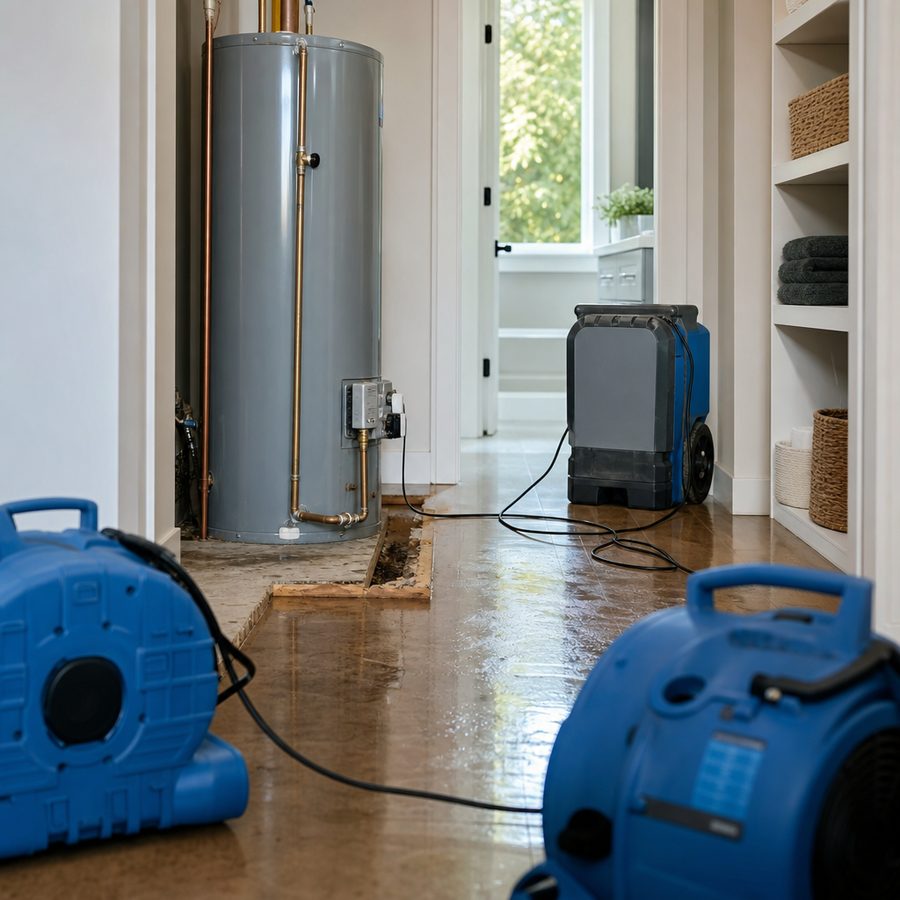
A leaking water heater does not announce itself politely. By the time you notice the puddle, the warped baseboard, or the musty smell creeping up from the basement, water has often been working against your home's structure for hours or even days. We work with homeowners across Omaha and the surrounding metro every week on exactly this situation, and we want you to understand what is actually happening, what we do about it, and how to protect yourself right now.
Why Water Heater Leaks Cause More Damage Than People Expect
Most homeowners picture a water heater leak as a manageable drip. The reality is that a failing tank or a burst pressure-relief valve can release 40 to 80 gallons in a very short window. In a finished basement, which is incredibly common in Millard and throughout southwest Omaha, that water has nowhere visible to go. It soaks into carpet padding, seeps under luxury vinyl plank or hardwood flooring, wicks up drywall, and saturates insulation inside wall cavities before anyone realizes there is a problem.
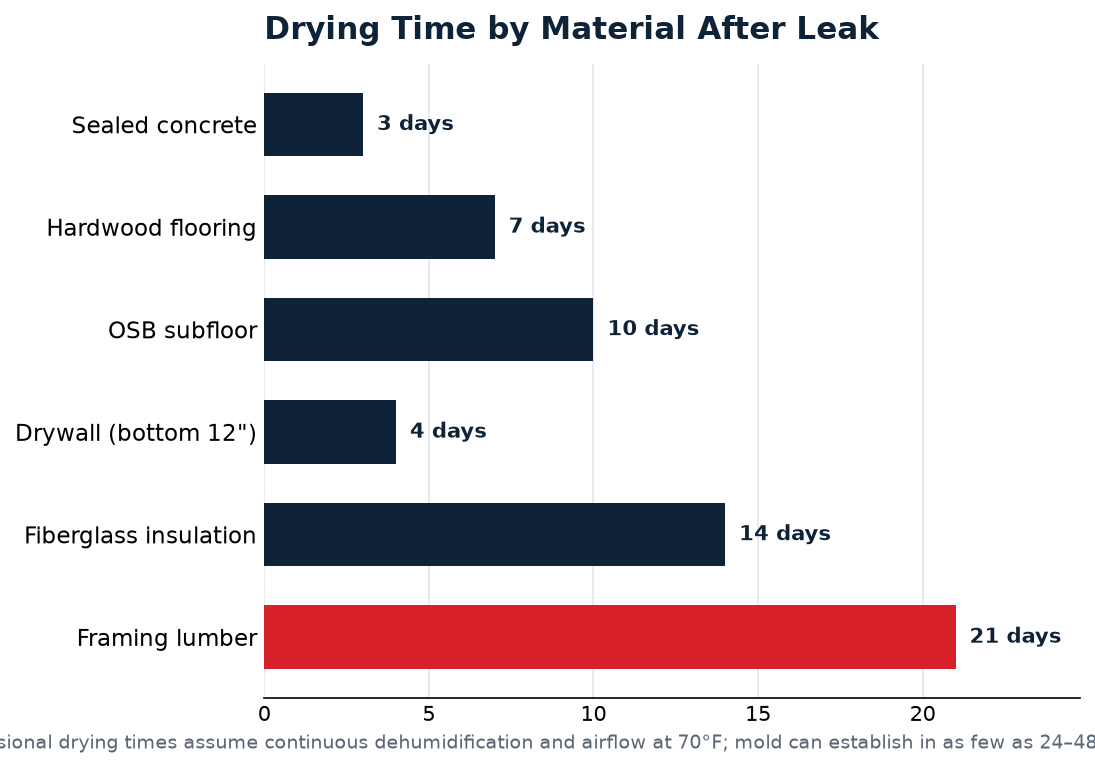
The damage compounds quickly because of Omaha's climate. Our humid summers mean that moisture trapped inside a wall cavity or under flooring does not dry on its own. It feeds mold growth, and mold can begin colonizing porous materials within 24 to 48 hours of a water event.
Common causes we see on calls across the metro:
- Sediment buildup from Omaha's moderately hard municipal water accelerating tank corrosion
- Failed anode rods in units older than eight years
- Loose or corroded supply line fittings, especially in older homes in Dundee and Benson where original plumbing connections may be decades old
- Pressure-relief valve failures caused by thermal expansion in closed plumbing systems
- Slow seam leaks on the tank bottom that go unnoticed until flooring shows damage
What To Do Right Now (Before We Arrive)
Acting in the first 30 minutes genuinely limits your losses. Here is the sequence we recommend:
- Shut off the water supply to the heater. There is a dedicated cold-water shutoff valve on the inlet line above the unit. Turn it clockwise until it stops.
- Turn off the power or gas. For electric units, flip the breaker. For gas units, turn the gas valve to the off position.
- Do not walk through standing water if you have any doubt about electrical safety. If water is near outlets, panels, or appliances, stay out and call us first.
- Remove what you can salvage. Furniture, area rugs, stored items, and personal belongings should come out of the wet area immediately.
- Do not run a standard household fan directly on wet drywall. It can distribute mold spores and often does not penetrate deep enough to dry wall cavities. Wait for our equipment.
- Document everything with photos and video before moving a single item. Your insurance adjuster will need this.
- Call your homeowner's insurance agent. Water heater leak damage is typically covered under a standard HO-3 policy as sudden and accidental water damage, though wear-and-tear exclusions apply to the unit itself.
Our Water Heater Leak Cleanup Process
We follow IICRC S500 standards on every job. Because Nebraska has no statewide mold licensing, IICRC certification is the meaningful quality signal you should look for when hiring any restoration company here. Here is what our process looks like from the moment our crew arrives:
Moisture Mapping We use thermal imaging cameras and calibrated moisture meters to trace exactly where water traveled. This matters enormously in finished basements, because water under a floating floor can spread six to eight feet beyond the visible wet area.
Controlled Demolition (When Necessary) Saturated drywall, insulation, and baseboards cannot be dried in place. We remove the minimum material needed to expose wet cavities to airflow. We explain every cut to you before we make it.
Industrial Drying Equipment Our commercial-grade dehumidifiers and air movers move a volume of air that household equipment cannot match. We monitor moisture readings daily and adjust equipment placement based on data, not guesswork.
Can Water-Damaged Hardwood Floors Be Saved? This is one of the most common questions we get on water heater calls. The honest answer is: sometimes, if we act fast enough. Solid hardwood that has been wet for fewer than 24 hours and has not buckled significantly can often be dried in place using specialty drying mats and targeted airflow. Engineered hardwood is more forgiving in some respects and less in others. Flooring that has been wet for multiple days, or that shows significant cupping and buckling, typically cannot be restored without replacement. We assess every floor honestly because we would rather tell you the truth upfront than charge you for a drying attempt that will not work.
Mold Inspection and Testing If any material shows visible mold growth, or if our moisture readings suggest the water was present long enough to support growth, we recommend mold inspection and testing before we close up walls. Douglas County requires a licensed mold assessment for larger remediation jobs, and we work with qualified assessors to make sure that documentation is in order. This protects you if you ever sell the home and need to disclose the event.
Why Omaha's Local Conditions Make Professional Drying More Important
Omaha is not Phoenix. Our summer dew points regularly climb into the oppressive range, which means the outdoor air that naturally ventilates a home is already carrying significant moisture. Opening windows does not help the way homeowners assume it will.
In areas like La Vista and Elkhorn, where newer construction relies heavily on sump pumps and sits on clay soils that hold groundwater close to the foundation, a water heater leak in the basement arrives on top of soil moisture that is already pushing against the slab. The combination means drying times are longer and mold risk is higher than the national average would suggest.
For homeowners in Ralston with older housing stock and aging infrastructure, a water heater failure sometimes reveals secondary problems like deteriorated subfloor framing or existing moisture damage that was never addressed. We flag these findings as part of our inspection so you can make informed decisions.
Costs and Insurance
Professional water heater leak cleanup in the Omaha area typically ranges from $1,500 to $6,000 depending on the size of the affected area, the materials involved, and whether mold remediation is required. Finished basement jobs on the larger end of that range are common in Millard and similar neighborhoods.
Most standard homeowner policies cover the cleanup when the leak was sudden and accidental. The water heater replacement itself is usually not covered. We provide thorough documentation, including moisture logs, photos, and scope of work, to support your claim.
Frequently Asked Questions
How long does water heater leak cleanup take? Structural drying typically takes three to five days, monitored with daily readings. Jobs requiring mold remediation or reconstruction take longer. We give you a realistic timeline after the initial assessment, not before.
Do I need to leave my home during the process? Usually not. Our equipment is loud, but most homeowners stay in the home and simply avoid the work area. We discuss access and comfort expectations with every customer before equipment is placed.
What if I find mold after the drying is finished? Call us immediately. Mold that appears after a drying job sometimes indicates a moisture source that was not fully identified the first time. We will reinspect at no charge if the concern arises within a reasonable window after our work is complete.
What should I do when a pipe bursts in Omaha's deep freeze? The steps overlap with a water heater emergency. Shut off the main water supply, call a plumber to address the break, and call us for the water damage. Omaha winters regularly push pipes past their limits, especially in uninsulated exterior walls of older homes in Dundee and Benson. The worst mistake is waiting until spring to address the moisture, because mold does not wait.
How do I know if my floors can be saved after a water heater leak? We assess the species of wood, the construction type (solid versus engineered), how long the floor was wet, and whether the subfloor is compromised. We use moisture meters to test the actual moisture content of the wood and give you a direct recommendation. There is no universal answer, which is why we look before we advise.