
When water starts dripping from your ceiling, or worse, when you notice a spreading brown stain that wasn't there yesterday, the clock starts ticking. We have worked with homeowners across Omaha and the surrounding metro for years, and we know how fast ceiling water damage can go from a minor inconvenience to a serious structural and health problem. This page walks you through exactly what causes it, what our repair process looks like, and what you should do right now if you are dealing with an active leak.
Why Ceiling Water Damage Is So Common in Omaha
Omaha's climate and housing stock create a perfect set of conditions for ceiling water damage to develop quickly and hide for a long time before becoming obvious.
Frozen and burst pipes during winter cold snaps are one of the most sudden causes we respond to. When January temperatures drop below zero, supply lines in exterior walls or unheated attic spaces can freeze and rupture. The water often travels silently inside wall cavities before it saturates the ceiling drywall below. By the time a homeowner notices the stain, the framing above may already be wet for days.
Spring snowmelt and saturated ground push enormous volumes of water toward foundations across the metro. In La Vista, where many newer homes rely entirely on sump pumps, a single power outage during a spring storm can allow water to migrate upward through basement ceiling assemblies. In Millard, finished basements with drop ceilings are especially vulnerable because the damage hides behind tiles until the framing above is already compromised.
Summer derechos and thunderstorm wind events drive rain under roofing shingles, through soffit vents, and around chimney flashings. We have documented this pattern repeatedly in Dundee and Benson, where century-old homes may have original roof decking and flashings that were never designed to handle the wind speeds a modern derecho produces.
Aging plumbing and sewer infrastructure is another persistent factor. Ralston has some of the oldest housing stock in the metro, and many homes there have galvanized supply lines that corrode from the inside out. A slow pinhole leak inside a wall can drip onto a ceiling plate for months before the stain appears.
What Ceiling Water Damage Actually Looks Like (and What It Hides)
Visible staining is just the surface signal. Here is what is often happening behind the drywall or plaster:
- Saturated insulation holding moisture and feeding mold growth long after the leak stops
- Swollen or delaminated drywall that has lost structural integrity
- Wet ceiling joists or rafters beginning the early stages of wood rot
- Compromised electrical wiring or junction boxes above the wet area
- Mold colonies already established within 24 to 48 hours of the initial wetting
We take ceiling water damage seriously as a whole-system problem, not just a cosmetic one. That is why our assessment always goes beyond the visible stain.
Our Ceiling Water Damage Repair Process
1. Emergency Stabilization
When you call us, our first priority is stopping ongoing damage. If the source is an active pipe burst, we coordinate with your plumber or handle emergency shutoff. We place containment to protect flooring and contents below the affected area.
2. Moisture Mapping and Mold Inspection and Testing
We use thermal imaging cameras and calibrated moisture meters to trace exactly how far the water traveled. This matters enormously because water follows framing cavities and gravity, not straight lines. If the moisture readings or visual evidence suggest microbial growth, we recommend professional mold inspection and testing before any drywall is closed back up. Skipping this step and sealing wet materials inside a ceiling is one of the most common mistakes we see homeowners and less experienced contractors make.
3. Controlled Demolition and Drying
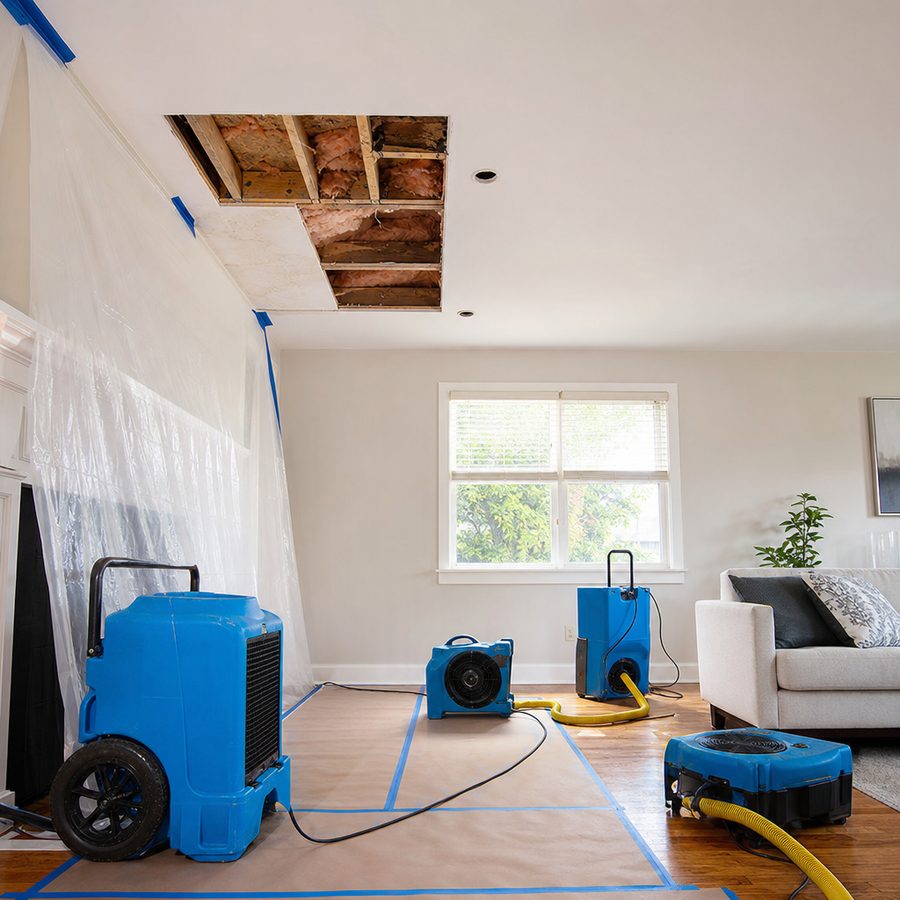
We remove only what is necessary. For typical ceiling damage, this means opening the affected drywall, extracting saturated insulation, and positioning commercial-grade air movers and dehumidifiers to dry the structural framing to acceptable moisture content. We document moisture readings daily and do not close up the ceiling until readings confirm the structure is genuinely dry.
4. Structural Assessment
If joists or rafters show signs of rot or deflection, we bring in a structural assessment before moving to repairs. This is especially relevant in older Benson or Dundee homes where decades of minor moisture events may have already weakened framing before this incident occurred.
5. Rebuild and Finish
Once everything is dry and clean, we hang new drywall, tape, mud, and texture to match the existing ceiling as closely as possible. We prime with a stain-blocking product before painting so previous water lines do not bleed through.
What To Do Right Now If Your Ceiling Is Leaking
- Turn off the water supply at the nearest shutoff if you suspect a pipe. If you cannot locate the source, shut off the main.
- Relieve pressure in the ceiling by carefully puncturing the lowest point of a sagging ceiling bubble with a screwdriver and placing a bucket below. This prevents a larger collapse.
- Move belongings and electronics out of the affected area immediately.
- Document everything with photos and video before any cleanup begins. Your insurance adjuster will need this.
- Call us so we can begin drying within the first few hours. The 24 to 48 hour window before mold begins to colonize wet materials is real, and faster response consistently reduces total repair costs.
Costs, Insurance, and What to Expect
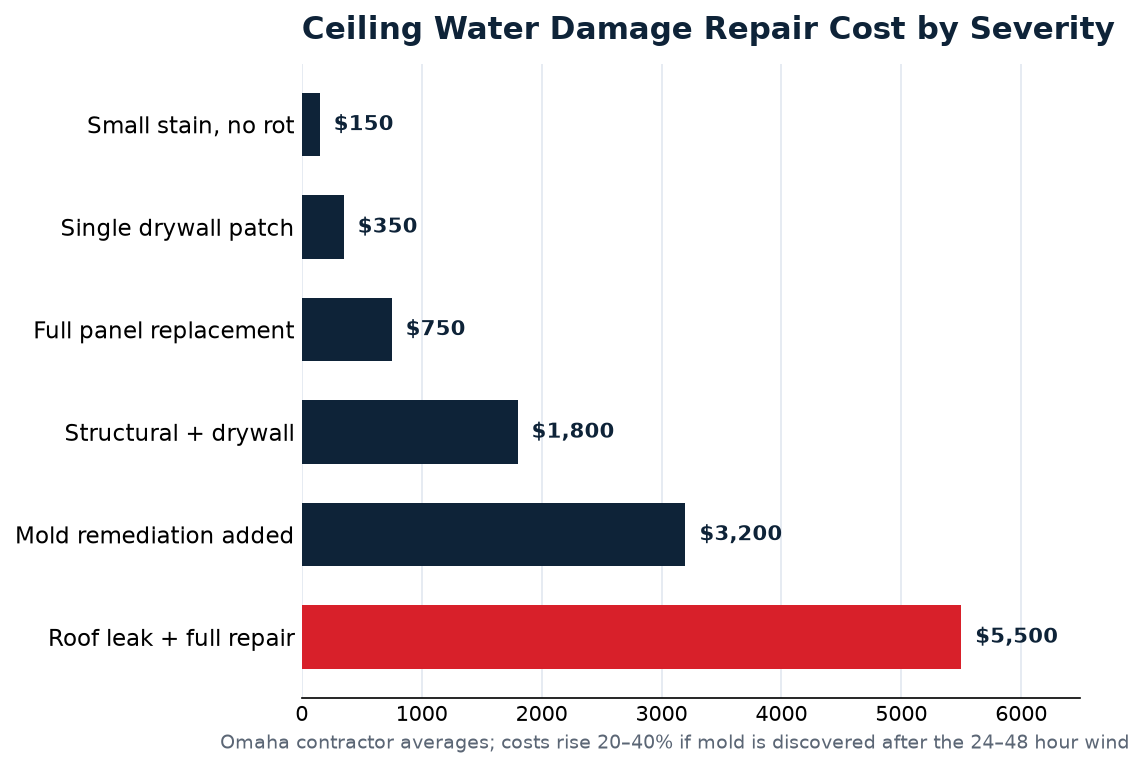
Ceiling water damage repair in Omaha typically ranges from a few hundred dollars for a small isolated stain to several thousand dollars when structural drying, mold remediation, and full ceiling replacement are involved. The variables that drive cost upward are the size of the wet area, how long the moisture was present before discovery, and whether mold inspection and testing confirms active growth requiring remediation.
Most homeowners insurance policies cover sudden and accidental water damage, including burst pipes and certain roof-related intrusions. They typically do not cover gradual leaks or flooding from outside the home. If you are in the Papillion Creek watershed or near the Missouri River floodplain in Bellevue or Council Bluffs, flood insurance through the NFIP is a separate policy and is worth reviewing before you need it.
We work directly with all major insurance carriers, provide detailed moisture documentation and photo reports, and can communicate with your adjuster on your behalf.
Frequently Asked Questions
How long does ceiling water damage repair take? Structural drying typically takes three to five days depending on the extent of saturation and ambient humidity. The full repair including drywall, texture, and paint usually adds another one to three days on top of that. We give you a realistic timeline after our initial assessment, not a guess.
Can Water-Damaged Hardwood Floors Be Saved? Often yes, if drying begins quickly. Water that drips from a ceiling onto hardwood floors can cause cupping and buckling, but wood that is dried within the first 24 to 48 hours frequently returns to an acceptable condition. We assess flooring moisture as part of our initial inspection so nothing gets overlooked.
What To Do When a Pipe Bursts in Omaha's Deep Freeze? Shut off water at the main immediately, call a licensed plumber to repair the pipe, and call us at the same time so drying equipment can be staged as soon as the repair is complete. Do not wait for the plumber to finish before contacting a restoration company. Starting drying early is the single most effective way to limit damage.
Do I need mold inspection and testing before repairs start? If the ceiling has been wet for more than 48 hours, or if you see or smell anything suggesting mold, we recommend mold inspection and testing before closing the ceiling back up. It protects your family and protects you from liability if you sell the home later.
Will my repaired ceiling look the same as before? We match texture and sheen as closely as possible. In most cases the repair blends well, though older homes with hand-applied plaster or unique texture patterns may show some variation. We are honest with homeowners about what to expect before we start.