
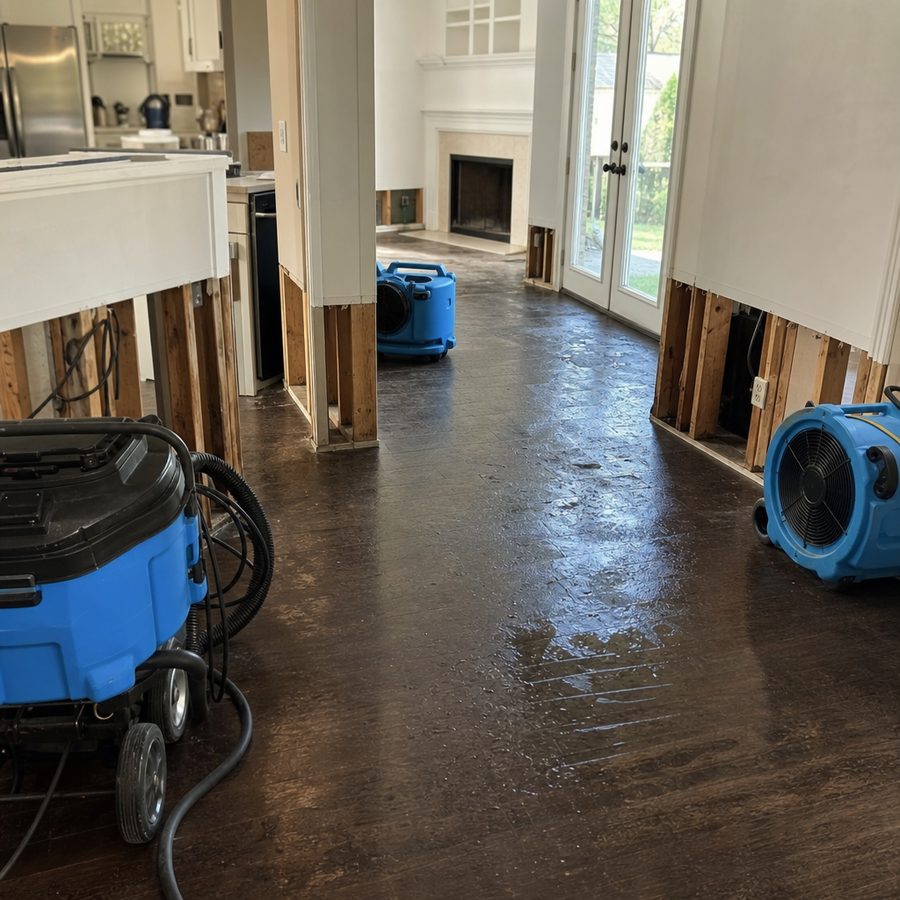
When sewage backs up into your basement or floodwater from the Missouri River pushes through your foundation, you are not dealing with ordinary water damage. You are dealing with Category 3 black water, the most dangerous classification of water intrusion, and the clock starts running the moment it enters your home. Our crews respond to these emergencies across the Omaha metro every day, and we want you to understand exactly what you are facing and what a proper cleanup looks like.
What Makes Water "Category 3" and Why It Matters
Water damage is classified on a three-tier scale. Category 1 is clean water from a supply line. Category 2 (gray water) carries some contaminants. Category 3 black water is grossly unsanitary and can contain:
- Raw sewage and fecal bacteria (E. coli, Salmonella)
- Hepatitis A and other viruses
- Parasites and chemical contaminants
- Pesticides and heavy metals carried in floodwater
Any water that has touched the ground outside, backed up through a floor drain, or come in through a sewer lateral is presumed Category 3. This is not a cleanup job for a shop vac and bleach. Direct skin contact poses genuine health risks, and airborne pathogens become a concern once materials begin to dry without proper containment.
Why Omaha Homes Face This Risk More Than Most
Several specific conditions in our metro create recurring black water events.
Aging sewer infrastructure in older neighborhoods. In Ralston and Dundee, many homes sit above sewer laterals that are 60 to 100 years old. These clay or cast-iron pipes crack, root-intrude, and partially collapse. During a heavy summer thunderstorm, combined sewer systems overflow and push raw sewage backward into basements. Residents in these neighborhoods often discover the backup hours after it began because finished basement spaces mask the odor initially.
Papillion Creek flooding and Sarpy County floodplains. Homeowners in Papillion, Bellevue, and La Vista know that the Papillion Creek watershed can rise with alarming speed during a derecho rain event. When that creek system overtops or when the Missouri River floodplain backs up groundwater pressure, the water entering basements is already contaminated with agricultural runoff, animal waste, and chemical residues. A sump pump failure during one of these events, common when power goes out during summer storms, means black water intrusion even in newer La Vista homes that were built with sump-pump-dependent drainage systems.
Frozen and burst supply lines that flood finished spaces. During Omaha's sub-zero January cold snaps, supply lines in exterior walls and unheated crawl spaces burst without warning. While the water itself starts as Category 1, it becomes Category 3 quickly if it contacts sewage-carrying drain lines, sits more than 24 to 48 hours, or saturates building materials that already harbor mold. In Benson and Elkhorn, where clay soils hold moisture around foundations year-round, baseline humidity in crawl spaces accelerates this contamination timeline.
What To Do Right Now (Before We Arrive)
Do not enter a flooded basement if you are unsure whether electrical outlets or appliances are submerged. Call your utility to shut off power if needed.
Steps you can safely take while waiting for our crew:
- Keep children and pets out of the affected area entirely
- Do not run HVAC systems, which will spread contaminated air through ductwork
- Do not attempt to remove standing water yourself without personal protective equipment (gloves, N95 mask, waterproof boots at minimum)
- Photograph every affected room and every damaged item before anything is moved
- Call your homeowner's insurance company to open a claim and ask specifically about sewer backup riders, as many standard policies exclude it unless you purchased an endorsement
- Locate your main water shutoff if a burst pipe is the source
Our Category 3 Cleanup Process, Step by Step
We follow IICRC S500 and S520 standards. Here is what that actually looks like inside your home.
1. Safety assessment and containment. We establish containment barriers using plastic sheeting and negative air pressure machines with HEPA filtration. This prevents cross-contamination to unaffected areas of your home.
2. Extraction. Truck-mounted extractors remove standing water far more effectively than portable units. We pull water from carpet, subfloor gaps, and wall cavities.
3. Removal of contaminated materials. Category 3 events almost always require tear-out. Drywall that wicked sewage water, saturated insulation, contaminated carpet and pad, and affected flooring are bagged, sealed, and disposed of per Nebraska Department of Environment and Energy guidelines. This is not optional. Cleaning and drying these materials in place leaves pathogens behind.
4. Antimicrobial treatment. We apply EPA-registered disinfectants to all structural surfaces, including concrete floors, wood framing, and block walls.
5. Structural drying. Industrial air movers and dehumidifiers run continuously. We monitor moisture readings in walls and subfloors daily until readings return to acceptable baselines.
6. Mold inspection and testing. Because black water events create ideal mold conditions, we conduct mold inspection and testing after drying is complete and before any reconstruction begins. In a home with pre-existing basement moisture (common in Millard finished basements and century-old Dundee homes), we may recommend air sampling to verify the space is safe.
Hardwood Floors and Black Water: An Honest Answer
Homeowners frequently ask us whether their hardwood floors can survive a black water event. The straightforward answer is: rarely, and we will tell you why rather than give you false hope.
Hardwood absorbs contaminated water deep into the grain. Even if the wood dries without significant cupping or buckling, the pathogens absorbed into the wood fiber cannot be reliably eliminated by surface disinfection. For a Category 3 event, most restoration professionals and your insurance adjuster will agree that contaminated hardwood must be removed. The exception is if the exposure time was very short (under a few hours) and the wood is solid rather than engineered with a wood-fiber core. We assess each floor individually and document our findings for your insurance claim.
Understanding Costs and Insurance
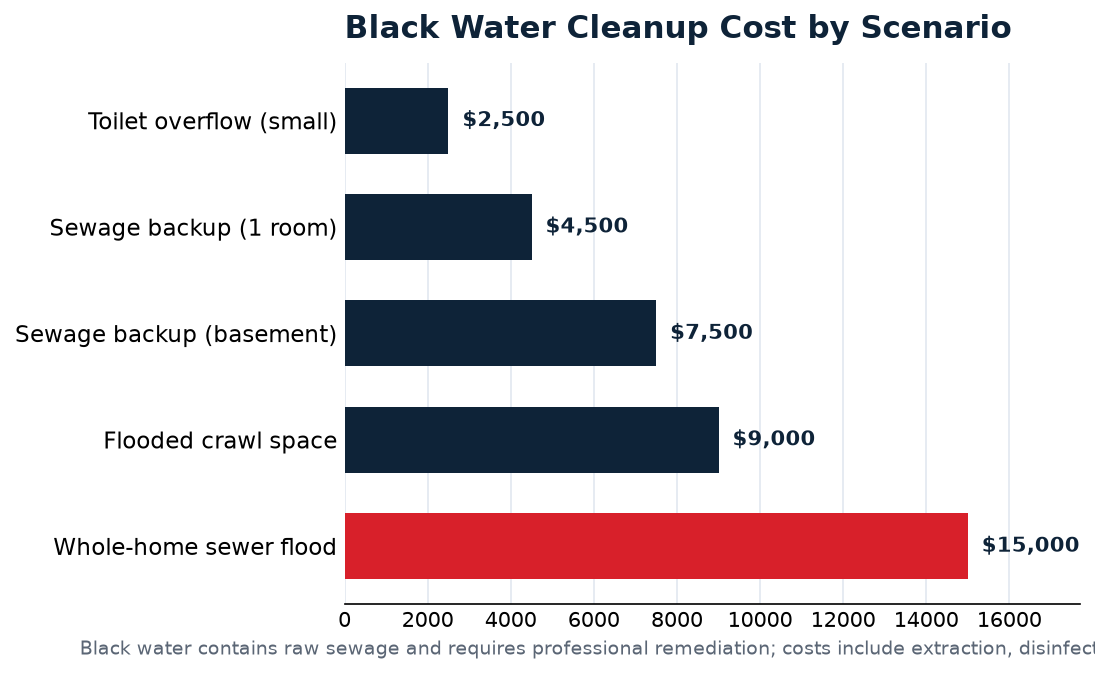
Category 3 cleanup costs in Omaha typically range from $3,000 for a minor basement backup to $15,000 or more for a full finished basement with significant tear-out and extended drying time. Reconstruction costs are additional.
Key insurance points:
- Standard homeowner's policies cover sudden and accidental water damage but often exclude ground surface flooding and sewer backup
- Flood insurance through NFIP is separate and relevant for homes in Sarpy County floodplains or Council Bluffs flood zones
- Document everything with photos and video before we begin work, your adjuster will request this
- We work directly with most major carriers and can provide a detailed scope of loss for your claim
Frequently Asked Questions
How quickly does Category 3 water create a mold problem? Mold can begin colonizing porous materials within 24 to 48 hours in warm, humid conditions. Omaha summers make this timeline even shorter. This is why we emphasize same-day or next-morning response for sewage backup events.
Is it safe to stay in my home during the cleanup? It depends on the extent of contamination and your home's layout. If affected areas can be fully isolated and your HVAC is shut down to those zones, occupancy is sometimes possible. We assess this on arrival and give you a straight answer.
My sump pump backed up during a storm. Is that black water? Yes. When a sump pit overflows or discharges back into your basement during a system failure, that water has contacted groundwater and potentially the surrounding soil. It is treated as Category 3 regardless of how clean it looks.
Will my mold inspection and testing results affect my insurance claim? Positive mold test results after a water event typically support your claim and justify additional remediation line items. We document our findings in a format your adjuster recognizes.
What happens if I wait a few days to call because the damage seems minor? Waiting converts a manageable cleanup into a mold remediation project. Materials that could have been dried in place require tear-out after mold establishes. Costs increase significantly, and health risks compound. If you have any doubt, call us for an assessment before deciding to wait.