
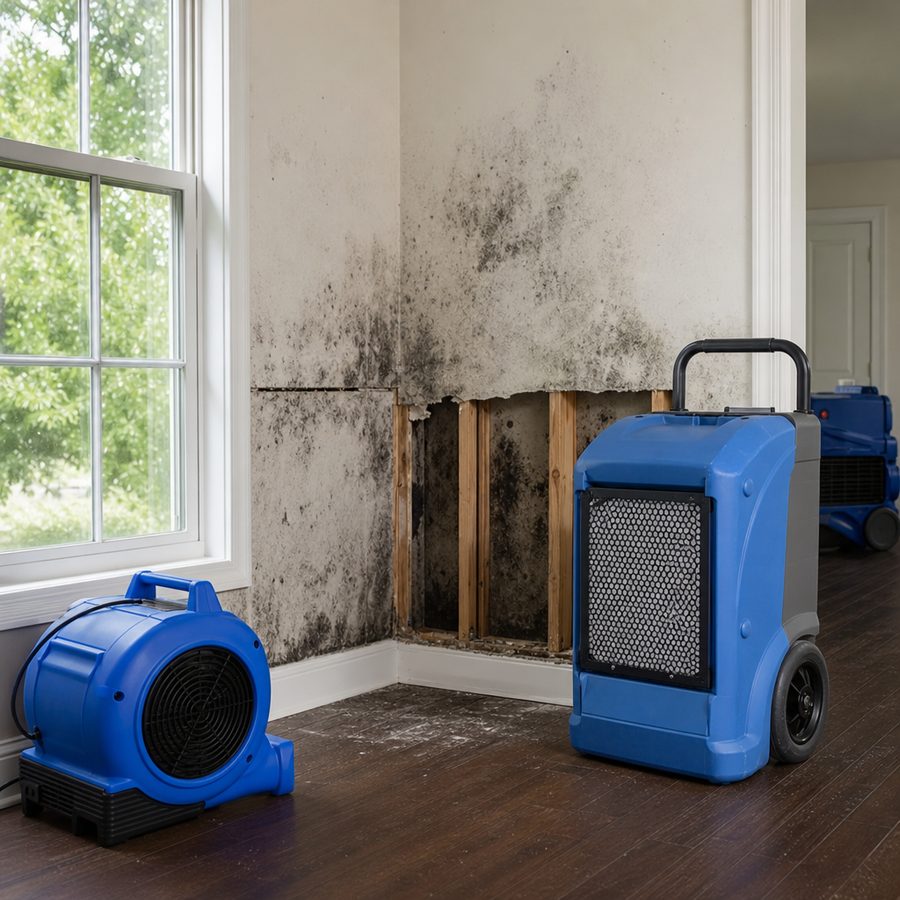
If you have found dark, fuzzy growth behind drywall, under flooring, or spreading across a basement wall, we understand the alarm you are feeling right now. Black mold is not just an eyesore. In the right conditions it produces mycotoxins that affect air quality and health, and in Omaha's climate it finds plenty of opportunities to take hold. Our crews respond to mold emergencies across Douglas and Sarpy counties, and this page explains exactly what we do, why Omaha's specific conditions matter, and what you should do before we arrive.
Why Black Mold Thrives in Omaha Homes
Omaha sits in a humidity corridor that swings between brutal summer heat and deep winter cold. That combination creates repeated condensation cycles inside wall cavities and crawl spaces. Add in the specific construction and geography of local neighborhoods and you get conditions that almost encourage mold growth.
- Finished basements in Millard. Millard is one of the largest residential areas in southwest Omaha, and the majority of homes there have finished lower levels. Finished drywall and carpet hide moisture intrusion for months. By the time a homeowner notices a smell, colonies are often already established behind the wall board.
- Clay soils in Elkhorn. Elkhorn's rapidly expanding west Omaha neighborhoods sit on dense clay that does not drain well. After a heavy rain, hydrostatic pressure pushes moisture through foundation walls even in newer construction.
- Older housing stock in Benson and Dundee. Century-old homes in Dundee and the aging inventory in Benson often lack proper vapor barriers and have plaster or older drywall that absorbs moisture quickly. We regularly find mold growth that has been present for years behind original plaster walls.
- Papillion Creek flooding. Homes near the Papillion Creek watershed experience flash-flood conditions during heavy rain events. Water that enters a basement and is not completely dried within 24 to 48 hours will begin supporting mold colonization.
- Sump-pump dependence in La Vista. Many La Vista homes were built with the assumption that a sump pump runs continuously during wet seasons. A single pump failure during a storm can flood a finished basement and set up mold conditions within two days.
What Black Mold Actually Is (and Is Not)
The term "black mold" typically refers to Stachybotrys chartarum, a slow-growing species that needs prolonged moisture to establish. However, many other mold species appear black or dark green, including Cladosporium and Aspergillus. Color alone does not confirm species. Only laboratory analysis through proper mold inspection and testing can identify what you are dealing with. We do not cut corners here. We collect samples, send them to an accredited third-party lab, and interpret results for you before remediation begins.
Our Black Mold Removal Process, Step by Step
We follow the IICRC S520 Standard for Professional Mold Remediation. Because Nebraska has no statewide mold licensing requirement, IICRC certification is the primary signal that a contractor is trained to the correct industry standard. Here is what our process looks like in your home.
- Emergency assessment. We walk the property, use moisture meters and thermal imaging cameras, and identify the source of moisture feeding the mold. Removing mold without fixing the moisture source guarantees it returns.
- Mold inspection and testing. Air and surface samples are collected and sent to the lab. For larger jobs in Douglas County, licensed mold assessment is required under local code, and we coordinate that step properly.
- Containment. We seal off the affected area with polyethylene sheeting and establish negative air pressure using HEPA-filtered air scrubbers. This prevents spores from spreading to unaffected rooms during removal.
- Removal of contaminated materials. Porous materials including drywall, insulation, and carpet padding that cannot be cleaned to clearance standards are removed and bagged in sealed 6-mil poly bags before disposal.
- HEPA vacuuming and antimicrobial treatment. All surfaces in the containment zone are HEPA-vacuumed, then treated with an EPA-registered antimicrobial agent.
- Structural drying. If elevated moisture remains in framing or subfloor, we deploy commercial dehumidifiers and air movers. City of Omaha permits may be required for structural drying and reconstruction, and we handle that paperwork.
- Clearance testing. A post-remediation verification sample confirms spore counts have returned to normal background levels before we close the walls back up.
What To Do Right Now, Before We Arrive
- Turn off your HVAC system if mold is visible. Forced air spreads spores through ductwork.
- Do not disturb or scrub visible mold growth.
- Ventilate the space if you can open a window to the outside, but do not point a fan at the affected wall.
- Photograph everything for your insurance claim.
- If a burst pipe or appliance failure caused the moisture, see our guide on what to do when a pipe bursts in Omaha's deep freeze. Winter pipe failures are a leading cause of the mold cases we handle each year.
- If you have water-damaged hardwood floors, do not assume they are ruined. Our separate resource on whether water-damaged hardwood floors can be saved walks through the timeline and conditions that determine whether restoration is possible.
Costs and Insurance
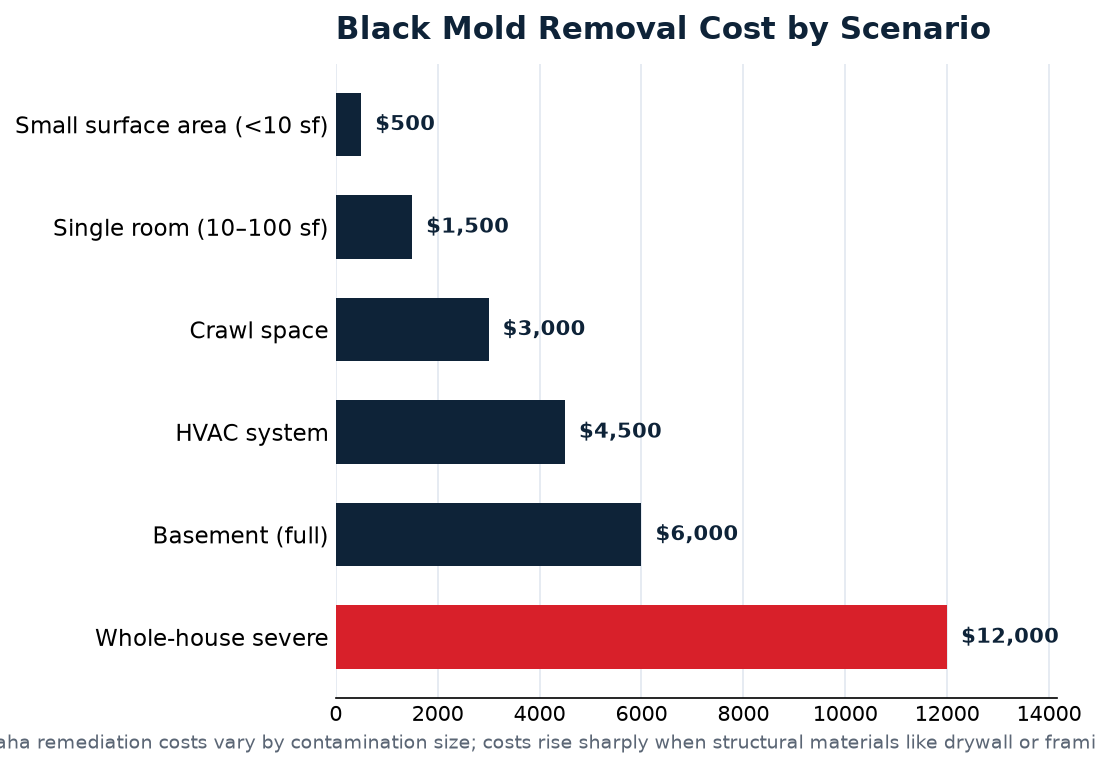
Black mold removal costs in Omaha vary based on square footage, the number of affected rooms, and whether structural materials need replacement. A small bathroom job may run a few hundred dollars. A finished basement in Millard with mold behind multiple walls and under flooring can reach into several thousand dollars.
Most homeowners insurance policies cover mold remediation when it results from a sudden covered peril such as a burst pipe or appliance overflow. Policies typically do not cover mold that developed because of long-term neglect or a slow undetected leak. We provide detailed documentation including moisture readings, lab reports, and photo logs to support your claim. We work directly with adjusters and can provide line-item estimates in the formats carriers require.
Frequently Asked Questions
Is the black mold I see always Stachybotrys? No. Many mold species appear dark. Only lab testing through mold inspection and testing confirms the species. We collect samples before any remediation work begins so you know exactly what you are dealing with.
My home is in Bellevue near Offutt AFB in the Missouri River floodplain. Does that affect my mold risk? Yes. Homes in the Bellevue and Council Bluffs areas near the Missouri River floodplain face elevated groundwater and flood intrusion risk. Even without a direct flood event, seasonal high water tables push moisture through slabs and foundation walls. We see this pattern regularly and factor it into our assessment.
How long does the remediation process take? Most single-room jobs take one to three days. A larger finished basement with multiple affected areas typically takes three to five days including drying time and post-remediation testing.
Can I stay in my home during black mold removal? It depends on the location and extent of the mold. We can often allow occupancy in unaffected areas of the home while maintaining proper containment. We will give you a clear recommendation during the initial assessment based on your specific situation.
What happens if mold comes back after remediation? If mold returns after our work, it means a moisture source was not fully resolved. We include a moisture source correction in every project because treating mold without fixing the water problem is not real remediation. If new moisture intrusion occurs after our work is complete, we will come back out to assess the new source.
Call us any time. We serve Omaha, Millard, Elkhorn, Bellevue, Papillion, La Vista, Ralston, Gretna, Council Bluffs, and surrounding communities. Our crews are local, our certifications are current, and we will give you straight answers from the first phone call.