
When a refrigerator ice maker line fails at 2 a.m., or a washing machine hose lets go while you are at work, the water does not wait for a convenient moment. We have responded to appliance leak water damage calls across Omaha and the surrounding metro for years, and we know how quickly a few gallons on a kitchen floor can become a saturated subfloor, a ruined cabinet base, and the beginning of a mold problem. This page walks you through what is actually happening inside your home, what you should do right now, and how our crews work to get your home back to normal.
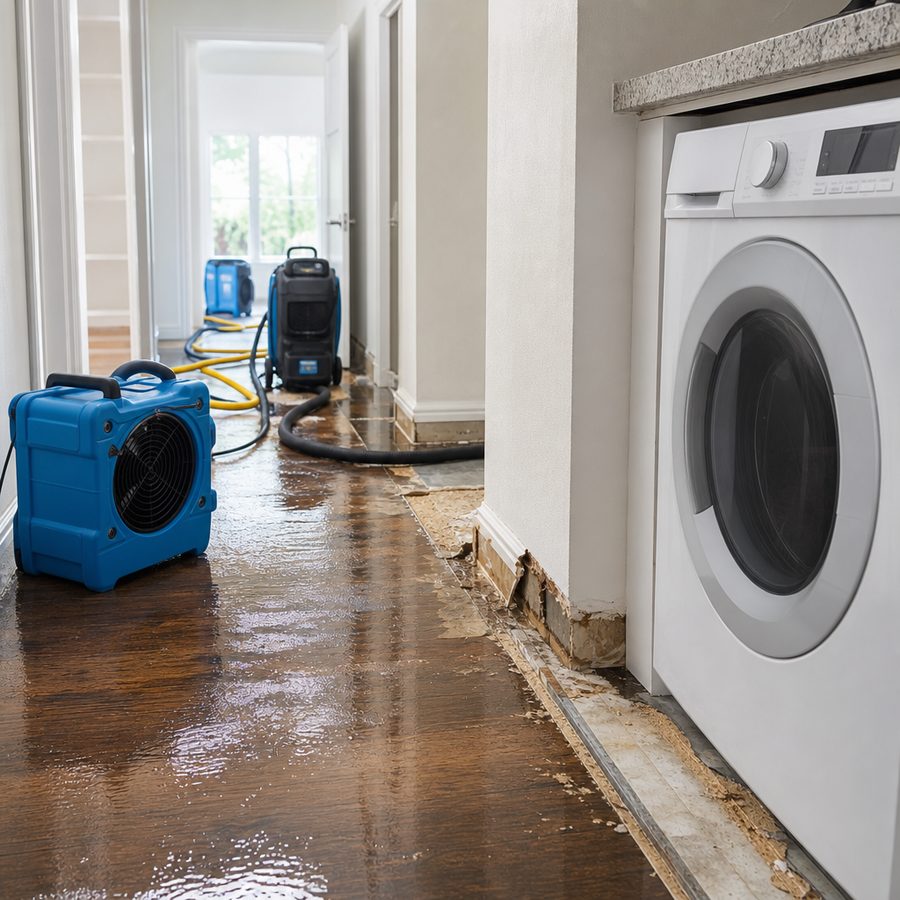
Why Appliance Leaks Are More Destructive Than They Look
Appliances sit in one place for years. The water they release does not just pool on the surface. It migrates under flooring, into wall cavities, beneath cabinets, and down into subfloor materials before you ever notice a puddle. In homes with finished basements, which are extremely common in Millard and throughout southwest Omaha, a refrigerator leak on the main floor can wick down through the subfloor and show up as ceiling staining in the basement. By the time that staining is visible, the structural materials in between have been wet for hours or days.
Common appliance sources we see:
- Refrigerator water supply lines (especially braided plastic lines that crack with age)
- Washing machine inlet hoses and drain connections
- Dishwasher door gaskets and drain hose fittings
- Water heaters (both tank-style and the condensate lines on tankless units)
- Whole-house humidifiers connected to furnace systems
- Ice makers and under-sink water filtration systems
Older housing stock compounds the risk. In neighborhoods like Dundee and Benson, where many homes were built in the early to mid-1900s, original hardwood floors and plaster walls absorb moisture differently than modern materials. Hardwood can cup, buckle, and separate. The question we hear most often from those homeowners is: Can water-damaged hardwood floors be saved? The honest answer is yes, in many cases, if drying begins within 24 to 48 hours. Once wood has been saturated past that window, the cells begin to distort permanently. Our crews use moisture meters to read every board in an affected area, not just the ones that look damaged, because the moisture front travels further than it appears.
What To Do Right Now Before We Arrive
Speed is the most important variable in appliance leak water damage situations. Here is what you should do immediately.
- Shut off the water supply to the appliance. For refrigerators and ice makers, look for the saddle valve on the cold water line behind the unit or under the sink. For washing machines, turn the two wall valves behind the machine fully clockwise.
- Turn off electricity to the affected area at your breaker panel if water is near outlets, under appliances, or pooling near your electrical panel.
- Remove standing water with towels, a wet vac, or a mop. Do not use a regular household vacuum.
- Pull back area rugs immediately. Rugs trap moisture against flooring and dramatically accelerate mold growth.
- Open cabinet doors under affected areas so air can circulate.
- Do not place fans directly on hardwood floors until a professional has assessed moisture levels. Improper drying of hardwood can cause additional warping.
- Take photos and video of everything before cleanup begins. Your insurance adjuster will need this documentation.
How Our Restoration Process Works
When our crews arrive, we start with a full moisture assessment using thermal imaging cameras and calibrated moisture meters. We map where the water has traveled, including areas that look dry on the surface. This matters especially in homes with laminate flooring or tile, where water migrates laterally under the surface before you see any visible sign.
Our process typically follows these stages:
Extraction and emergency drying. We remove standing water, then deploy industrial dehumidifiers and air movers sized to the actual affected area. Residential box fans are not sufficient for structural drying.
Material assessment. We determine which materials can be dried in place and which need to be removed. Wet drywall below a certain moisture threshold can often be saved. Wet insulation almost always cannot.
Mold inspection and testing. If the leak has been present for more than 24 to 48 hours, or if we detect elevated moisture in wall cavities or under flooring, we recommend mold inspection and testing before closing up any walls or cabinets. Douglas County requires licensed mold assessment for larger remediation jobs, and because Nebraska has no statewide mold licensing, you should look specifically for IICRC-certified technicians when choosing any company. We hold those certifications and can walk you through what any findings mean for your home.
Structural drying documentation. We log moisture readings daily and provide you with a drying report. City of Omaha permits may be required for structural drying and reconstruction depending on the scope of work. We handle permit coordination so you do not have to figure that out in the middle of an emergency.
Reconstruction. Once materials reach dry standard, our team can handle flooring replacement, cabinet base repair, and drywall work so you are dealing with one company instead of coordinating multiple contractors.
Omaha Conditions That Make Appliance Leaks Worse
Omaha's climate and housing patterns create specific complications that a national franchise may not account for.
Clay soils in Elkhorn and other expanding west Omaha communities hold water around foundations, which keeps basement humidity elevated. An appliance leak that would dry in 48 hours in an arid climate may take longer here simply because ambient humidity is high year-round in these homes.
In La Vista and other newer suburbs where homes depend heavily on sump pumps, a simultaneous appliance leak and sump pump failure during a heavy rain event creates a compounding situation. We have handled those calls and know how to prioritize extraction sequencing.
Knowing what to do when a pipe bursts in Omaha's deep freeze also applies here because the aftermath of a burst pipe and a major appliance leak looks nearly identical on arrival. Our assessment process is the same: find the full extent of moisture, document it, dry it completely, and test before closing walls.
Costs and Insurance
Most homeowner insurance policies cover sudden and accidental appliance leaks. Gradual leaks that developed over time are typically excluded. That distinction matters, so photograph the failed component (the cracked hose, the faulty valve) before it is discarded. We work directly with all major insurance carriers and can provide the documentation your adjuster requires.
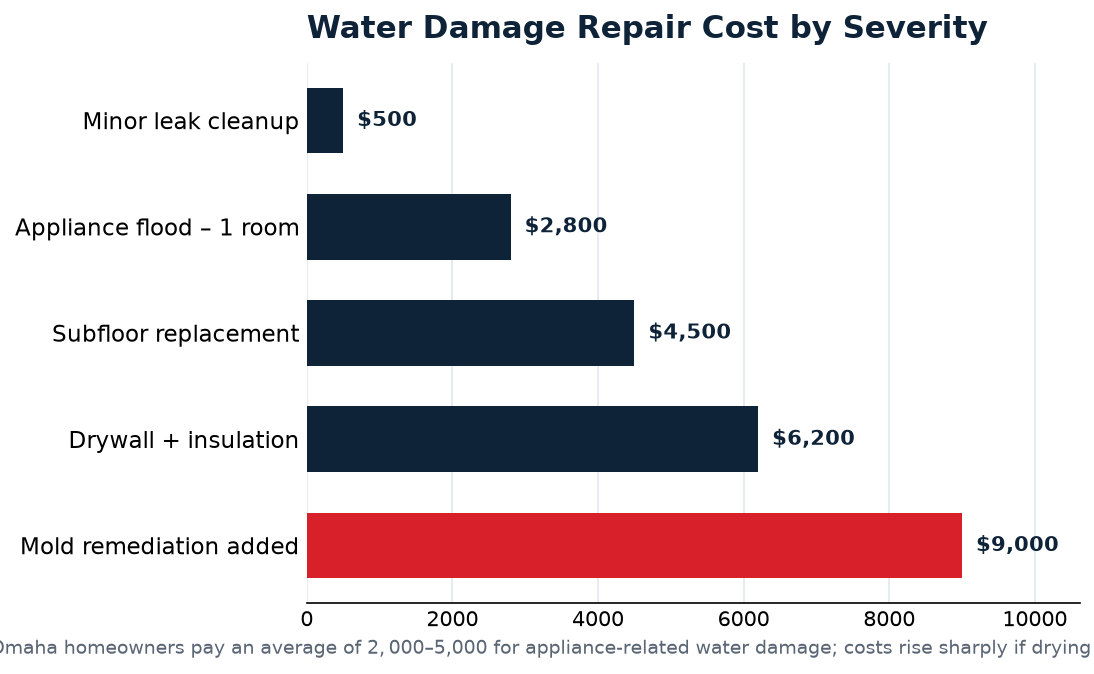
Out-of-pocket costs without insurance vary based on affected area and materials, but a kitchen appliance leak affecting 100 to 200 square feet of flooring and one or two cabinet bases typically falls between $1,500 and $4,500 depending on flooring type and whether mold remediation is needed.
Frequently Asked Questions
How fast does mold grow after an appliance leak? Mold can begin developing within 24 to 48 hours under the right temperature and humidity conditions. Omaha summers are warm and humid, which accelerates that timeline. Getting drying equipment in place the same day is the best prevention.
Can my hardwood floors be saved after a washing machine overflow? Often yes, if drying begins quickly. Our moisture meters tell us the actual saturation level. Floors that have cupped slightly can sometimes return to flat as they dry. Floors that have swelled and buckled significantly may need replacement.
Will my insurance cover the appliance leak but not the appliance itself? Correct in most cases. Homeowner policies cover resulting water damage to your home's structure and materials. The appliance itself is generally not covered under a standard policy.
Do we need mold testing after every appliance leak? Not always. If the leak is caught immediately and drying begins within a few hours, mold testing may not be necessary. We recommend mold inspection and testing when leaks have been present overnight or longer, when wall cavities show elevated moisture, or when the homeowner or residents have allergies or respiratory sensitivities.
How long does the drying process take? Most residential appliance leak water damage jobs reach dry standard in three to five days with proper equipment in place. We check readings daily and remove equipment only when materials have reached acceptable moisture levels, not on a set calendar schedule.