
A house fire leaves two kinds of damage. The flames themselves destroy what they touch directly. But smoke, soot, and toxic residue travel far beyond the burn zone, seeping into walls, HVAC systems, clothing, furniture, and the structure itself. In our experience working across Omaha and the surrounding metro, the smoke damage is almost always the costlier, longer-lasting problem. If you are dealing with this right now, this page will walk you through exactly what is happening in your home, what our crews do to fix it, and what you should do in the next few hours.
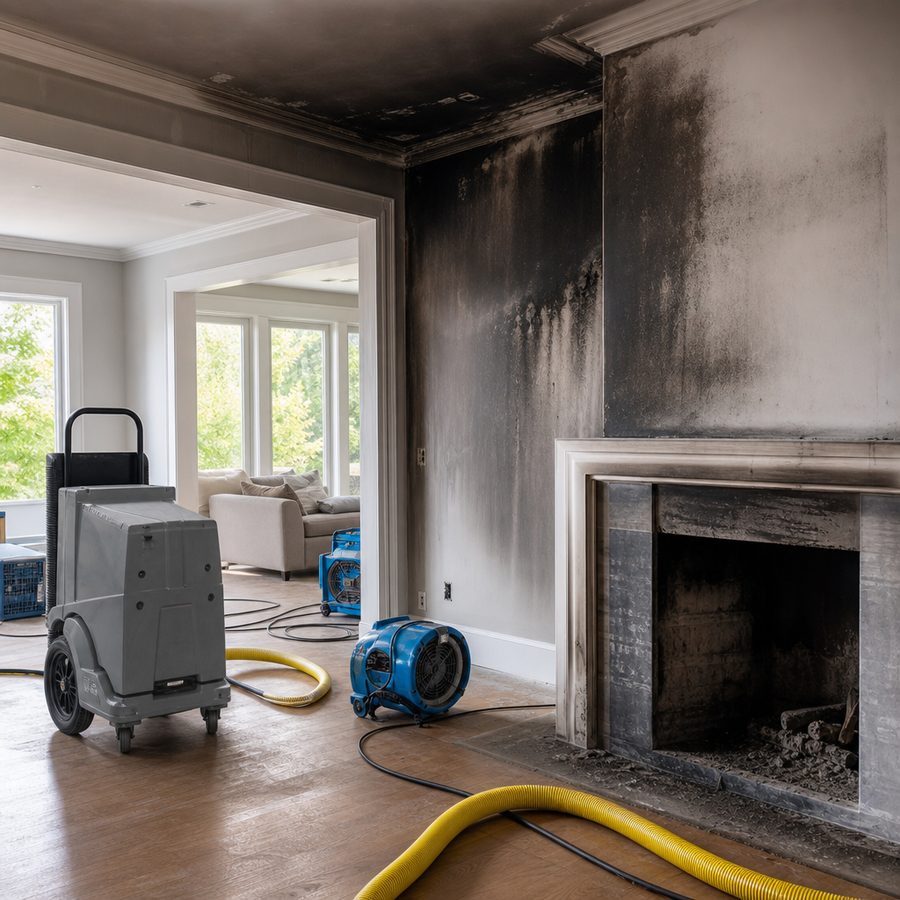
Why Smoke Damage Is More Complicated Than It Looks
Smoke is not a single substance. It is a mixture of carbon particles, volatile organic compounds, and acidic gases that behave differently depending on what burned. A kitchen grease fire produces a thick, oily residue that bonds to surfaces. An electrical fire leaves a dry, powdery soot that penetrates porous materials deeply. A structural fire involving insulation or synthetic materials can release hydrogen cyanide and other chemicals that require specialized cleaning protocols.
Here is what makes Omaha homes particularly vulnerable:
- Older housing stock in Dundee and Benson often contains original plaster walls, which are far more porous than modern drywall. Smoke odor and soot particles embed deeply into plaster and are nearly impossible to eliminate without professional treatment.
- Finished basements in Millard create large square footage where smoke migrates through HVAC return vents. A kitchen fire one floor up can coat every surface in a 1,500 square foot finished basement.
- Century-old homes throughout Dundee frequently have original wood framing, horsehair plaster, and older insulation materials that absorb odor compounds aggressively.
Smoke damage also begins destroying surfaces within minutes. Acidic soot etches glass permanently after about 72 hours. It discolors painted walls, corrodes metal fixtures, and permanently stains grout. Time matters significantly.
What Smoke Damage Cleanup Actually Involves
We get calls from homeowners who tried to clean smoke damage themselves with store-bought products and found the smell came back weeks later. That happens because consumer cleaning products treat the surface while the odor compounds remain in the substrate. Here is the full process our crews follow:
Initial Assessment and Air Quality Testing
We walk every room, including attic space and the HVAC system, to map where smoke traveled. We document damage with photos and written notes for your insurance adjuster. If the fire also caused water damage from suppression efforts, we assess that simultaneously because wet soot is more corrosive and spreads faster.
Dry Soot Removal
Before any wet cleaning, we use dry chemical sponges and HEPA-filtered vacuums to remove loose soot. Wiping soot with a wet cloth before this step grinds it deeper into porous surfaces, making staining worse.
Surface Cleaning and Decontamination
We use pH-balanced cleaning agents matched to the surface type. Walls, ceilings, cabinetry, and hard surfaces each require different chemistry. For homes with heavily porous materials, such as the plaster walls common in Benson and Dundee neighborhoods, we apply penetrating cleaners and allow extended dwell time.
Odor Elimination
This is where most DIY attempts fail. We use a combination of:
- Thermal fogging, which creates a deodorizing fog that penetrates the same spaces smoke entered
- Hydroxyl generators or ozone treatment for deep structural odor
- HEPA air scrubbers running continuously throughout the process
Ozone treatment requires all occupants and pets to be out of the home. We schedule and communicate this clearly before we begin.
HVAC System Cleaning
Smoke travels through ductwork throughout the entire house. We clean and deodorize the duct system as a standard part of smoke damage cleanup, not an add-on. Skipping this step means odor returns every time the furnace or air conditioning runs.
Structural Assessment for Hidden Damage
In severe fires, we check for structural compromise before any reconstruction begins. If mold begins developing in water-damaged framing from suppression efforts, we address that before closing walls. Douglas County requires licensed mold assessment for larger remediation jobs, and we coordinate that process so your project stays compliant.
What To Do Right Now Before We Arrive
If you are reading this after a fire, here is what you can do safely:
- Open windows if outdoor air quality permits. Ventilation slows secondary damage.
- Do not run the HVAC system. It will distribute soot and odor to every room.
- Do not wipe soot with wet cloths or paper towels. You will drive it deeper into surfaces.
- Photograph everything before touching anything. Your insurance claim depends on documentation.
- Avoid entering rooms with heavy char damage. Structural integrity may be compromised.
- Contact your insurance company to open a claim. We work directly with adjusters.
Smoke Damage Costs and Insurance in Omaha
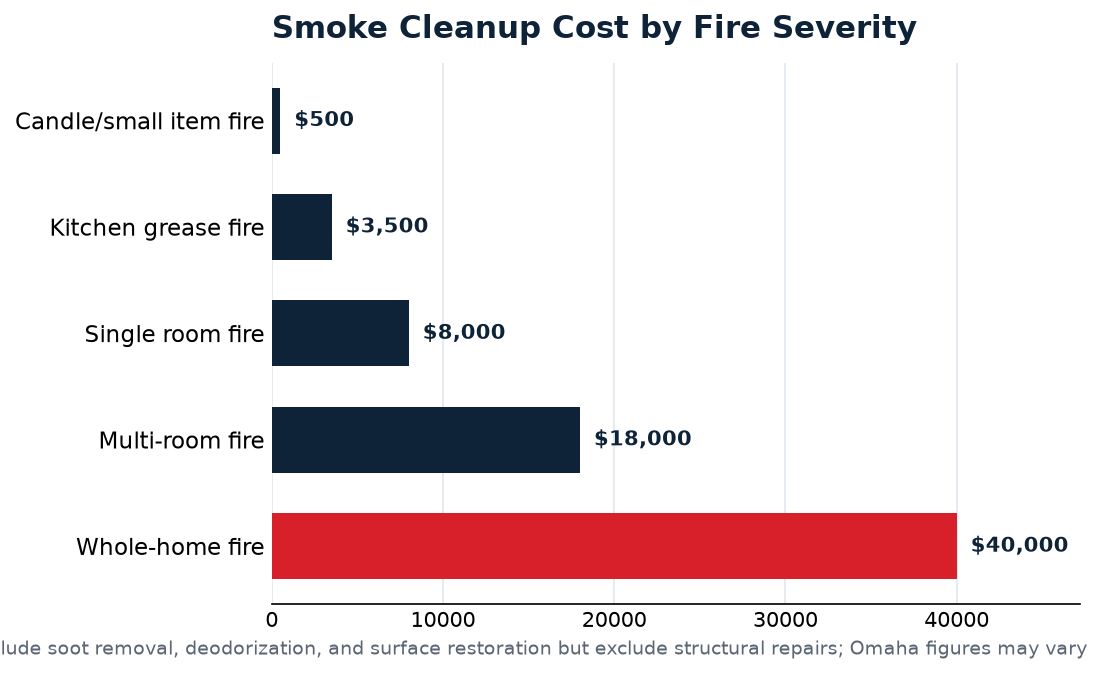
Most homeowner's insurance policies cover smoke damage cleanup, including odor remediation, HVAC cleaning, and content cleaning. The range for a mid-size Omaha home is typically between $3,000 and $15,000 depending on the extent of smoke travel, the materials involved, and whether reconstruction is needed.
A few things that affect cost in the local market:
- Older homes with plaster walls cost more to clean than modern drywall construction.
- Homes with large finished basements, common throughout Millard, have more square footage to treat.
- HVAC cleaning cost scales with system complexity and the number of zones.
We provide detailed written estimates that insurance adjusters can work with directly. We do not require payment upfront before insurance settles.
Why Omaha Conditions Specifically Affect Your Restoration
Nebraska's climate creates conditions that matter for smoke damage recovery. Our winters are dry and cold, which slows some microbial growth but also means homes are sealed tightly, concentrating odor. Our summers are humid, which accelerates mold growth in any framing or insulation that got wet from fire suppression. IICRC certification (the primary quality signal in Nebraska, since the state has no statewide mold licensing) ensures our crews are trained to handle both scenarios correctly.
We also see situations where smoke damage cleanup reveals pre-existing moisture issues. A fire in an older Benson home might uncover long-standing basement moisture problems that now require addressing before reconstruction. We handle that sequentially so you do not end up with mold behind new drywall.
Frequently Asked Questions
Can we stay in the house during smoke damage cleanup? In most cases, no. The cleaning agents, ozone treatment, and air scrubbers require the space to be unoccupied. We coordinate timelines so you know exactly when reoccupation is safe. Your insurance policy typically covers temporary housing during this period.
How long does smoke damage cleanup take? For a single-room kitchen fire in a standard Omaha home, expect three to five days. For a whole-house event with HVAC contamination and some reconstruction, two to three weeks is realistic. We give you a project timeline at the initial assessment.
Will the smoke smell ever come back after professional cleanup? If the process is done correctly, including duct cleaning and structural deodorization, the odor does not return. If a company skips the HVAC system or uses only surface cleaning, odor typically resurfaces within weeks. That is the most common reason we get second calls.
Does smoke damage cleanup also involve mold inspection and testing? It can. Fire suppression water creates real mold risk, especially in the humid Omaha summers. If suppression water soaked framing or insulation, we recommend mold inspection and testing before closing any walls. Douglas County requires licensed assessment for larger jobs, and we make sure that process is handled correctly.
What if my fire was small but the smell spread through the whole house? That is extremely common. Smoke follows air pressure and HVAC pathways. A contained oven fire can contaminate an entire two-story home through the duct system within minutes. We scope the full house regardless of where the fire started, because the damage almost never stays in one room.