
When a pipe lets go inside your home, every minute counts. Water spreads fast, soaks into framing and insulation, and begins setting the stage for mold within 24 to 48 hours. Our crews have responded to burst pipe water damage calls across the Omaha metro for years, and we know exactly what the damage looks like behind the walls, under the floors, and in the finished basements that are so common in neighborhoods like Millard and Dundee. This page tells you what to do right now, what our repair process looks like, and what you can realistically expect in terms of costs and insurance.
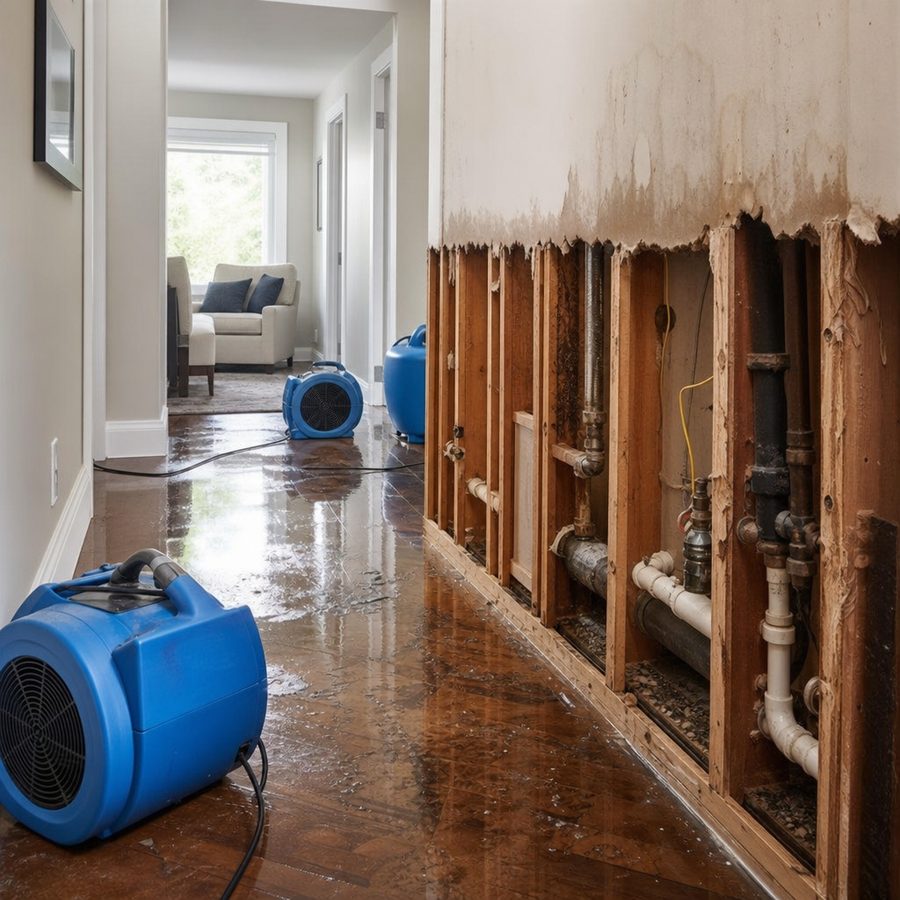
Why Omaha Pipes Burst: Local Conditions That Stack the Odds Against You
Omaha's climate is one of the most punishing in the country for residential plumbing. A few specific hazards stand out.
Deep winter cold. January lows here regularly drop to negative 10 to negative 20 degrees Fahrenheit. Pipes in exterior walls, crawl spaces, attached garages, and unheated utility rooms freeze solid when temperatures stay that low for multiple days in a row. When the ice expands, it splits copper and PVC alike. We see a sharp spike in burst pipe water damage calls every time a sustained cold snap hits, particularly in older homes in Benson and Ralston where original plumbing runs through poorly insulated exterior walls.
Spring snowmelt and saturated ground. March and April bring a different threat. As snow melts rapidly, ground water rises and sump pumps run around the clock. In La Vista, where newer construction relies heavily on sump systems, a single pump failure during a melt event can dump hundreds of gallons into a finished basement within hours.
Summer storms and flash flooding. The Papillion Creek watershed turns into a fast-moving flood channel after heavy late-summer downpours. Homes near the creek in Papillion face not just surface flooding but also sewer backups when the municipal system gets overwhelmed, pushing contaminated water back through floor drains and toilets.
What To Do When a Pipe Bursts in Omaha's Deep Freeze
If you are dealing with a burst right now, here is the sequence that limits damage while you wait for our crew.
- Shut off the main water supply immediately. Know where your shutoff valve is before an emergency happens. In most Omaha homes it is near the water meter in the basement utility area or just inside the foundation wall.
- Turn off electricity to affected areas. Water and live circuits are a deadly combination. If water is near your electrical panel, stay out and call us and an electrician.
- Open faucets to relieve remaining pressure. After shutting the main, open the lowest faucet in the house to drain what is left in the lines.
- Move valuables and furniture out of the water path. Every item you pull from a wet floor is one less item to remediate or replace.
- Document everything with photos and video before touching anything else. Your insurance adjuster will want this.
- Call us. We arrive with extraction equipment, moisture meters, and industrial drying gear. Do not wait until morning.
Our Burst Pipe Water Damage Repair Process
We follow a structured process that mirrors industry standards set by the IICRC, adapted to the specific conditions we encounter in the Omaha metro.
Step 1: Emergency Water Extraction
We remove standing water first, using truck-mounted and portable extractors. Speed here directly limits the scope of structural damage and mold risk.
Step 2: Moisture Mapping
Our crews use thermal imaging cameras and calibrated moisture meters to find water that has wicked into walls, subfloors, and ceiling assemblies. This step is not optional. Visible water is rarely the whole story.
Step 3: Controlled Demolition (When Necessary)
Wet drywall, insulation, and saturated flooring materials cannot be dried in place. We remove what needs to come out and document everything for your insurance claim. In homes with finished basements, which are extremely common in Millard, this often means removing lower sections of drywall and pulling up carpet and pad.
Step 4: Structural Drying
We set high-volume air movers and commercial dehumidifiers in a calculated configuration based on the room volume and material types. We monitor readings daily and adjust equipment until the structure reaches pre-loss moisture levels. This typically takes three to five days depending on how much water entered and how long it sat.
Step 5: Mold Inspection and Testing
Any time water sits longer than 48 hours before extraction, or when we open walls and find staining or odor, we recommend mold inspection and testing. We can perform air sampling and surface sampling and have those results evaluated by a certified industrial hygienist. If mold is confirmed, we perform full remediation before any reconstruction begins. This step protects your family and protects the value of your home.
Step 6: Reconstruction
Once the structure is dry and clear, we rebuild. That means framing repairs, insulation, drywall, paint, trim, and flooring. We coordinate the whole process so you are not managing three separate contractors.
Can Water-Damaged Hardwood Floors Be Saved?
This is one of the most common questions we hear, and the honest answer is: sometimes yes, but it depends on timing and wood species.
Solid hardwood that has been wet for less than 48 to 72 hours and has not cupped severely can often be dried in place using specialized floor drying mats and low-grain refrigerant dehumidifiers. We have saved beautiful original floors in century-old Dundee homes using this method.
Engineered hardwood is more variable. The plywood core can delaminate when saturated, making replacement more likely.
The factors working against you are time, heat, and subfloor saturation. If the subfloor is also wet and swelling, the hardwood above it will buckle even if the wood itself would otherwise be salvageable. We assess every situation individually and give you a straight answer before any work begins.
Costs and Insurance: What to Expect
Burst pipe water damage is typically covered under standard homeowners insurance as a sudden and accidental loss. Gradual leaks are often excluded, which is why documentation of the pipe failure matters.
General cost ranges for reference:
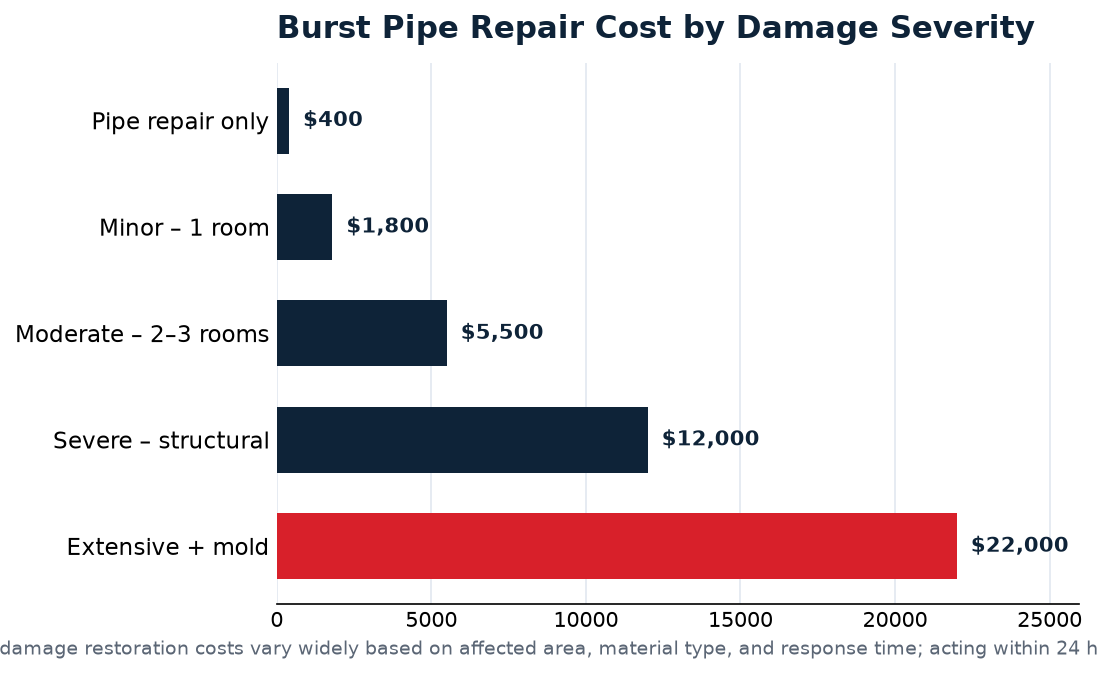
- Water extraction and initial drying: $1,500 to $4,000 for an average residential loss
- Mold inspection and testing: $300 to $600 depending on sampling scope
- Structural drying (equipment and monitoring): $1,000 to $3,000
- Reconstruction (highly variable): $2,000 to $20,000 or more depending on affected areas
We work directly with all major insurance carriers and can supplement your claim with detailed moisture logs, photo documentation, and scope-of-loss reports that make the adjuster's job easier and reduce the chance of a disputed claim.
Frequently Asked Questions
How fast does mold start growing after a pipe bursts? Mold can begin colonizing wet organic materials like drywall paper and wood within 24 to 48 hours in warm indoor conditions. Getting extraction started the same day is the single most effective way to avoid a mold remediation on top of your water damage repair.
My pipe burst during a cold snap and I was out of town for two days. Is it too late? It is never too late to start, but two days of standing water significantly increases the likelihood of mold and structural damage. Expect a more involved scope of work, including mold inspection and testing, and plan for a longer restoration timeline.
Will my insurance cover a burst pipe if it happened because I left the heat off? This is a gray area. Many carriers deny claims where a vacant home was left unheated in winter because it may be considered negligence. We recommend reviewing your policy language and speaking with your agent. We can document the conditions we found, which may support your case.
Do I really need professional drying equipment, or can I just use fans and a box-store dehumidifier? Consumer equipment moves far less air and removes far less moisture per hour than commercial gear. Homes dried with inadequate equipment frequently end up with mold inside wall cavities even when the surface feels dry. We have pulled drywall in Benson and Ralston homes where owners dried the surface only to find active mold growth behind the wall months later.
How long will the whole repair process take? Structural drying alone takes three to five days on average. Add demolition, mold remediation if needed, and reconstruction, and a moderate loss typically runs two to four weeks from call to completion. We give you a realistic timeline at the start and communicate daily during active work.