
A house fire leaves behind two problems that outlast the flames: soot and odor. Even a small kitchen fire or a furnace puffback can coat walls, ductwork, and personal belongings with fine carbon particles that keep damaging surfaces for weeks if left untreated. The smell follows everywhere, embedding itself in insulation, subflooring, and soft furnishings. We have worked through these situations hundreds of times across Omaha and the surrounding metro, and we want to give you a clear picture of what soot and odor removal actually involves so you can make smart decisions fast.
Why Soot Keeps Causing Damage After the Fire Is Out
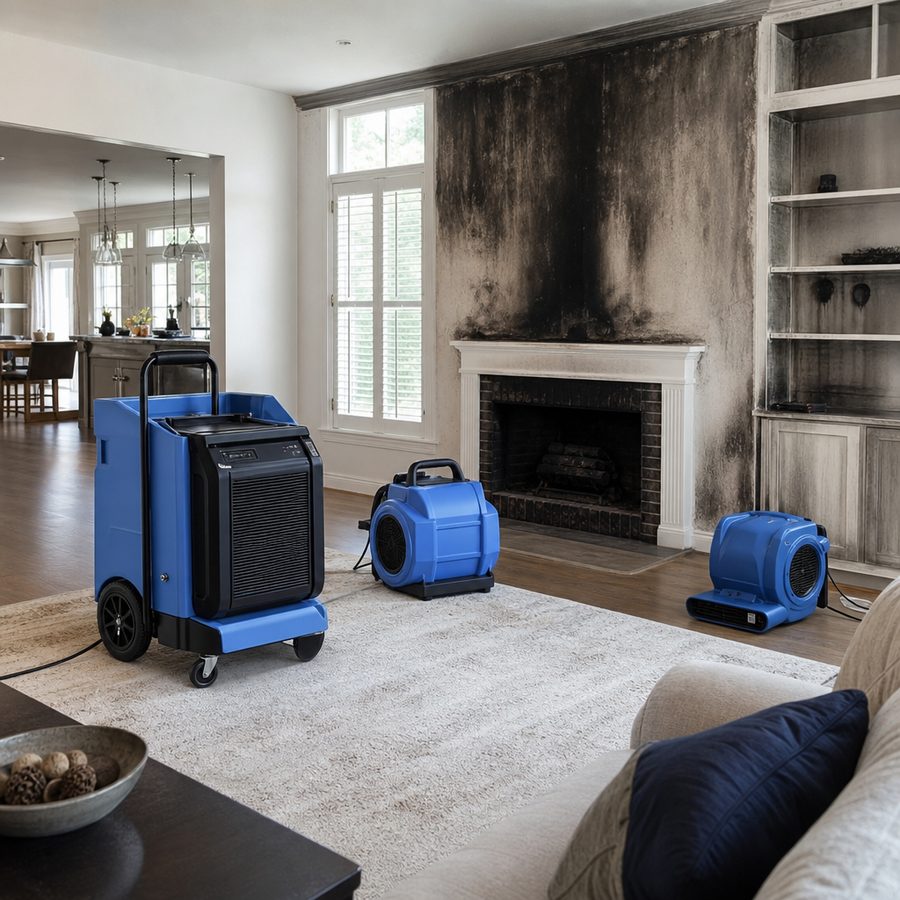
Soot is not simply ash. It is a complex mixture of carbon particles, acids, oils, and partially burned chemicals. The moment fire is extinguished, that mixture begins reacting with moisture in the air and with painted or porous surfaces. Within hours, soot starts etching metals, yellowing plastics, and permanently staining walls. Within days, corrosion and discoloration become much harder to reverse.
In older Omaha neighborhoods like Dundee and Benson, homes are often insulated with materials that act like sponges. Century-old plaster walls and original hardwood floors absorb soot particles deeply, which means surface cleaning alone rarely solves the problem. Our crews treat these structures differently than we would a newer suburban build.
Types of soot residue we commonly encounter:
- Dry smoke residue: Produced by fast-burning, high-temperature fires. Powdery and easier to remove, but spreads widely through HVAC systems.
- Wet smoke residue: Produced by slow, low-temperature smoldering fires, often involving plastics or rubber. Thick, sticky, and carries a particularly sharp odor.
- Protein residue: Comes from kitchen fires involving food. Nearly invisible but extremely pungent. It bonds tightly to painted surfaces and is easy to overlook during a DIY cleanup.
- Fuel oil soot (puffback): Common in Omaha homes with older oil furnaces. A furnace backfire sends a fine oily mist through every duct register in the house almost instantly.
What Our Soot and Odor Removal Process Looks Like
We follow a structured process that meets IICRC standards, which matters in Nebraska because the state has no statewide mold or fire restoration licensing requirement. IICRC certification is the clearest signal that a contractor knows what they are doing and follows documented methods.
Step 1: Emergency pre-cleaning and containment We arrive and immediately set up containment barriers to stop soot from migrating to unaffected rooms. HEPA air scrubbers go to work pulling fine particles from the air while we dry-sponge loose soot from walls and ceilings. This step must happen before any water or cleaning solution touches the surface, because moisture binds soot permanently into porous materials.
Step 2: Structural surface cleaning We clean walls, ceilings, floors, trim, and structural components using chemistry matched to the specific type of residue. Protein and wet smoke residues require degreasers and enzyme treatments. Dry soot responds well to dry cleaning sponges followed by chemical sponges. We document every surface and photograph before-and-after conditions, which your insurance adjuster will need.
Step 3: Contents cleaning and pack-out Furniture, clothing, documents, and personal items may need to leave the property for professional cleaning. We inventory everything before it moves and work with ozone chambers and ultrasonic cleaning equipment at our facility for items that can be salvaged.
Step 4: Odor neutralization Masking odor with fragrance is not treatment. We use thermal fogging and hydroxyl generators to break down odor-causing molecules at the molecular level. Thermal fogging pushes a deodorizing agent into the same microscopic spaces the smoke penetrated. Hydroxyl generators are safe for use around people and plants and work continuously over days to eliminate embedded odor in walls and soft goods.
Step 5: Duct and HVAC cleaning Every register and duct run that carried smoke must be cleaned. If this step is skipped, the furnace or air conditioner will redistribute soot particles and odor every time it cycles. This is especially common after puffback events.
Step 6: Clearance testing and documentation Before we close out a job, we verify odor levels and surface conditions meet established thresholds. If our work has uncovered signs of moisture or hidden mold, we can connect you with a mold inspection and testing professional to assess whether remediation is also needed, which Douglas County may require to be performed by a licensed assessor for larger jobs.
What To Do Right Now If Your Home Has Soot Damage
The actions you take in the first two hours matter a great deal.
- Do not run your HVAC system. Every minute it runs after a fire spreads soot through every room.
- Do not wipe soot with a wet cloth. This pushes particles deeper into surfaces and makes staining permanent.
- Open windows if outdoor air quality permits to ventilate, but only after the fire department has cleared the structure.
- Photograph everything before touching anything. Your insurance company needs documentation.
- Call your insurer to open a claim and then call us. We can coordinate directly with your adjuster.
How Omaha's Seasons and Older Housing Stock Affect Soot Jobs
Omaha winters create specific complications. When temperatures drop into the single digits, as they regularly do in January and February, homes in La Vista and Elkhorn that rely on sump pumps and backup heating sources are more likely to experience furnace puffbacks or space heater fires. Opening windows for ventilation is not always practical, which means we rely more heavily on negative air pressure and HEPA filtration to manage air quality during cleanup.
Spring flooding along the Papillion Creek watershed and in the Missouri River floodplain near Bellevue sometimes creates a combined disaster scenario: fire or furnace damage followed immediately by water intrusion. When that happens, soot removal and structural drying must happen simultaneously, and sequencing those tasks correctly requires experienced judgment. Wet materials that are not dried before soot cleaning simply trap particles under the surface.
In neighborhoods like Ralston, where aging sewer laterals and older construction are common, we frequently find that a fire or smoke event has also disturbed preexisting moisture issues in the basement. We flag those situations and recommend mold inspection and testing before reconstruction begins.
Costs and Insurance for Soot and Odor Removal
Most standard homeowner policies cover fire and smoke damage, including professional soot and odor removal. What they do not always cover without documentation is the full scope of contents cleaning and secondary damage like corrosion to electronics or appliances.
Factors that affect cost:
- Square footage of affected space
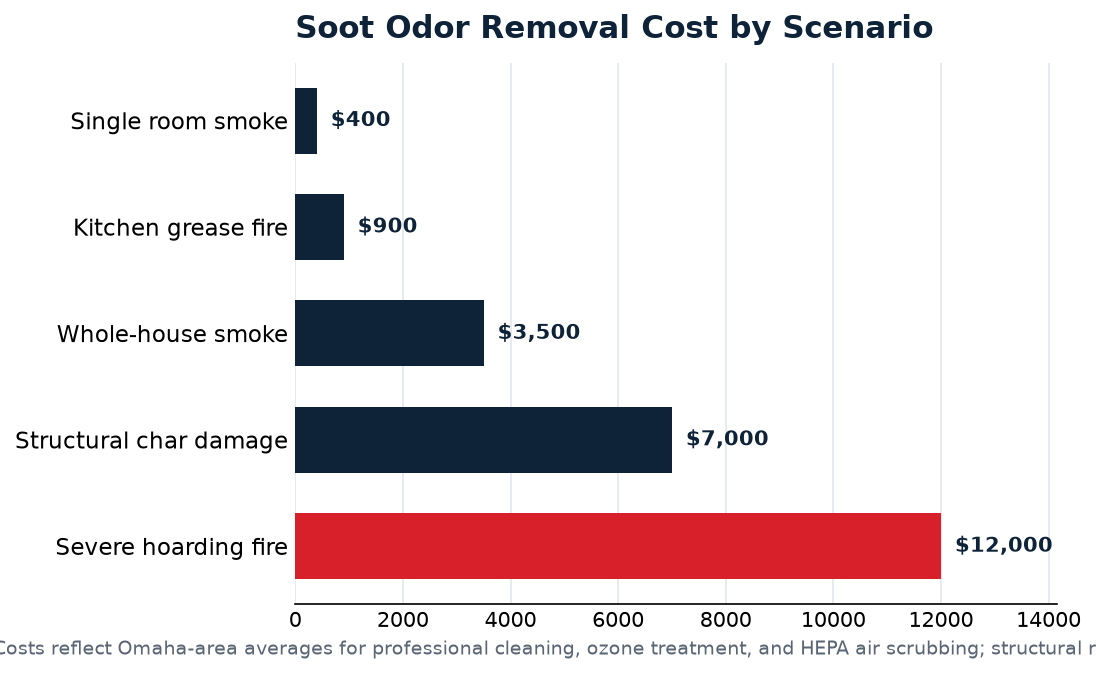
- Type of soot residue (wet smoke and protein residue are more labor intensive)
- Number of duct registers requiring cleaning
- Whether contents pack-out and off-site cleaning are needed
- Presence of any secondary water or mold damage
We provide detailed line-item estimates in a format adjusters recognize, and we communicate directly with your insurance company throughout the process so you are not caught in the middle.
Frequently Asked Questions
Can I stay in my home while soot and odor removal is happening? In most cases we recommend that you do not. Fine soot particles are a respiratory hazard, and the deodorization chemicals we use, particularly thermal fogging agents, require the home to be unoccupied during application. Your insurance policy often covers temporary lodging while remediation is in progress.
How long does soot and odor removal take? A single-room kitchen fire with limited spread typically takes two to four days. A whole-house event with duct contamination and contents pack-out can take one to two weeks. We give you a realistic timeline on day one, not a number designed to win the job.
Our house smells fine right now but we had a small fire last week. Should we still call? Yes. Protein residue from cooking fires and light smoke from smoldering events can be nearly odorless at first and become noticeable weeks later as the compounds continue to off-gas. By that point the damage to surfaces is significantly worse and more expensive to reverse.
What is the difference between a fire restoration company and a general contractor? A general contractor rebuilds structures. Fire restoration, including soot and odor removal, is a specialized field that requires specific chemistry, equipment, and documented methodology. We handle the restoration phase first, and if reconstruction is needed afterward, we coordinate that work as well.
We also have moisture in our basement. Can you handle both issues at once? We can assess both during our initial inspection. If the moisture issue requires mold inspection and testing, we will tell you clearly what Douglas County licensing requirements apply and make sure the right professionals are involved before any reconstruction begins.