
When something goes wrong inside a home that no one planned for, the last thing you need is a company that treats your situation like a line item on a checklist. Our crews respond to biohazard cleanup situations across the Omaha metro every day, and we understand that the people calling us are almost never in a normal headspace. Whether it is an unattended death, a sewage backup, bloodborne pathogen exposure, or a hoarding remediation, we come ready to work carefully, discreetly, and completely.
This page explains exactly what biohazard cleanup involves, what our process looks like from the first call to the final clearance test, and what you should do right now if you are dealing with one of these situations.
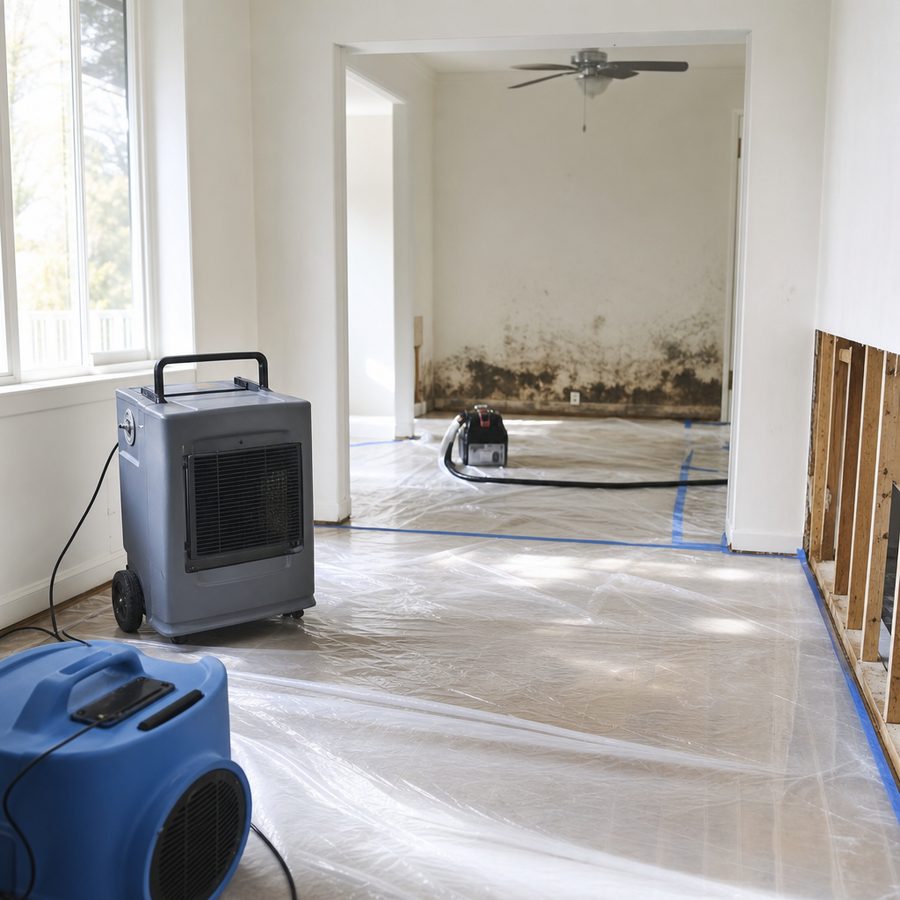
What Counts as a Biohazard Scene
People sometimes assume biohazard cleanup is limited to crime scenes. In reality, the category is broad and includes situations that happen in ordinary Omaha homes every week.
- Unattended deaths and decomposition
- Suicide and homicide scenes
- Sewage backups that introduce raw waste into living spaces
- Hoarding environments with rodent droppings, mold, or animal waste
- Bloodborne pathogen exposure from accidents or medical events
- Methamphetamine contamination (residue from use or production)
- Industrial chemical spills that migrate into residential buildings
In Ralston, where the housing stock is older and sewer laterals are aging, we regularly see sewage backups that push raw waste into finished basements. That material is classified as a biohazard. It contains bacteria, viruses, and pathogens that no amount of consumer-grade cleaning product can fully address. The same is true for the hoarding situations we handle in older neighborhoods like Benson and Dundee, where decades of accumulated material can harbor mold colonies, rodent infestations, and biological waste that requires certified remediation, not just a dumpster.
Why Omaha's Local Conditions Make This Work Different
Omaha's climate and infrastructure create specific biohazard risks that crews from outside the region may not fully appreciate.
Sarpy County recommends backwater valves for sewage-backup-prone homes, particularly in low-lying areas like those near Papillion Creek, which runs through communities like Papillion and La Vista. When heavy rain overwhelms the system, basements in these areas can receive a mixture of stormwater and raw sewage. That combination requires full biohazard protocol, not a basic water extraction.
In Bellevue, proximity to the Missouri River floodplain means that flood events can introduce contaminated river water into homes. River water carries agricultural runoff, sediment, and pathogens that qualify it as Category 3 water under IICRC standards, the most dangerous classification. Our teams are trained to treat it accordingly.
Older neighborhoods like Dundee, where century-old homes sometimes have original clay sewer lines, face sewage intrusion risks that newer construction simply does not. When those pipes crack or root-infiltrate, the contamination comes up through floor drains and toilet bases, often spreading across finished basement floors before anyone notices.
Our Biohazard Cleanup Process, Step by Step
We do not believe in vague promises. Here is exactly what happens when you call us.
1. Immediate Response and Scene Assessment We arrive with full personal protective equipment and conduct a thorough walkthrough before touching anything. We identify the scope of contamination, document everything for your insurance claim, and explain what we are going to do before we start.
2. Containment We establish containment barriers to prevent cross-contamination from spreading to unaffected areas of the home. This protects your HVAC system and the rest of your living space.
3. Removal of Contaminated Material All porous materials that have absorbed biohazardous substances are removed and packaged according to Nebraska and federal regulations for biological waste disposal. This includes flooring, drywall, insulation, furniture, and personal items as appropriate.
4. ATP and Pathogen Testing We test surfaces during and after cleaning using ATP meters and, when indicated, laboratory swab testing. We do not declare a space clean based on visual inspection alone.
5. Hospital-Grade Disinfection We apply EPA-registered hospital-grade disinfectants using fogging and direct-contact methods. For scenes involving bloodborne pathogens, we follow OSHA Bloodborne Pathogen Standard protocols throughout.
6. Deodorization and Air Scrubbing Biohazard scenes often leave behind persistent odor caused by microbial activity. We use thermal fogging and HEPA air scrubbers to address airborne particulates and odor at the source.
7. Final Clearance and Documentation We provide written documentation of the remediation process and test results. This matters for insurance, for future home sales, and for your own peace of mind.
Mold Inspection and Testing After Biohazard Events
Biohazard events often introduce moisture into areas of a home that dry slowly and in the dark. When that happens, mold follows. We offer mold inspection and testing as a natural extension of our biohazard work, particularly after sewage backups, decomposition events, or hoarding cleanups where moisture has been present for an unknown period.
Douglas County requires licensed mold assessment for larger remediation jobs, and Nebraska's lack of statewide mold licensing means that IICRC certification is the clearest quality signal you can look for when hiring anyone for this work. Our team holds current IICRC certifications, and we coordinate with independent certified mold assessors when Douglas County rules require a separate assessment party.
If you have questions about whether water damage to your flooring may have created a mold risk underneath, we address that as part of our assessment. The question of whether water-damaged hardwood floors can be saved depends heavily on how long moisture was present and what type of contamination was involved. In biohazard situations, we almost always recommend replacement of affected flooring rather than restoration.
What To Do Right Now
If you are on this page because something has already happened, here is what to do before our crew arrives.
- Do not enter the affected area without proper protective equipment
- Do not use household cleaners or bleach on biological contamination (it is not sufficient and can spread pathogens on contact surfaces)
- Keep children and pets out of the space completely
- Call your homeowner's insurance company to report the incident and open a claim
- Ventilate the space if you can do so safely, but do not run your HVAC system if the contamination is near ductwork
- If this involves a death or crime scene, wait for law enforcement clearance before any cleanup begins
Costs and Insurance Coverage
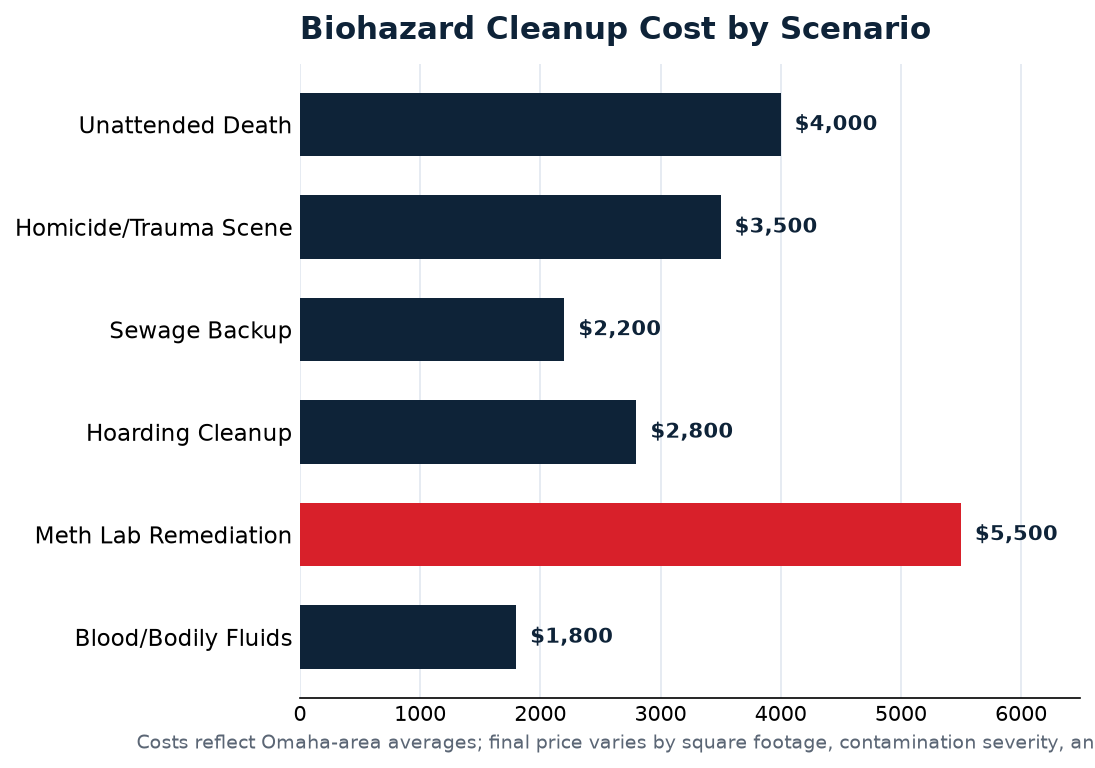
Biohazard cleanup costs vary significantly based on the size of the scene, the type of contamination, and how long it has been present. Most homeowner's insurance policies cover trauma and biohazard cleanup, and many cover sewage backup remediation if you carry that endorsement. We work directly with insurance adjusters and can help you document the claim from day one.
If you are in Bellevue or Council Bluffs and your home sits in a designated flood zone, your flood insurance policy may cover biohazard-level contamination from flooding. We can walk you through what documentation adjusters typically require.
Frequently Asked Questions
How quickly do you respond to biohazard calls in Omaha? We answer calls around the clock and aim to have a crew on-site within two to four hours for emergency situations anywhere in the Omaha metro, including Sarpy County communities like Papillion, Gretna, and La Vista.
Is biohazard cleanup covered by homeowner's insurance? In most cases, yes. Trauma scenes, unattended deaths, and sewage backups (if you carry the sewer backup endorsement) are typically covered. We assist with documentation and communicate directly with your adjuster.
Do you handle the waste disposal, or do we have to arrange that? We handle everything. Biohazardous waste must be packaged and transported according to federal and state regulations. Our crews are trained and equipped to manage disposal from start to finish.
How do we know when the space is actually clean? We use ATP surface testing and, when appropriate, laboratory analysis to verify that contamination has been reduced to safe levels. We do not release a space based on appearance alone. You receive written results.
What if we find mold after a sewage backup in our finished basement? This is common, especially in homes in Millard, Ralston, and Benson where finished basements hold moisture in wall cavities and under flooring. We assess for mold as part of our post-remediation process and can coordinate the full remediation if testing confirms growth.