
When water gets under your hardwood floors, every hour counts. Boards begin to cup, buckle, and swell within the first 24 hours. By 48 to 72 hours, mold spores are already finding a food source in the wood fibers and the subfloor beneath them. We have dried and saved hardwood floors in homes across Omaha, from century-old Dundee craftsman bungalows to newer builds in Elkhorn and Gretna, and the single biggest factor in whether floors can be saved is how fast professional hardwood floor water drying begins.
This page will walk you through exactly what we do, what you should do right now, and what realistically determines whether your floors survive.
Can Water-Damaged Hardwood Floors Be Saved?
The honest answer is: often yes, but not always. The outcome depends on four things:
- How long the water sat. Less than 24 hours gives us the best odds. Beyond 48 to 72 hours, secondary damage like mold and subfloor deterioration compound the problem.
- What kind of water it was. Clean water from a burst pipe is very different from a sewage backup or a Category 3 flood event. Gray or black water contamination changes the restoration equation entirely.
- Wood species and floor construction. Solid hardwood (oak, maple, walnut) responds to drying better than engineered hardwood with a thin veneer. Glue-down installations can trap moisture underneath and are harder to dry in place.
- Whether the subfloor and joists are involved. If water has soaked through to your OSB or plywood subfloor, we have to address both layers simultaneously.
We will give you a straight answer after our initial moisture assessment, not a sales pitch.
Why Omaha Specifically Creates Hardwood Floor Water Emergencies
Omaha's climate and housing stock create a specific set of risks that homeowners in other cities simply do not face at the same frequency.
Pipe bursts in deep freezes. Nebraska winters regularly push temperatures below zero. When a cold snap hits and a poorly insulated pipe along an exterior wall or in a crawl space lets go, it can release hundreds of gallons before anyone notices. We call this scenario "What To Do When a Pipe Bursts in Omaha's Deep Freeze" because it happens every January and February without fail. Pipes in older homes in Ralston and Benson, where housing stock dates back 60 to 80 years and insulation was never upgraded, are especially vulnerable.
Sump pump failures and heavy rain. La Vista and Papillion are largely sump-pump-dependent communities. The Papillion Creek watershed is flash-flood prone during heavy spring and summer storms. When a sump pump motor burns out or loses power during a storm, a finished basement with hardwood or engineered wood flooring can take on several inches of water in under an hour.
Clay soils and hydrostatic pressure. In Elkhorn, the expanding western suburbs sit on clay-heavy soils that hold water instead of draining it. That persistent hydrostatic pressure pushes moisture through foundation walls and slab floors, creating chronic low-level dampness that slowly destroys wood flooring from underneath without a visible flood event ever occurring.
Aging infrastructure. In Ralston and Benson, aging sewer laterals mean sewage backups are a real risk. Sarpy County actually recommends backwater valve installation for sewage-backup-prone homes, and homes without them can see contaminated water enter through floor drains directly onto finished floors.
Our Hardwood Floor Water Drying Process
We follow IICRC S500 standards for water damage and S520 standards for mold remediation. In Nebraska, there is no statewide mold licensing requirement, so IICRC certification is the clearest signal that a restoration company knows what it is doing. Here is what our process looks like from the moment we arrive:
1. Moisture Mapping and Assessment
We use thermal imaging cameras and calibrated moisture meters to map exactly where water has traveled. Water migrates further than it looks. A two-inch puddle on the surface can mean six to eight feet of wet subfloor underneath.
2. Water Extraction
Before drying can begin, standing water and deep moisture must be extracted. We use truck-mounted extraction units and specialty floor mat extraction systems designed specifically for hardwood floors. These draw moisture up through the boards without requiring us to remove them in many cases.
3. Structural Drying with Desiccant and LGR Dehumidification
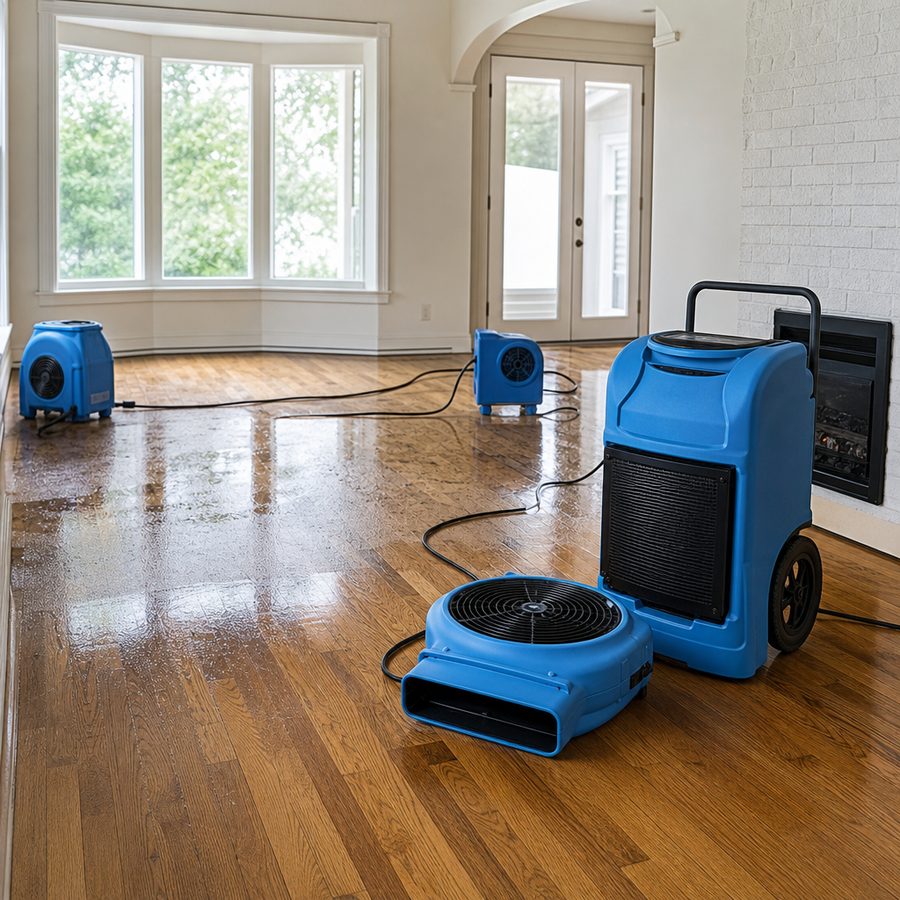
We place commercial low-grain refrigerant (LGR) dehumidifiers and high-velocity air movers in a calculated configuration based on the square footage and moisture levels documented in our assessment. This is not the same as renting a consumer dehumidifier from a hardware store. Our equipment processes many times more air volume and pulls moisture down to levels that stop mold growth.
4. Daily Monitoring
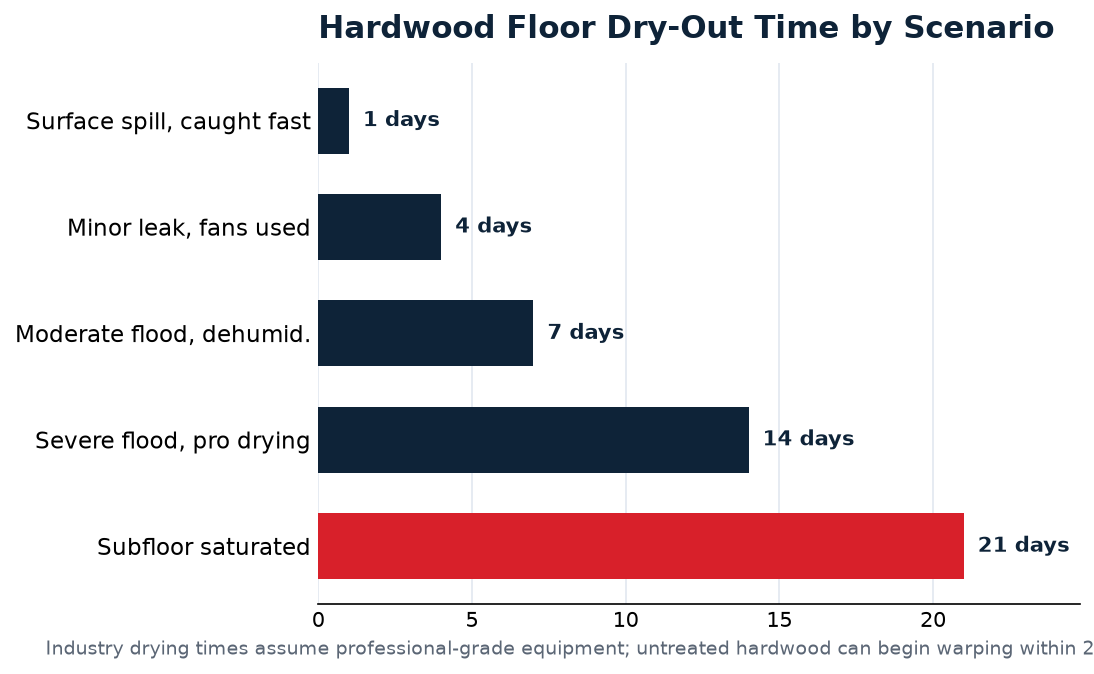
We return each day to take moisture readings and adjust equipment placement. Drying a hardwood floor properly takes three to seven days depending on species, construction, and how much water was involved. We document every reading so you and your insurance adjuster have a full record.
5. Mold Inspection and Testing
If drying was delayed or if we identify conditions where mold growth is likely, we perform mold inspection and testing before we close anything up. Douglas County requires a licensed mold assessment for larger remediation jobs, and we coordinate with certified industrial hygienists when that threshold is met. We will never tell you mold is not a concern just to move faster.
6. Subfloor Evaluation and Reconstruction
If the subfloor is compromised, we assess whether it can be dried in place or must be replaced. City of Omaha permits may be required for structural drying and reconstruction work, and we handle that process on your behalf.
What To Do Right Now Before We Arrive
- Stop the water source. Locate your main shutoff and turn it off if a pipe has burst.
- Do not use a household vacuum or fan on soaked hardwood. This can push water further under the boards and does not dry at the depth needed.
- Do not crank up your furnace. Rapid surface drying without controlling humidity causes boards to crack.
- Remove rugs, furniture, and anything sitting on the wet floor. This reduces load and improves airflow.
- Photograph everything before touching it. Your insurance claim depends on documentation.
- Call us. The faster professional hardwood floor water drying begins, the better your odds of saving the floor.
Costs and Insurance
Most water damage from sudden and accidental causes (burst pipes, appliance failures, sump pump overflow with a rider policy) is covered under standard homeowners insurance. Flood damage from rising water outdoors typically requires separate flood insurance.
We work directly with all major insurance carriers and can document the loss in the format adjusters need. We will give you a clear estimate and explain what is and is not likely to be covered before work begins.
Frequently Asked Questions
How fast does mold grow under wet hardwood floors? Mold can begin colonizing within 24 to 48 hours in the right temperature and humidity conditions. Wood flooring and OSB subfloor are both excellent mold food sources. This is why we treat every hardwood floor water event as urgent.
Can I dry my hardwood floors myself with fans and a dehumidifier? Consumer equipment does not create the airflow volume or humidity removal rate needed to dry wood flooring to safe moisture levels. Surface drying with fans while moisture remains trapped underneath is one of the most common causes of mold problems we see months after a water event.
My floors look flat again after drying out on their own. Are they fine? Not necessarily. Cupped boards can appear to flatten while remaining at elevated moisture content inside the wood. Subfloor moisture and mold can persist without visible signs on the surface. A proper moisture meter reading will tell you what is actually happening.
We live in Papillion near Papillion Creek. Does our location affect our risk? Yes, meaningfully. The Papillion Creek watershed experiences some of the fastest surface-water runoff in the metro during heavy rain events. Homes in this watershed should have sump pumps inspected annually and consider a battery backup system as a minimum precaution.
Do we need a permit for floor drying or reconstruction work in Omaha? It depends on the scope. Drying equipment placement typically does not require a permit. Structural repairs, subfloor replacement, or any work that involves opening walls or framing may require a City of Omaha permit. We evaluate this at the assessment stage and manage the permitting process when it is required.