
If you have opened a basement door to a musty smell or spotted dark patches spreading across drywall, you already know something is wrong. Our crews respond to basement mold calls across the greater Omaha metro every week, and we want to give you honest, detailed information so you can move quickly and confidently.
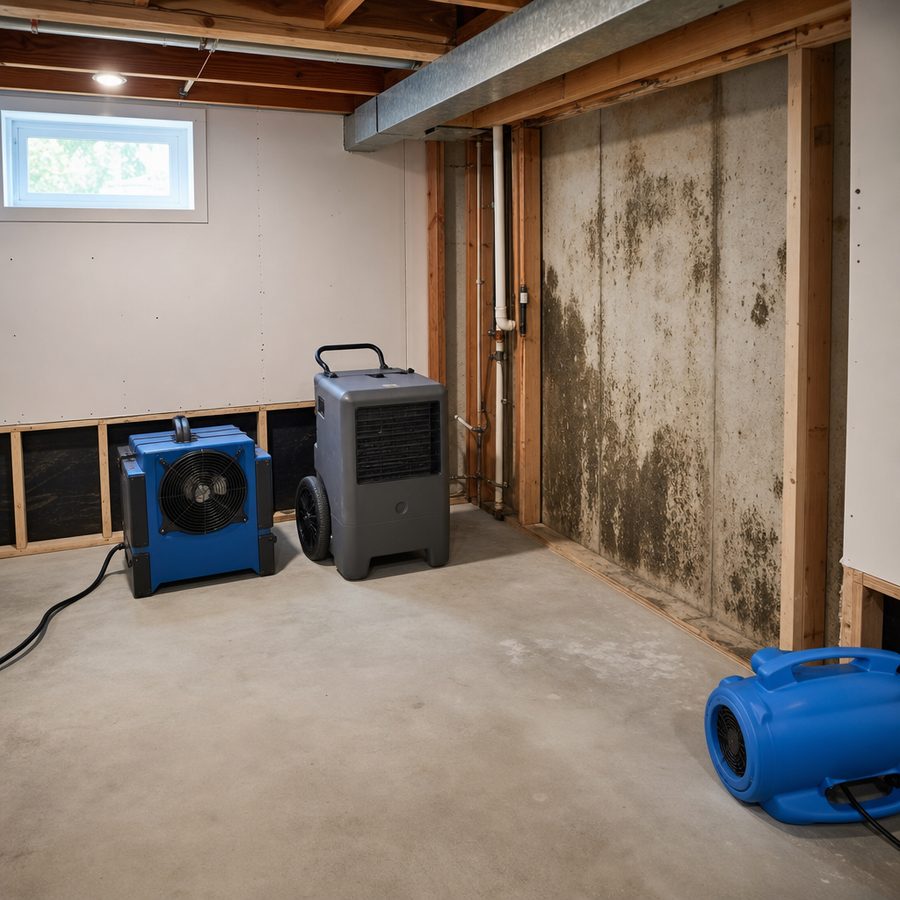
Why Omaha Basements Are Especially Vulnerable
Omaha's geography and climate create a near-perfect environment for basement mold. A few realities that set our region apart:
- Clay soils in Elkhorn and west Omaha hold water against foundation walls for weeks after heavy rain, creating persistent hydrostatic pressure and slow seepage that most homeowners never trace back to a single storm.
- The Missouri River and Papillion Creek floodplains put homes in Bellevue, Papillion, and Council Bluffs at elevated basement-flooding risk during spring runoff and summer storm events.
- Aging combined sewer lines in Benson, Ralston, and Dundee can back up raw sewage into basement floor drains during heavy rainfall, introducing not just moisture but Category 3 contaminated water that accelerates mold growth dramatically.
- Sub-zero January cold snaps cause supply lines to freeze and burst, often inside finished basement walls where the damage goes unnoticed for days.
- Spring snowmelt hits Omaha when ground is still frozen below the surface. That combination overwhelms sump pumps in La Vista and newer Sarpy County developments, leaving standing water in finished recreational rooms for hours or longer.
Mold only needs 24 to 48 hours of moisture and an organic material (drywall paper, wood framing, carpet) to begin colonizing. Once Omaha's spring or summer conditions put water in your basement, the clock starts immediately.
Signs You Have a Basement Mold Problem
Do not wait for visible growth. Watch for:
- A persistent musty or earthy odor that does not improve when you run a dehumidifier
- Discoloration on drywall, framing, or ceiling tiles (black, gray, green, or even white fuzzy patches)
- Warped or bubbling paint on basement walls
- Allergy or respiratory symptoms that improve when family members leave the house
- Prior water intrusion, even if the basement "dried out" on its own
Millard homeowners with finished basements are especially likely to miss early mold because it grows inside walls behind insulation and vapor barriers where it is invisible until the problem is serious.
Our Basement Mold Removal Process
We follow a structured, documented process that meets IICRC S520 mold remediation standards. Here is what working with our team actually looks like.
1. Mold Inspection and Testing
We begin with a thorough mold inspection and testing assessment. Our technicians use moisture meters, thermal imaging cameras, and air sampling to locate hidden colonies and establish baseline spore counts. Testing results give you documentation for insurance claims and confirm which mold species are present, which matters for determining the appropriate remediation protocol.
2. Containment
Before any demolition begins, we seal the affected area with polyethylene sheeting and create negative air pressure using HEPA-filtered air scrubbers. This prevents spores from migrating to the rest of your home during removal.
3. Controlled Demolition and Material Removal
Mold-damaged drywall, insulation, and carpet are bagged, sealed, and removed in compliance with Nebraska disposal requirements. We do not leave compromised materials in place just because they look surface-clean. If framing is structurally sound but surface-contaminated, we treat and encapsulate it rather than default to unnecessary replacement, which keeps your costs reasonable.
4. Antimicrobial Treatment
Exposed framing, concrete block, and subfloor surfaces are treated with EPA-registered antimicrobial solutions. We apply two rounds in heavily affected areas and allow proper dwell time rather than rushing to the next step.
5. Clearance Testing
After remediation and before any reconstruction begins, we conduct post-clearance air sampling. Spore counts must return to normal outdoor ambient levels before we sign off. You receive a written clearance report, which your insurance carrier and any future home buyer will want to see.
6. Moisture Source Correction
Mold removal without fixing the moisture source is a temporary fix. We work with you to address the underlying cause, whether that is a failed sump pump, a cracked foundation wall, a burst supply line, or a condensation problem from an undersized HVAC system.
What You Should Do Right Now
If you are in the middle of discovering a mold problem, here are practical immediate steps.
- Reduce humidity. Run your dehumidifier and any portable fans, but do not point fans directly at visible mold colonies, as that spreads spores.
- Stop the water source. If active leaking or standing water is present, address that first. Our team can also help with water extraction.
- Limit foot traffic. Keep children and anyone with respiratory conditions out of the affected area.
- Document everything. Photograph all visible damage before touching anything. Your insurance adjuster will need this.
- Call a professional before using bleach. Bleach does not penetrate porous materials like drywall or wood. It kills surface mold while leaving roots intact, which gives a false sense of resolution.
Costs and Insurance
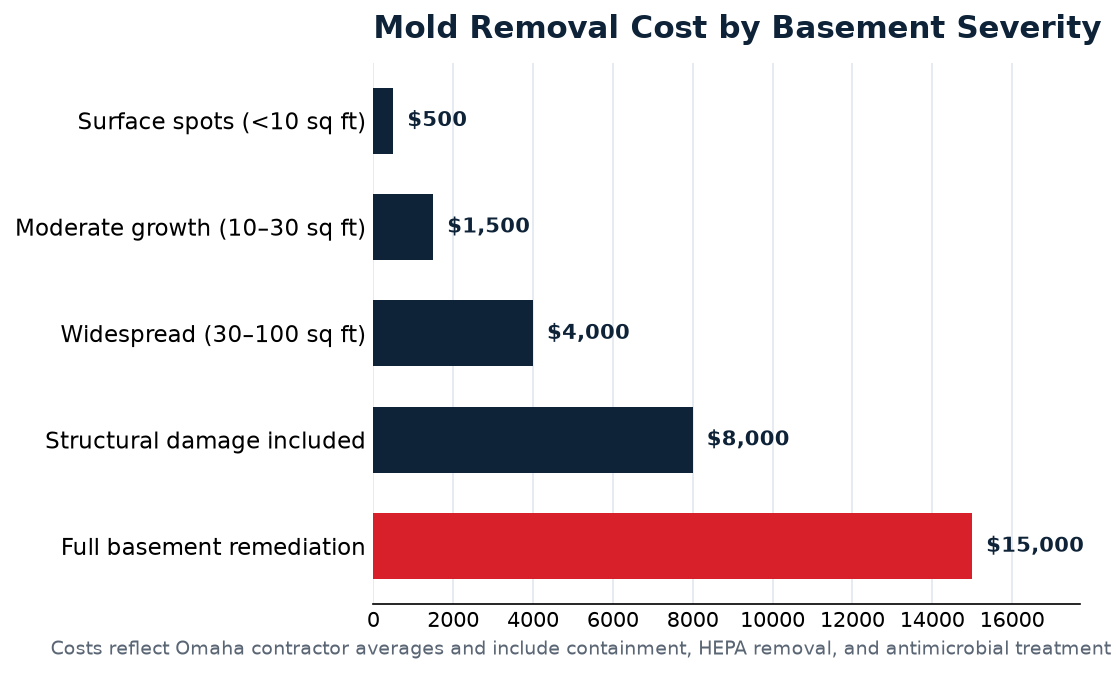
Basement mold removal costs in Omaha vary based on square footage affected, materials involved, and whether the moisture source requires repair at the same time. Smaller contained areas (under 50 square feet of drywall) may run a few hundred dollars. Larger finished basement remediation projects with framing involvement commonly range from several thousand dollars upward.
Homeowner's insurance often covers mold remediation when the underlying cause is a sudden and accidental event, such as a burst pipe from one of Omaha's deep-freeze cold snaps or storm-driven water intrusion from a summer derecho. It generally does not cover mold resulting from long-term neglect or maintenance failures. We help you understand what your policy language covers and provide the documentation adjusters need, including our mold inspection and testing results and a detailed scope of work.
If your basement flooded due to sewer backup, check whether you have a sewer backup rider on your policy. Many Ralston and Benson homeowners are surprised to learn their base policy excludes it.
Frequently Asked Questions
How long does basement mold removal take? Most residential basement projects take two to four days from initial containment through clearance testing. Larger finished basements with extensive framing involvement may take a full week. We give you a realistic timeline before work begins.
Can water-damaged hardwood floors be saved? The answer to "can water-damaged hardwood floors be saved?" depends on how quickly the drying process begins and how much swelling has occurred. Hardwood that is addressed within 24 to 48 hours has a reasonable chance of being dried, re-sanded, and refinished. Floors that sat wet for several days often cup or buckle beyond repair, and subfloor mold becomes a secondary concern. We assess moisture content with calibrated meters before recommending replacement.
What should I do when a pipe bursts in Omaha's deep freeze? Knowing what to do when a pipe bursts in Omaha's deep freeze can prevent mold from becoming your next problem. Shut off the main water supply immediately, call a plumber, and then call us for water extraction. The faster standing water is removed and structural drying equipment is deployed, the better your chances of avoiding mold entirely.
Is black mold more dangerous than other molds? "Black mold" is a term the public uses loosely. Stachybotrys chartarum, the most publicized species, is relatively rare and requires prolonged wet conditions. Many black-colored molds are common Cladosporium or Aspergillus species. All mold growth warrants professional remediation. Our mold inspection and testing process identifies the specific species present so the response is appropriate, not alarming.
Do I need to leave my home during remediation? In most cases, families can remain in the home if the affected area is properly contained and the HVAC system serving the rest of the house is isolated. If contamination is extensive or involves the home's mechanical systems, temporary relocation may be advisable. We give you a clear answer after the initial assessment.
We are based in the Omaha metro and familiar with every neighborhood on this list. Call us to schedule a same-day mold inspection and testing visit, and we will give you a straight assessment of what you are dealing with and what it will take to fix it properly.