
When water is spreading across your floor right now, you do not have time to read marketing copy. Here is what you actually need to know: we dispatch crews within the hour, we work through the night, and we have seen every water emergency Omaha throws at homeowners, from burst pipes in a January deep freeze to Papillion Creek flooding a finished Sarpy County basement. Call us first, then read the rest of this page while we are on our way.
Why Omaha Homes Face Unusually High Water Damage Risk
Omaha is not a generic Midwestern city when it comes to water intrusion. Our geography, soil, and housing stock combine to create conditions that turn a minor leak into a major loss faster than homeowners expect.
- Clay soils in Elkhorn and west Omaha hold moisture instead of letting it drain. When heavy rain hits those expanding subdivisions, water presses laterally against foundation walls rather than percolating away.
- The Papillion Creek watershed puts homes in Papillion and La Vista in direct flash-flood territory during summer thunderstorms and derecho events. We have responded to calls where finished basements took on two feet of water in under 90 minutes.
- Aging combined sewer lines in Ralston and Benson were built for a smaller population and lighter storms. During a heavy rain event, those lines back up and push sewage through floor drains. That is a Category 3 contamination emergency, not a simple wet-floor situation.
- Missouri River floodplain exposure affects Bellevue near Offutt AFB and Council Bluffs across the river. Homeowners in those areas carry a baseline risk that does not go away even in dry years.
- Dundee and other historic Omaha neighborhoods feature century-old homes with original supply lines, galvanized steel that corrodes from the inside out and fails without warning.
- Spring snowmelt saturates the ground across the metro before sump pumps can keep up. In Millard, where large finished basements are the norm, a sump pump overwhelmed by snowmelt can mean $30,000 in flooring and drywall losses.
Understanding your neighborhood's specific risk helps you prepare before an emergency and respond correctly when one happens.
What To Do When a Pipe Bursts in Omaha's Deep Freeze
Sub-zero January cold snaps are a fact of life here. Supply lines in exterior walls, garage ceilings, and crawl spaces freeze, and when they thaw or simply give way under pressure, they can release hundreds of gallons before anyone notices.
Do these things in order:
- Shut off the main water supply valve immediately. Know where yours is before winter arrives.
- Turn off electricity to any affected rooms at the breaker panel if water is near outlets, appliances, or your electrical panel.
- Open cabinet doors under sinks on exterior walls to let heat reach pipes that are still frozen.
- Do not use open flame to thaw pipes.
- Call us. Then call your insurance agent to open a claim while we are in transit.
- Remove rugs and small furniture items from wet areas if it is safe to do so, but do not run household fans over sewage-contaminated water.
What you should not do is wait to see if it dries on its own. Structural wood begins to absorb moisture within minutes. Mold colonization can begin in 24 to 48 hours under Omaha's humid summer conditions, and even in winter, a heated home provides enough warmth for mold to establish in wet wall cavities.
Our Emergency Water Removal Process, Step by Step
We want you to know exactly what happens when our crew pulls into your driveway.
1. Rapid Assessment (First 15 Minutes) We use thermal imaging cameras and moisture meters to map the full extent of water migration, including inside walls, under flooring, and into ceiling assemblies below a second floor. Water travels farther than it looks. We document everything photographically for your insurance claim.
2. Water Extraction We deploy truck-mounted and portable extraction units rated for high-volume removal. For Millard finished basements with carpet over concrete, we use weighted extraction tools that pull water from carpet padding before deciding whether the pad can be saved.
3. Can Water-Damaged Hardwood Floors Be Saved? This is one of the most common questions we hear, and the honest answer is: sometimes yes, often yes if we arrive quickly enough. Solid hardwood that has been wet for fewer than 24 hours and shows cupping but not buckling has a reasonable chance of being dried in place with desiccant dehumidifiers and floor mat drying systems. Engineered hardwood is more variable. Floors that have been soaking for 48 hours or more, or that show extreme crowning and separation, typically need replacement. We will give you a straight assessment on site rather than promising results we cannot deliver.
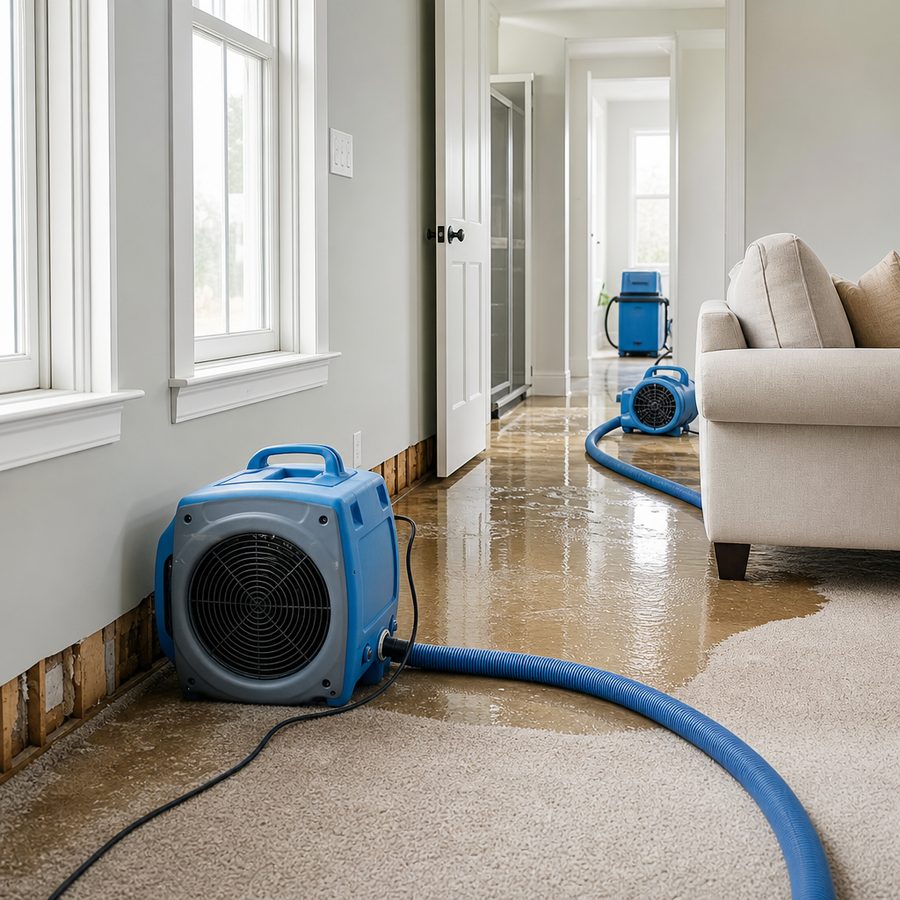
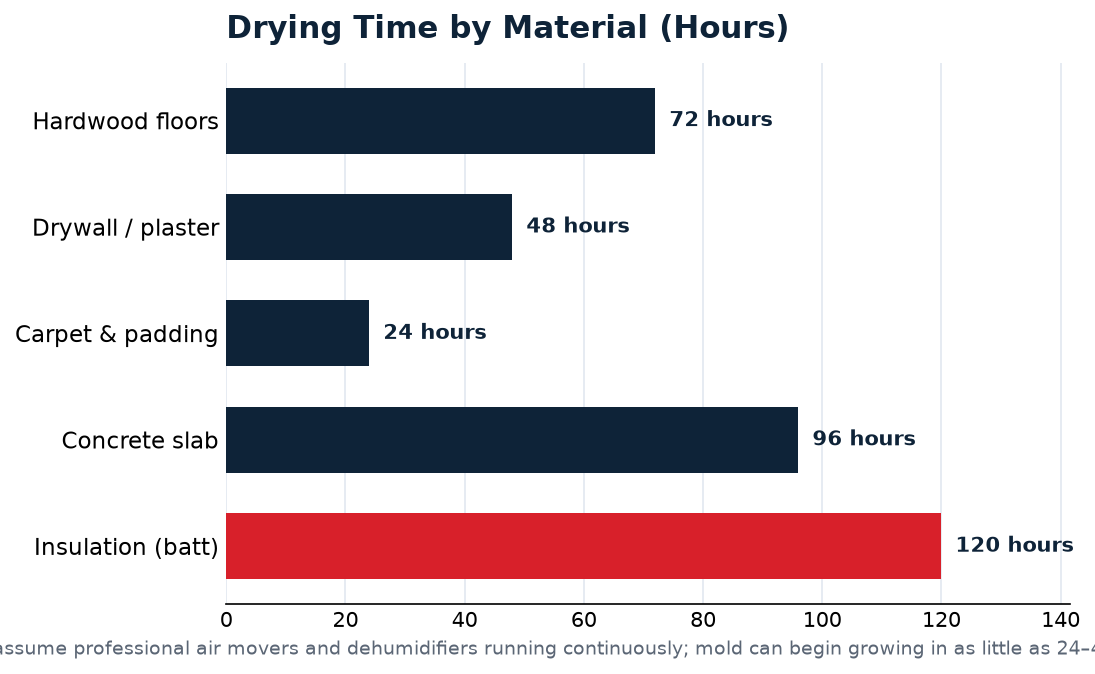
4. Structural Drying We place commercial-grade air movers and low-grain refrigerant dehumidifiers in calculated positions based on the room's volume and the materials involved. Drying a Gretna new-build with OSB subfloor requires a different approach than drying a Dundee home with old-growth fir framing. We monitor moisture readings daily and adjust equipment accordingly. Average dry-out time runs three to five days for most residential losses.
5. Mold Inspection and Testing If water has been present for more than 48 hours before we arrive, or if we detect musty odors and visible growth during extraction, we conduct a mold inspection and testing protocol. We collect air and surface samples and send them to an independent certified laboratory. We do not simply assume there is no mold to avoid complicating your project. If mold is present, we remediate it under containment before reconstruction begins. This protects your family and your insurance claim documentation.
6. Reconstruction Coordination We work directly with your insurance adjuster and, when you are ready, coordinate the rebuild through our licensed reconstruction division so you are not managing two separate contractors.
Costs and Insurance: What Omaha Homeowners Need to Know
Emergency water removal costs in the Omaha metro typically range from $1,500 for a minor supply-line leak in a small room to $15,000 or more for a full-basement flood with contaminated water and mold remediation. The variables are the water category (clean, gray, or sewage), the square footage affected, the materials involved, and how long the water sat before extraction began.
Most standard homeowners insurance policies cover sudden and accidental water damage, including burst pipes. They typically do not cover flooding from outside the home unless you carry a separate NFIP or private flood policy. If you are in Bellevue or Papillion Creek lowland areas, that distinction matters enormously.
We work with all major insurance carriers and provide detailed moisture logs, photo documentation, and drying reports that support your claim and reduce the chance of a dispute.
Frequently Asked Questions
How fast can you actually get here? We maintain on-call crews around the clock. Our target is wheels rolling within 30 to 45 minutes of your call for locations across the Omaha metro, including Sarpy County communities like Papillion, La Vista, and Gretna.
Is water from a sewer backup safe to clean up myself? No. Sewage-contaminated water carries bacteria, viruses, and parasites. It requires full personal protective equipment, proper containment, and disposal under EPA and OSHA guidelines. Ralston and Benson homeowners who deal with backup events regularly sometimes underestimate this risk because it has happened before. Each event requires proper remediation.
Will my floors definitely need to be replaced? Not necessarily. We make that determination based on moisture content readings and the type of flooring, not a blanket policy. We will always tell you what the data shows and what we recommend, with the reasoning behind it.
How long will drying equipment be in my home? Most residential drying projects run three to five days. We check moisture readings every 24 hours and remove equipment as soon as materials reach industry-standard dryness levels. We do not leave equipment running longer than necessary.
What if I find mold weeks after a water event? Call us for a mold inspection and testing appointment. Mold found after a remediated loss may or may not be related to the original event. We collect samples, identify species, and determine the extent before recommending a remediation scope. We do not guess, and we do not pressure you into unnecessary work.