
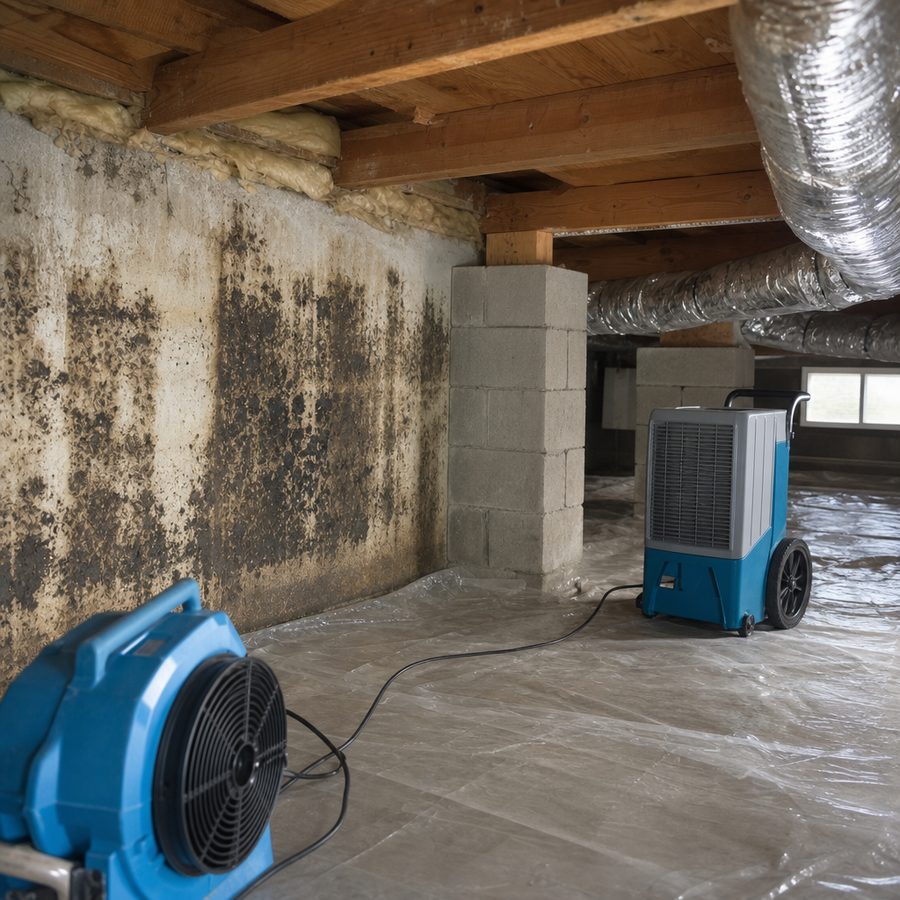
If you have lifted the access hatch to your crawl space and been hit with that earthy, musty smell, you already know something is wrong. Crawl space mold is one of the most common and most underestimated problems we find in Omaha homes, and it rarely fixes itself. Our crews have worked in crawl spaces across the metro, from older Benson bungalows with decades of accumulated moisture to newer La Vista homes where a sump pump failure let groundwater pool for weeks. The conditions under your house matter, and so does acting quickly.
Why Omaha Crawl Spaces Are Especially Vulnerable
Omaha's climate and geography create a near-perfect environment for mold growth beneath homes. Here is what we see driving crawl space mold again and again across the area.
Seasonal moisture swings. Our winters are dry and brutally cold, but spring brings saturated soil, snowmelt, and persistent humidity. That transition puts enormous pressure on crawl space vapor barriers and drainage systems. When spring snowmelt combines with already-saturated clay soils, like those common in Elkhorn on the west side, sump pumps in crawl spaces run almost continuously, and any gap in that protection means standing water.
Floodplain proximity. Homes in Bellevue near Offutt AFB and communities along the Missouri River and Papillion Creek floodplains face elevated groundwater tables after heavy rain events. The Papillion Creek watershed, which runs through communities like Papillion and La Vista, is especially flash-flood prone during summer thunderstorm season. Water that enters a crawl space from below or through foundation cracks does not evaporate quickly in an enclosed, poorly ventilated space. It soaks into wood joists, subflooring, and insulation and becomes a mold colony within 24 to 48 hours.
Aging infrastructure. In older neighborhoods like Dundee and Ralston, homes were built without the vapor barriers or drainage systems we install today. Ralston's aging sewer laterals can back up during heavy rain events, sending contaminated water into the lowest points of a home. Dundee's century-old houses often have rubble or block foundations that allow soil moisture to wick through without any barrier at all.
Summer derecho and storm intrusion. Omaha's summer storm season is no joke. High-wind events drive water through foundation vents, damaged skirting, and utility penetrations. Once that moisture is trapped in the crawl space, warm temperatures accelerate mold growth dramatically.
What Crawl Space Mold Actually Looks Like (and Why You May Not Know It's There)
Most homeowners never see their crawl space mold. They notice the symptoms first: musty odors drifting up through floors, allergy flare-ups that seem worse at home, or occasionally soft or bouncy subflooring. By the time these signs appear, mold has usually been growing for weeks or months.
Common mold types we find in Omaha crawl spaces include Cladosporium, Penicillium, Aspergillus, and in cases involving significant water intrusion, Stachybotrys (black mold). No crawl space mold should be ignored regardless of color or species. The question is always how far it has spread and what is feeding it.
Our Crawl Space Mold Removal Process
We do not spray and walk away. Our process is thorough because cutting corners in a crawl space means the mold comes back, often worse, within a single season.
1. Mold inspection and testing. We begin with a detailed mold inspection and testing assessment. This means physically entering the crawl space, documenting the extent of growth, identifying the moisture source, and in many cases taking air or surface samples to determine mold species and spore concentrations. You cannot remediate effectively without understanding what you are dealing with.
2. Moisture source identification. Removing mold without fixing the water problem is temporary at best. We trace the intrusion, whether it is a failed vapor barrier, a cracked foundation wall, inadequate drainage, or a plumbing leak. Related concerns like water-damaged hardwood floors above the crawl space often prompt the question: can water-damaged hardwood floors be saved? The honest answer is that it depends on how long moisture exposure has lasted and whether the subfloor beneath has been compromised. Our inspection covers both layers.
3. Containment. We seal off the affected area to prevent spores from spreading to the living space above during removal. This is especially important in homes with open floor registers or gaps around plumbing penetrations.
4. Removal and treatment. Affected insulation is bagged and removed. Moldy wood surfaces are HEPA-vacuumed, wire-brushed where necessary, and treated with EPA-registered antimicrobial agents. In severe cases we use dry ice blasting or media blasting to clean joists without adding additional moisture to the space.
5. Encapsulation and prevention. We install or replace vapor barriers, typically a reinforced 20-mil liner, sealed to the foundation walls and piers. We also evaluate and, if needed, install or repair crawl space drainage systems, dehumidifiers, and vent covers appropriate to Omaha's climate.
What to Do Right Now If You Suspect Crawl Space Mold
If you have reason to believe there is mold under your home, here is what we recommend before we arrive.
- Do not run fans or HVAC systems that pull air from the crawl space. You risk distributing spores throughout the house.
- Avoid entering the crawl space yourself without an N95 respirator, gloves, and eye protection.
- If a pipe burst is the cause, particularly during one of Omaha's sub-zero January cold snaps when supply lines freeze and rupture, shut off the main water supply immediately. Knowing what to do when a pipe bursts in Omaha's deep freeze can mean the difference between a contained repair and a full remediation job.
- Document everything with photos for your insurance claim.
- Call us as soon as possible. Mold growth accelerates with every warm day.
Costs and Insurance Coverage
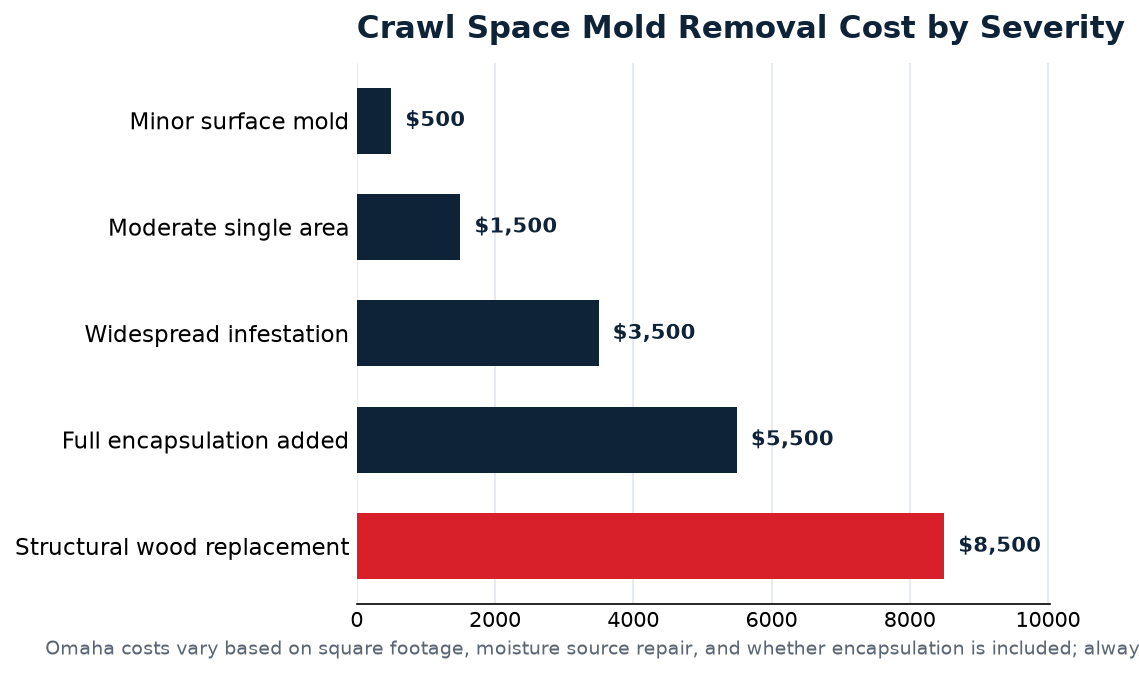
Crawl space mold removal costs vary depending on the size of the space, severity of the infestation, and what restoration work is needed afterward. In our experience working across the Omaha metro, remediation for a standard residential crawl space typically ranges from a few hundred dollars for minor surface mold to several thousand for extensive infestations requiring encapsulation and structural drying.
Homeowners insurance coverage for mold is complicated and depends on the cause. Mold resulting from a sudden and accidental event, like a burst pipe, is often covered. Mold from long-term humidity or deferred maintenance typically is not. We work directly with adjusters and can provide detailed documentation to support your claim.
Frequently Asked Questions
How do I know if my crawl space has mold if I cannot smell anything? A musty odor is common but not universal. Some mold colonies grow in areas with enough airflow to dilute the smell before it reaches living areas. A professional mold inspection and testing visit is the only reliable way to know for certain.
Is crawl space mold dangerous to my family's health? It can be. Mold spores move through air gaps, HVAC returns, and floor penetrations into living spaces. Prolonged exposure is linked to respiratory irritation, worsened asthma, and allergic reactions. Children and elderly residents are most vulnerable.
How long does crawl space mold removal take? Most residential crawl space remediations take one to three days. Larger spaces or severe infestations with structural drying and encapsulation can take longer.
Will the mold come back after remediation? Not if the moisture source is eliminated. This is why we treat source control as a non-negotiable part of every project. A properly encapsulated crawl space with working drainage and humidity control should not develop mold again.
Do I need to leave my home during the work? In most cases, no. Our containment protocols are designed to protect your living space during remediation. We will let you know if your specific situation requires any precautions.