
Water in your crawl space is not a minor inconvenience. Left alone for even 48 to 72 hours, standing moisture begins rotting floor joists, corroding fasteners, and feeding mold colonies that spread silently into the living areas above. Our crews respond to crawl space water damage across the Omaha metro every week, and we want you to understand exactly what is happening under your home, what we do about it, and what you should do right now.
Why Omaha Crawl Spaces Are Especially Vulnerable
Omaha's geography and climate create conditions that push water into crawl spaces from multiple directions at once.
Soil and drainage problems specific to our area:
- Elkhorn and much of west Omaha sit on dense clay soils that absorb water slowly and hold it against foundation walls for days after a heavy rain. Newer subdivisions in Gretna face the same issue as grading settles over time.
- Homes near Papillion Creek in Papillion and La Vista depend almost entirely on sump pumps to keep crawl spaces and basements dry during flash floods. When a sump pump fails during a summer thunderstorm, water rises fast.
- Bellevue and Council Bluffs properties in the Missouri River floodplain carry elevated groundwater tables that can push moisture upward through crawl space floors even without a visible flood event.
Seasonal threats we see every year:
- Spring snowmelt combined with already-saturated ground overwhelms sump pumps across the metro. We respond to dozens of crawl space calls every March and April.
- Summer derechos and severe thunderstorms drive rain horizontally through crawl space vents and around poorly sealed rim joists.
- January cold snaps bring burst supply lines under floors in older homes in Dundee, Benson, and Ralston, where aging plumbing runs through uninsulated crawl spaces. A frozen pipe can dump hundreds of gallons into a small enclosed space before anyone notices.
- Ralston's older housing stock also carries aging sewer laterals that back up during heavy rain, sometimes sending contaminated water into crawl spaces connected to the drainage system.
What Crawl Space Water Damage Actually Does to Your Home
Understanding the damage timeline helps you act with the right urgency.
- 0 to 24 hours: Standing water saturates soil, insulation, and wood framing. Vapor pressure begins pushing moisture into subfloor panels and hardwood above.
- 24 to 48 hours: Mold spores, always present in soil, find the moisture they need to germinate. Wood begins swelling. Insulation batts become waterlogged and compress permanently.
- 48 to 72 hours and beyond: Active mold growth on joists and rim joists. Structural wood softens. If the water source was a sewer backup, bacterial contamination is now embedded in surrounding materials.
- Weeks to months: Chronic high humidity causes hardwood floors above to cup and buckle. A common question we hear is whether water-damaged hardwood floors can be saved. The honest answer is that timing determines everything. Floors dried within 48 hours have a strong chance of recovery. Floors that have been wet for a week or more frequently require replacement, though we assess each situation individually.
Our Crawl Space Drying Process, Step by Step
We do not simply set a fan in the access hatch and hope for the best. Effective crawl space drying is a controlled, documented process.
1. Emergency water extraction We use truck-mounted and portable extractors to remove standing water from the crawl space floor and pull saturated material from soil and vapor barriers. This step happens within hours of your call.
2. Moisture mapping Our technicians use thermal imaging cameras and calibrated moisture meters to map every wet surface: soil, concrete piers, wood framing, and the underside of your subfloor. This gives us a drying target and a baseline for documentation.
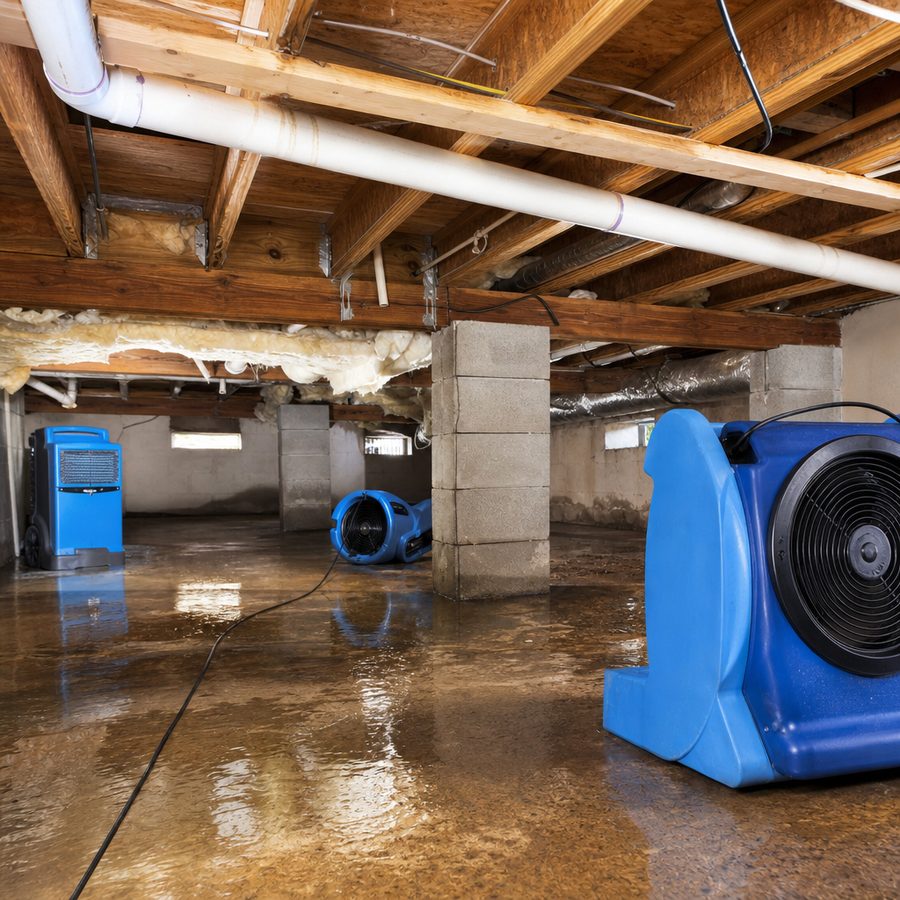
3. Controlled drying with industrial equipment We place desiccant or refrigerant dehumidifiers, axial air movers, and in some cases, heat drying systems in configurations specific to your crawl space dimensions. We check and log readings daily.
4. Mold inspection and testing If water has been present more than 24 to 48 hours, we conduct mold inspection and testing as part of our standard protocol. Visible growth is not required to have a problem. Air sampling and surface swabs confirm whether remediation is needed before we close up the space.
5. Material removal when necessary Saturated fiberglass batt insulation almost never dries properly. We remove it, treat affected framing if mold is present, and document everything for your insurance adjuster.
6. Encapsulation and prevention discussion After drying is complete and clearance testing passes, we discuss whether a full crawl space encapsulation system makes sense for your home. This is especially relevant for homes in La Vista and Elkhorn where chronic humidity is a recurring issue.
What To Do Right Now If Your Crawl Space Has Water
Before our crew arrives, here is what you can do safely.
- Turn off electricity to any circuits that run through the crawl space if you can do so safely from your main panel.
- Do not enter a crawl space with standing water if you do not know whether the source is sewage. Category 3 (black water) contamination requires protective equipment.
- Locate your sump pump and check whether it is running. If a float switch is stuck, sometimes resetting it buys time before we arrive.
- Take photos and video of the access hatch and any visible water for your insurance claim.
- Call your insurance company and let them know you have an active loss. Most policies require prompt notification.
Costs and Insurance for Crawl Space Water Damage in Omaha
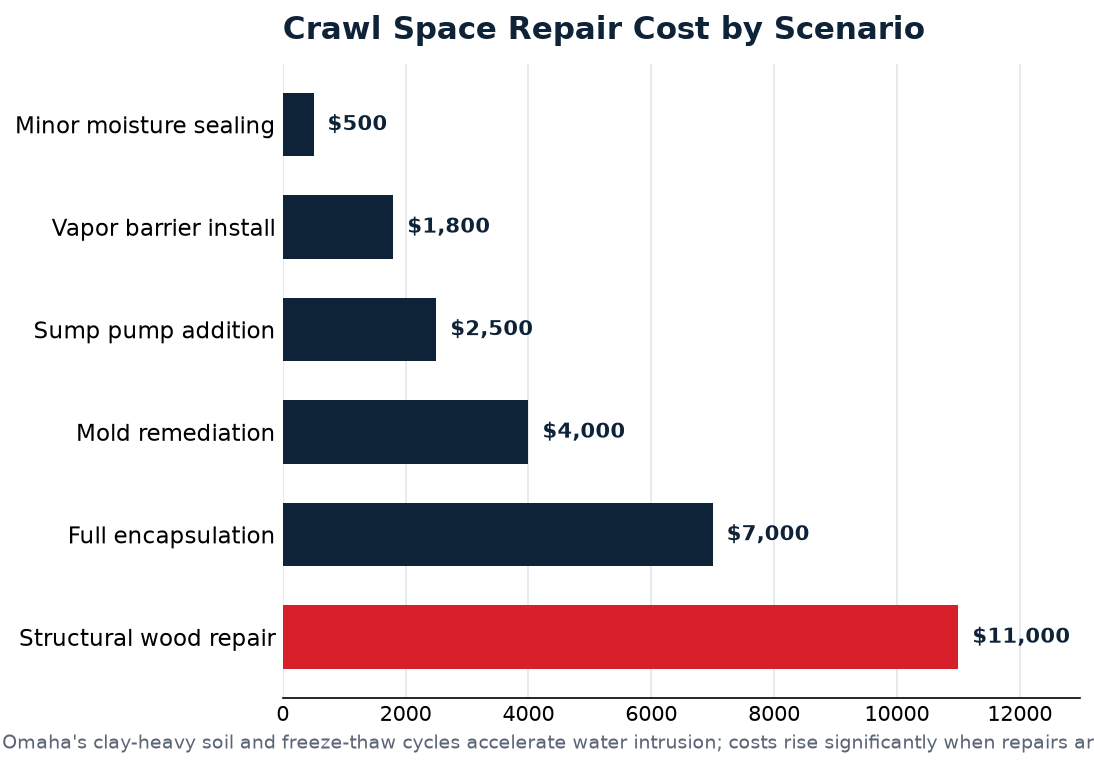
Costs vary widely depending on crawl space size, water category, and how long moisture has been present. A straightforward drying job in a modest crawl space may run a few thousand dollars. A project involving mold remediation, framing treatment, insulation replacement, and encapsulation can reach into the tens of thousands for larger homes.
Most standard homeowner policies cover sudden and accidental water damage, including burst pipes. They typically do not cover gradual leaks or flooding from surface water without a separate flood policy. If you are in a Sarpy County floodplain community near the Missouri River, a National Flood Insurance Program policy is worth reviewing specifically.
We work directly with all major insurance carriers and provide detailed photo documentation, moisture logs, and scope of work reports designed to support your claim.
Frequently Asked Questions
How long does it take to dry a crawl space? Most residential crawl spaces reach drying goals in three to five days with proper equipment placement. Larger spaces, heavy contamination, or very wet soil can extend that to seven to ten days. We monitor daily and adjust equipment as readings change.
What if my crawl space has never had water before and now it suddenly does? A sudden change usually points to a specific event: a burst supply line, a failed sump pump, a blocked foundation drain, or a sewer backup. We identify the source before drying begins so the same problem does not return the following week.
Is crawl space mold dangerous to my family? Mold under your floor affects indoor air quality above it. Spores and mycotoxins migrate upward through gaps, subfloor seams, and HVAC returns. Families with asthma, allergies, or young children are most sensitive, but prolonged exposure is a concern for anyone. Mold inspection and testing removes the guesswork.
Can I dry a crawl space with a shop vac and a box fan? Consumer equipment does not move nearly enough air volume or remove enough humidity to dry structural wood properly. Inadequate drying leads to hidden mold growth and continuing structural damage. Professional equipment pays for itself in avoided remediation costs.
What should I do if the water in my crawl space smells like sewage? Stop all entry immediately and call us. Sewage backup water is classified as Category 3 contamination and contains bacteria and pathogens that require specialized protective equipment and disposal protocols. This is not a situation for DIY cleanup.