
When you find dark spots behind a baseboard, smell something musty in a finished basement, or discover water damage that sat unnoticed for a few days, the first question is almost always the same: do we actually have mold, and how bad is it? We answer that question every week for homeowners across the Omaha metro. Mold inspection and testing is not about scaring you into expensive work. It is about getting you accurate information so you can make smart decisions for your family and your home.
Why Omaha Homes Are Especially Vulnerable to Mold
Omaha's climate creates near-perfect conditions for mold growth. Hot, humid summers push indoor humidity through the roof. Spring snowmelt and heavy rain events flood window wells and stress sump pumps. Then winter freeze-thaw cycles crack foundation walls and split pipes. Add in an older housing stock in neighborhoods like Dundee and Benson, where century-old homes have fieldstone foundations and marginal vapor barriers, and you have a region where mold problems are genuinely common, not rare.
A few local conditions we see come up again and again:
- Finished basements in Millard and La Vista. These large southwest Omaha subdivisions are full of finished lower levels. When a sump pump fails or a window well floods, water gets into wall cavities that stay wet for days before anyone notices. Mold can establish a foothold in 24 to 48 hours under warm, humid conditions.
- Papillion Creek watershed flooding. Homes near Papillion Creek face repeated flash-flood exposure during heavy rain events. Even a small intrusion that dries on its own can leave behind mold spores in subfloor assemblies and wall insulation.
- Older sewer laterals in Ralston. Aging infrastructure means sewage backups happen. Category 3 water (sewage) carries bacteria and mold simultaneously, and the two problems have to be addressed together.
- Clay soils in Elkhorn. Clay holds water against foundation walls for extended periods after rain, creating chronic dampness that feeds slow-growing mold colonies behind drywall.
What Mold Inspection and Testing Actually Involves
We hear the terms used interchangeably, but inspection and testing are two different things.
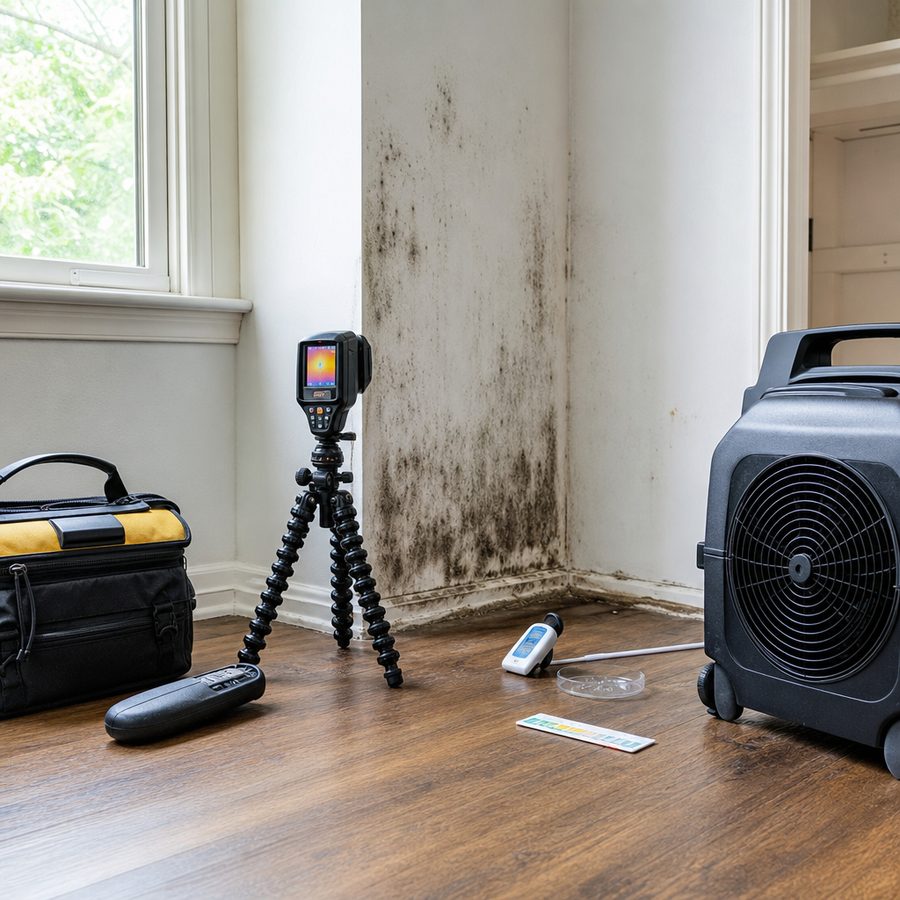
Inspection is a physical, visual assessment of your home. Our certified technicians (IICRC Applied Microbial Remediation Technician credential) walk through your property looking for moisture sources, staining, visible growth, and conditions that favor mold. We use moisture meters, thermal imaging cameras, and borescopes to check inside wall cavities without tearing anything open unnecessarily.
Testing means collecting samples and sending them to an accredited third-party laboratory. We use several methods depending on what we find during inspection:
- Air sampling (spore trap cassettes). We pull a measured volume of air through a cassette and compare indoor spore counts to an outdoor control sample. Elevated indoor counts, especially of specific species like Stachybotrys or Chaetomium, tell us there is active hidden mold.
- Surface sampling (tape lifts or swabs). When we see discoloration but are not sure if it is mold or something else, surface samples give us a species identification and approximate concentration.
- Bulk sampling. We take a small piece of suspect material (drywall, insulation, wood) and send it for analysis. This is useful when we need to confirm contamination inside a wall cavity before opening it.
Lab results typically come back within 24 to 48 hours. We walk you through the report in plain language, not laboratory jargon.
Douglas County and Nebraska Regulatory Context
Nebraska does not have a statewide mold contractor licensing law, which means literally anyone can call themselves a mold inspector. This is a real problem. The quality signal to look for is IICRC certification, specifically the Applied Microbial Remediation Technician (AMRT) credential. Our technicians hold current IICRC certifications, and we carry the documentation to prove it.
For larger remediation jobs in Douglas County, a licensed mold assessment is required before work begins. We handle that documentation as part of our process so you are not scrambling to figure out the regulatory side while dealing with an already stressful situation. City of Omaha permits may also be required when structural drying and reconstruction are involved. We coordinate with the city directly so permits are pulled correctly and work passes inspection.
What to Do Right Now if You Suspect Mold
Before we arrive, here are the most useful steps you can take:
- Stop the moisture source first. Mold cannot be fixed while the leak or humidity problem continues. If a pipe is still dripping, turn off the water supply. If the crawl space is damp, avoid running the HVAC system until we assess it.
- Do not disturb visible growth. Scrubbing or painting over mold releases spores into the air. Leave it alone.
- Improve ventilation carefully. Opening windows in dry weather helps. In humid Omaha summers, opening windows can make indoor humidity worse. Use a dehumidifier if you have one.
- Document everything for insurance. Photograph the affected areas, any water staining, and the suspected source before you move or clean anything. This matters for claims.
- Keep children and anyone with respiratory conditions out of the affected area until we complete the assessment.
Costs, Insurance, and What to Expect
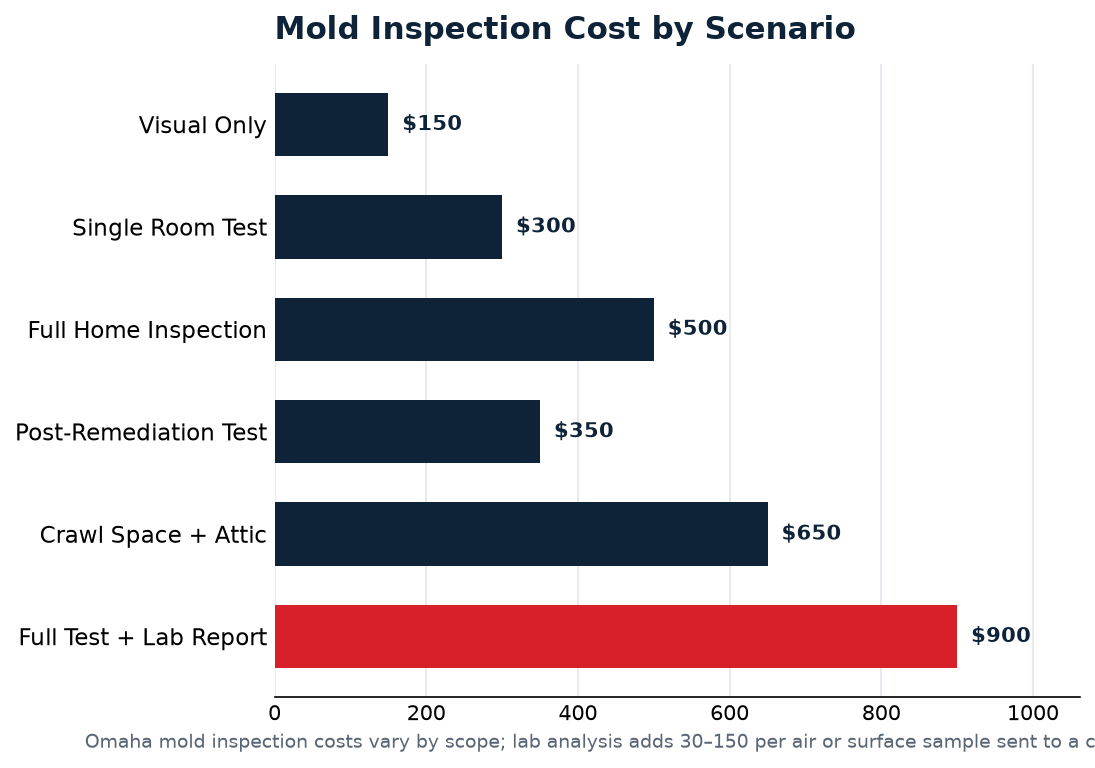
A professional mold inspection with air sampling in a typical Omaha home runs between $300 and $600 depending on the size of the home and number of samples collected. That cost includes the laboratory analysis and a written report you can share with your insurance company or a future home buyer.
Whether homeowners insurance covers mold remediation depends heavily on the cause. Mold that results from a sudden, covered event (a burst pipe, an appliance failure) is often covered. Mold from long-term neglect or maintenance issues typically is not. We work with most major carriers and can provide the documentation adjusters need. If you are in Bellevue or Council Bluffs near the Missouri River floodplain, flood-related mold claims go through the National Flood Insurance Program, which has its own process and timelines.
Frequently Asked Questions
Can I just buy a home test kit from the hardware store? Those kits will almost always show mold because mold spores exist everywhere. They cannot tell you what species you have, how concentrated it is, or where it is coming from. A professional inspection gives you actionable information. A hardware store kit does not.
How long does a mold inspection take? For most single-family homes in the Omaha metro, plan on two to three hours for the physical inspection and sample collection. Lab results add 24 to 48 hours. We provide a written report after we receive and review the lab data.
We had a pipe burst during a cold snap. Could we already have mold? Yes, possibly. Mold can begin growing within 24 to 48 hours in warm, humid conditions. If the water sat for more than a day before drying began, we recommend testing even if you do not see visible growth. Wall cavities and subfloor assemblies can stay wet long after surfaces feel dry.
Does my homeowners insurance cover the inspection itself? In most cases, no. The inspection cost is typically out of pocket. However, if remediation is covered by your claim, some policies roll testing costs into the covered scope. Ask your adjuster directly and get the answer in writing.
We are buying a home in Dundee or Benson. Should we get a mold inspection before closing? We strongly recommend it for older homes. Century-old construction in those neighborhoods often has fieldstone or brick foundations, limited vapor barriers, and histories we cannot see. A pre-purchase mold inspection gives you negotiating information and peace of mind. It is a much smaller expense than discovering a mold problem after you own the home.
We serve the full Omaha metro including Douglas, Sarpy, and Washington counties, as well as Council Bluffs and the surrounding Iowa communities. If you have concerns about mold in your home, call us to schedule an inspection. We will give you a straight answer.